Activity
Mon
Wed
Fri
Sun
Aug
Sep
Oct
Nov
Dec
Jan
Feb
Mar
Apr
May
Jun
What is this?
Less
More
Memberships
You, me and CPTSD
25 members • Free
5 contributions to You, me and CPTSD

Mar 31 •
WINNER!
Congratulations to Bre W. for having the most likes and comments in the month of March. You will be receiving a specialized package full of nervous system support and comfort calming items. I hope you love everything. 💖 Thank you for being here with us.

2 likes • Mar 31
Yay! I'm so excited 🖤 Happy to be part of this healing journey 💓
Jan 27 •
Nervous System MUSIC playlist
10 song playlist to soothe your mind, body and nervous system. Music helps regulate the nervous system because it speaks directly to the body, not the thinking mind. Trauma lives below words. Music meets it there. “Regulate & Rest” – A Trauma-Informed Healing Playlist How to use: - Best with headphones or low-volume speakers - No need to listen closely. Let it play in the background. - If emotions come up, that’s normal. The body is releasing, not breaking. 1. Erik Satie – Gymnopédie No. 1 Opening the door to calm This piece slows the nervous system without asking anything from you. It creates safety first — essential for trauma recovery. 2. Claude Debussy – Clair de Lune Softening the body Breathing naturally deepens here. Shoulders often drop. This is where the body starts to feel less guarded. 3. Arvo Pärt – Spiegel im Spiegel Grounding + emotional containment Minimal, repetitive, and steady. Excellent for anxiety, dissociation, or emotional overwhelm. 4. Johann Sebastian Bach – Goldberg Variations (Aria) Stabilization The predictability of Bach’s structure helps settle racing thoughts and looping trauma memories. 5. Max Richter – Dream 3 (from Sleep) Entering deep rest This is where hypervigilance begins to release. Ideal for evening listening or before sleep. 6. Brian Eno – 1/1 (Music for Airports) Regulation without effort Designed to reduce stress. Let this play while resting, journaling, or lying down. 7. Nils Frahm – Says Gentle emotional release Slow build without shock. Often brings a feeling of “I can breathe again.” 8. Chopin – Nocturne in E-flat Major, Op. 9 No. 2 Comfort + reassurance This piece carries warmth and safety, especially for people who associate calm with gentleness rather than silence. 9. Hildegard of Bingen – O vis aeternitatis Primitive safety Vocal tones activate a deep, ancient sense of containment (especially powerful for attachment trauma.) 10. Max Richter – Path 5 (Delta) Closure + Integration Ends the playlist feeling held, not dropped. Perfect for sleep or meditation.
2 likes • Mar 31
I'll def have to check these out. Thanks for sharing! 🖤
Mar 15 •
Subscribe to the new Youtube Channel
Happy Sunday! I started a YouTube channel for those who wish to watch rather than read. Though you will find more information on topics in our skool class, if you want short/medium style videos, subscribe to the YT page. :) Enjoy! Don't forget about the Giveaway this month!!
1 like • Mar 27
Yes! I def would like to check this out 🖤
Mar 9 •
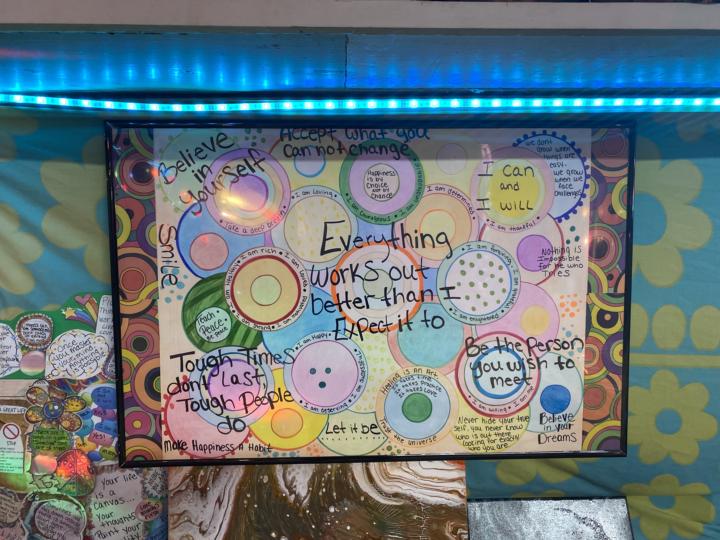
The Power Of Positivity
This is my favorite tool! I could write for days about this topic. It utilizes creativity, personal choice, and psychology. This helped me far more than anything next to challenging my body learning aerial arts. This is a long read but it’s joyful and extremely helpful. Enjoy. 🫶🏼 There is a fun activity at the end. Many people who are healing from complex post traumatic stress disorder or other mental health issues spend years studying trauma, understanding the nervous system, and learning why their body reacts the way it does. That knowledge is important. But at some point in the healing journey, something equally powerful begins to emerge. The ability to intentionally create positive experiences inside the brain and body. Positivity is often misunderstood. It is not about ignoring reality. It is not about pretending life is perfect. It is not about forcing happiness when you feel something else. True positivity is a practice. It is the intentional creation of mental and emotional environments that help the nervous system recognize safety, stability, and possibility. For someone healing from complex trauma, positivity becomes less about mood and more about regulation. It becomes a tool that helps retrain the brain toward balance. When the nervous system experiences repeated positive states, even small ones, the brain begins to shift. New neural pathways begin forming. The body begins learning that calm, safety, and hope are not temporary accidents. They can become familiar places to return to. This is the power of positivity in healing. One of the most important things to understand is that the brain does not only respond to danger. It also responds strongly to safety and pleasure. When the brain experiences something positive, chemicals such as dopamine, serotonin, and oxytocin begin to circulate through the nervous system. These chemicals help regulate mood, stabilize emotions, and promote feelings of connection and wellbeing. These states send signals through the vagus nerve, which is one of the primary communication highways between the brain and the body. When positive states are repeated often enough, the nervous system begins to favor regulation rather than constant alertness.
1 like • Mar 27
I absolutely love these boards, & the idea of making one, I just haven't found myself hyperfocused into this project yet 😅 One day! 🤞🖤
Jan 16 •
Welcome to You Me CPTSD SKOOL.
I’m really glad you’re here. If you’re arriving tired, skeptical, hopeful, numb, curious, overwhelmed, all of that belongs here. There is no “right way” to enter this space. This community exists because so many of us were taught to survive quietly instead of heal honestly. This is NOT new age healing or any main stream trend. This is real experience. Studied psychology. True stories of trauma and the outcomes. Real emotions and real feelings not completely understood. There will be stories of happiness, grief, abuse, joy, and trauma. I am here to share my story to help guide those who wish to find support in healthy ways. Here, we do things differently. A few important things to know: - You don’t need to share your story to belong - Lurking is participation - Learning counts even on low-energy days - Progress is not measured by productivity here You’ll find lessons, discussions, reflections, and tools designed to help you understand yourself better. Start wherever feels safest. There is no catching up required. If you want to introduce yourself, you can share: - What brought you here - Or just your name - Or a simple “I’m here” Or you can say nothing at all and just settle in. This is you and me learning CPTSD together. Take your time. You’re welcome here.
1 like • Mar 27
I'm here! Tired, but curious 🖤
1-5 of 5