Activity
Mon
Wed
Fri
Sun
Jun
Jul
Aug
Sep
Oct
Nov
Dec
Jan
Feb
Mar
Apr
May
What is this?
Less
More
Memberships
Quantumology
26 members • Free
QE
Quantum Energetics Experience
8 members • Free
The School of Yoga Lifestyle
160 members • Free
High Vibe Tribe
80.5k members • Free
✨AWAKEN✨
3.9k members • $11/month
12 contributions to High Vibe Tribe

3h •
Might is a might
Might is a might essentially - whether you win or lose. You still win. However, you only win when you expand beyond that loss. The expansion is exponential. That, in itself, is the best consolation. And also the amazing part of might.

3d •
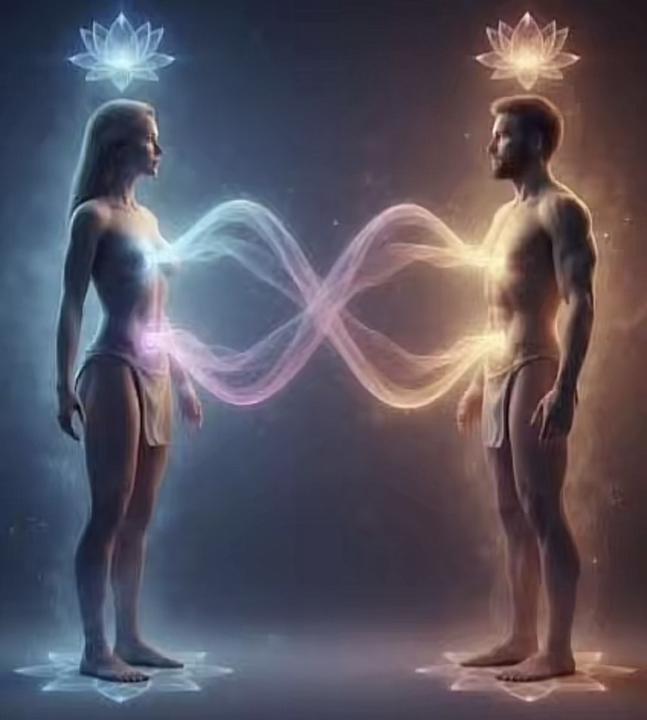
Union is God
People constantly say that they must put God first, that they should focus only on God. But where is God? God is not just an emotion that makes you feel good. God is within us, and we are an extension of God's hand. That means we see God not only within ourselves, but also in others. It is the place where you share your life with others. To be with God means to have a family and to build a better place for children and future generations. God is in union between man and woman. God is family. God is happy children. God is commitment. God is creating a relationship based on love.
0 likes • 1d
In my opinion, unity of the principles of masculine and feminine understandings are the - in totale - combination of a life worth living at some point in our lives. Combining the aspects of both, give us an understanding of the totality of our life paths that’s are assimilated in a way at a personal level. Things like monogamy - once we find others that we can perceive in such a way - and the instances of the experiences of polyamory and/or short-term to long-term monogamy give us the rounding of our symbolic understandings of life. It’s really amazing this is able to be achieved in such a way
0 likes • 1d
I like the symbolic imagery also. It’s a nice post in all

⭐
Dec '25 •
have you ever heard of a heart wall? NEW MEDITATION INSIDE!
In 2012 when I had my spiritual awakening I was introduced to a 90 year old lady via a phone call reading that would do these “emotional code readings” Using muscle testing she would ask yes or no questions to herself to determine what emotional blocks I had and when I developed them It was trippy I always remembered that one of blocks was around a heart wall that I created as a response to a relationship I was in when I was 23 The details she shared resonated and that’s when I learned about the heart walls that get created out of pain and fear I believe the heart wall is an energy that gets stored inside the body that resists love and connection In the past there was closeness and love… Something happened that came out of the unknown that was painful And the body remembers and avoids it happening again So a past part of us creates a heart wall as a way to block the pain that can come from connection and love The challenge is not only does it protect you from pain… it also protects you from love I believe many people subconsciously block love due to this symbol of a heart wall The unprocessed energy from the past blocks love and connection Meditation and feeling into my heart was key to integrating this energy And that’s why I created a powerful meditation to help you remove any heart walls that may be BLOCKING love and connection from coming into your life Or from you going deeper with those already in your life Listen to this meditation for 21 days and watch what happens https://youtu.be/Lt7KHTXip-c?si=iZ7brqMUkJC7uYxv Pay attention to how people respond differently to you after you begin to build this opening in your heart You may find yourself more loving towards others as well as you integrate it each day Anyways hope you are having a great day :) Talk to you soon! Much love, Aaron P.s can you comment on the new meditation on Youtube and declare that you are committing to it for 21 days and then share your experience at the end of the 21 days in an updated comment?
1 like • Dec '25
Thinking about it intricately for visualizing in intrucate energy work, the block is an already open pathway that energy enters and fights any positivity that connection inverted into negativity. Those pathways that is created, are difficult to seal when thinking this way. But it could help. Each aspect of that shadow automatically closes those intricately developed pathways automatically and naturally sealing them, easily and without trouble. If you have trouble closing pathways like this and shadow work on those intricacies (when thought of incrementally) don’t work, a mantra and a process to clear the negativity from each of those can be beneficial. Only think of this process like this, if all else fails and you can transmute that into a stronger understanding and unbreakable pathway you created. Thanks for the community you have here. It really has helped me personally

🔥
Dec '25 •
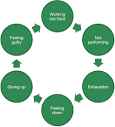
Breaking Negativity Cycles
When facing difficult or traumatic times for a long period of time, it is common to fall into negativity cycles. This is both uncomfortable, and counter productive. Because we attract what we feel, the cycle is self perpetuating. I have known people who have been trapped in such cycles most of their lives. One tragic tale to the next stretching out for decades. I have recently talked with a couple of people so trapped. Breaking this cycle of the mind, emotions, and nervous system is critical to breaking it in physical reality. What pieces of advice\methods would you suggest to help others so trapped to break the cycle?
3 likes • Dec '25
Definitely emotional simplicity, especially if you’re around negativity the majority of the time. Like indifference understanding of - people are going through their own current life experience, much of the time, it’s the exact same mindspace that you’re stuck in ( in regards to environment) it’s that some are more socially accepted (for positive OR negative things they do) and it generates a place of overall negative times. With emotional simplicity, you can let go of things people do more easily and that generates a positive mind-set for your self (strength rather than power that essentially weakens you after extended periods of time) it gets tiring. Finding a way passed that is easier using this way of thinking, though you know
🔥
Dec '25 •
Why Shunning Psychopaths is Necessary Self Care
Many psychologists and ethicists suggest maintaining a "no contact" rule or a significant distance from individuals with psychopathic traits because of the fundamental differences in how their brains process social connection and morality. Unlike the normal person, a psychopath lacks functional empathy—no normal capacity to feel what another person feels. While they may have high intellectual empathy , they don't experience the emotional conscience that prevents most people from causing harm. One of the main reasons to shun or distance oneself is the predatory nature of their interaction. Psychopathy is often characterized by a lack of remorse and exploitation. In a typical relationship, there is a social contract of mutual care and respect. A psychopath, however, sees social interactions as a an opportunity for self gain. Because they don't experience guilt or mutual friendship the way others do, they see kindness as a weakness to exploit. The psychological toll on those close to a psychopath is devastating. Because psychopaths are masters of self image, they can be very persuasive, using things like gaslighting and manipulation to disorient their victims. Over time, this damages a person's sense of reality and self-worth. Shunning is often not seen as an act of cruelty, but as a necessary form of self protection of one's mental health from a cycle of manipulation that the psychopath will never change. Behavioral change in psychopaths is extremely rare. Many personality disorders respond well to therapy, but traditional talk therapy can makes psychopaths more dangerous by teaching them better ways to copy human emotions and manipulate others. The core of the condition involves defects in the brain's emotional processing centers, so the ability for moral reform is literally not there. All considered, shunning people with psychopathic behavior is the only reliable way to ensure others safety and peace.

3 likes • Dec '25
I feel like if someone prove that they (sober minded) change their entire energy, when around other people and/or when they are with only a few other people (having an emotional polarity aspect of - depressed to extreme negative or positive to extreme negative by themselves) then it’s best to fall away from that person as much as possible. It’s confusing to the person not like that, because they’re not showing their true emotions all the time anyways. Then sometimes people put on a mask to hide what they do when no one pays attention. I had an experience where someone was like this and they were completely lying to me, and everyone around and it made me have nothing but mistrust for most people for a long while
1-10 of 12

@brandon-roach-2774
I’m Brandon, I’m a psychology major currently in school. If you want to get to know more about me, just message me where ever
Active 3h ago
Joined Dec 19, 2025
Powered by