Activity
Mon
Wed
Fri
Sun
Jun
Jul
Aug
Sep
Oct
Nov
Dec
Jan
Feb
Mar
Apr
May
What is this?
Less
More
Memberships
Break Into Aerospace
109 members • $19/month
2 contributions to Break Into Aerospace

Mar 29 •
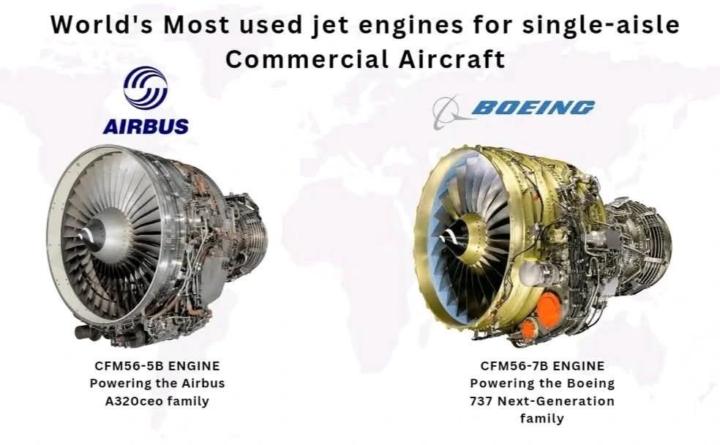
⚙️✈️Engines that Keep the World Flying: The CFM56 Powerhouses
From Airbus to Boeing, the CFM56 engine series has set an industry standard for powering single-aisle commercial aircraft. With unparalleled reliability and efficiency, these engines are the trusted choice for operators around the globe. Here’s a look at two of its legendary models: CFM56-5B: Powering the Airbus A320ceo Family The CFM56-5B reigns as the preferred engine for Airbus’s A320ceo lineup, chosen to power nearly 60% of these aircraft. It’s the only engine capable of powering every model of the A320ceo family with a single bill of materials, making it exceptionally versatile and cost-effective. Known for its simple and rugged design, the CFM56-5B delivers unmatched reliability, durability, and the lowest cost of ownership in its class. Over 30 years of service speaks volumes about its excellence and dependability. CFM56-7B: The Backbone of Boeing’s Next-Generation 737 Fleet For Boeing, the CFM56-7B is the exclusive powerplant for the Next-Generation 737 aircraft—a combination that has logged over 500 million flight hours and solidified itself as the most popular engine-aircraft pairing in commercial aviation. The -7B’s robust architecture ensures it’s as easy to maintain as it is to operate, offering the highest reliability, durability, and reparability at a low cost of ownership. With over 15,000 engines in service, this powerhouse is a symbol of rugged reliability. Together, these two engines exemplify the engineering excellence that drives modern aviation forward—keeping passengers safe, flights on schedule, and airlines competitive.

2 likes • 1d
That's an interesting post! It's also worth taking a look at CFM LEAP 1 family, version 1-A propelling currently the most popular single-ailse aircraft worldwide- Airbus A320neo and version 1-C developed for Comac C919 Lluis wrote about. Comac might become huge competition for Boeing and Airbus in forseeable futurte.

Mar 4 •
The genius design of Delta Wings
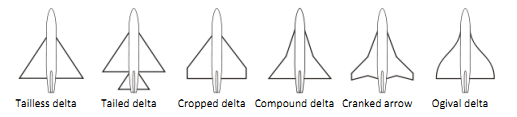
Straight wings, while highly efficient for generating lift at low speeds, hit a literal wall as they approach the speed of sound; the air compresses, creating severe shock waves that result in massive wave drag and catastrophic loss of control. To delay this effect, engineers developed swept wings, which angle backward to effectively trick the air into "feeling" a thinner wing, allowing for higher speeds. However, swept wings introduce their own severe drawbacks: they are structurally prone to twisting under aerodynamic loads (aeroelasticity) and suffer from dangerous tip stall at low speeds, which can cause an aircraft to pitch up uncontrollably and lose altitude. As military and civilian aviation pushed to routinely break the sound barrier, designers faced a complex set of requirements that conventional wings could no longer satisfy. They needed a wing that could remain safely tucked inside the Mach cone, the V-shaped shockwave boundary created by the nose of the aircraft at supersonic speeds. Simultaneously, the wing had to be incredibly thin to minimize supersonic drag, yet structurally rigid enough to prevent the twisting that plagued swept wings. Furthermore, practical realities dictated that the wing still needed enough internal volume to house massive amounts of jet fuel and heavy landing gear. The delta wing emerged as an elegant solution to these conflicting requirements. Named after the triangular Greek letter Δ, this design sweeps the leading edge sharply back to stay behind the Mach cone, while the trailing edge extends straight across to meet the fuselage. By filling in the space between a highly swept leading edge and a straight trailing edge, the delta wing creates a massive "root chord"—the length of the wing where it attaches to the fuselage. This inherent triangular geometry provides immense structural strength, allowing the wing to be built incredibly thin for supersonic efficiency without sacrificing rigidity or internal storage capacity for fuel.
1 like • Mar 8
Interesting read! Thank You Lluis👍
1-2 of 2

@bartosz-cop-5995
Mechanical engineer working in Aviation Insitute.
Active 3h ago
Joined Dec 16, 2025