Activity
Mon
Wed
Fri
Sun
Oct
Nov
Dec
Jan
Feb
Mar
Apr
May
Jun
Jul
Aug
Sep
What is this?
Less
More
"Train With The Pack"
306 members • Free
4 contributions to "Train With The Pack"
May '24 •
Welcome to the Pack! 🐺
You made it—welcome to the Pack Baseball & Softball Academy online community! Whether you’re here to level up your game, grow as a coach, or just hang out with fellow baseball and softball fanatics, you’re officially part of the family now. We believe in high-fives, hustle, and helping each other get better every day. This is your space to ask questions, share your wins (big or small), and learn from the best—on and off the field. Welcome to the Pack, coach — quick roll call. Drop 3 quick bullets so we can get you plugged in: - City/State: - Who you coach: (age + baseball/softball) - Your #1 challenge right now: (hitting / pitching / practice plans / parents / culture / recruiting) I’ll reply with one resource or idea for your challenge — and I’m sure other coaches will jump in too.


1 like • Dec '25
@Jason Taylor sounds great, I’ll be there!
1 like • Jan 7
@Michael Berlin It's great to meet you! I would love to connect about some additional information on hitting or infield. There are so many ways to help develop athletes in both these areas as well as strengthen your confidence in your coaching style! Let's connect!
Dec '25 •
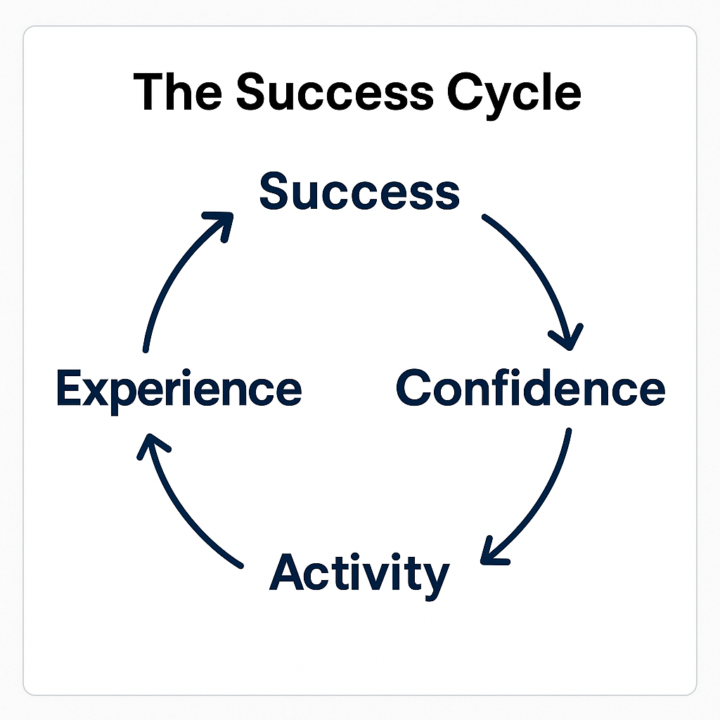
The Success Cycle: How to Use It to Your Advantage
Let’s talk about something that’s happening every day in your practices, games, and even your team culture — whether you realize it or not. It’s called The Success Cycle. Here’s how it works: Success builds Confidence →Confidence creates Activity →Activity builds Experience →Experience leads to more Success. This cycle is always in motion. The key is whether you're using it intentionally or just letting it run in the background. Most coaches understand this on some level. But when you truly recognize this cycle at a conscious level, you can start using it strategically — not just hoping that hard work turns into results. Too often, coaches zero in on Activity as the only path to improvement. More reps. More drills. More hustle. And while activity matters, it’s only one part of the cycle. Without confidence, the activity lacks impact. Without success, confidence never gets off the ground. Without experience, the activity doesn’t translate into results. Here’s the breakthrough: You can pick any point in the cycle — Success, Confidence, Activity, or Experience — and build a practice plan around it. And when you do, you’ll start to see momentum build across the entire cycle. For example: - Focus on small wins early in practice to create quick success - Create confidence through well-timed encouragement or individualized instruction - Layer in high-quality activity that fits the athlete’s current level - Use live reps or feedback loops to convert activity into meaningful experience The more intentional you are, the more control you have over the outcomes. Let’s open it up to the community:How do you use the Success Cycle in your coaching — on the field, in the weight room, or even off the field? Have you seen it in action with a specific player or team?What shifted when you emphasized one part of the cycle over another? Drop your thoughts, stories, and questions below — let’s sharpen each other. —The Pack Team
2 likes • Dec '25
I use the Success Cycle by being intentional about where we start. I'll break down the three views, on the field, weight room and off the field. On the field, I build in small wins early, simple defensive reps, controlled hitting progressions, and pitchers hitting spots. This allows players to experience success before intensity ramps up. That quick success boosts confidence, which changes their body language and effort for the rest of practice. In the weight room, we emphasize visible progress. When athletes see strength gains, confidence rises and their work quality improves. We do visible progress tracking (results on the board) and we split into two groups and make it a competitive point system. I’ve seen this as a complete team buy in but also teammates pushing each other together. I focus on behavior first. We like to see consistency, accountability, and preparation. When those improve, success follows and belief grows. I would agree, the biggest shift I’ve seen is when I stopped chasing “more reps” and started engineering confidence and success first. Everything else moved faster after that. Off the field, I think of academics, leadership, or discipline issues, I focus on behavior before belief: Show up on time, communication, and complete small tasks daily. A struggling athlete academically didn’t believe she was “a school person.” We emphasized daily structure and accountability, not motivation. When grades improved, her identity shifted. She started calling herself “locked in,” and that belief carried into practice and competition.
Dec '25 •
Building the Future — Our Coaching Philosophy & the Wolfpack Community
Welcome to the Pack Baseball & Softball Academy community. This space is about more than drills, mechanics, or game strategy. This is where we define what it truly means to be part of the "Wolfpack". Our mission is simple, but powerful: To build complete, confident, college-ready athletes and coaches through elite development, cutting-edge technology, and a family-driven culture. But here’s the truth — a mission like that can’t live through one program, one coach, or one voice. It only becomes real when "this community owns it together." At Pack, we believe leadership isn’t reserved for captains. It’s cultivated in "every athlete." On the field. In the classroom. At home. In adversity. In how they treat teammates. In how they respond when no one is watching. And the same goes for coaches. This group exists so we can sharpen each other, challenge each other, and grow together — not just as technicians of the game, but as builders of people. Let’s start that process right here: What is your coaching “why”? Not your résumé. Not your record. The real reason you show up for athletes. The moment, the mentor, the experience that shaped how you coach today. How are you using technology or data to help your athletes grow? Whether it’s video, metrics, tracking progress, communication tools, or mental performance — how are you helping athletes understand themselves better? What’s one thing you wish you had known when you first started coaching? A lesson learned the hard way. A mindset shift. A mistake that made you better. This community is how legacy is built — not through slogans, but through "shared wisdom, shared standards, and shared commitment." If you see a post that resonates with you, respond to it. If you connect with a coach’s story, reach out. If you’ve got a question, ask it. If you’ve got experience, share it. The strength of the Wolf is in the Pack. And the future of the Pack is being built right here — together. Drop your “why,” your story, or your lesson below. And make a connection with a coach you haven’t met yet.
1 like • Dec '25
@Jason Taylor Yes, great questions! - My Why: I think just being able to show up every day to help athletes become confident, resilient, and a better version of themselves on and off the field. I make sure we are involved in the community, having conversations outside of just practices, and connecting them through team bonding. Watching them succeed after out program is what I see as my bigger accomplishment. - Technology: We use blast motion metrics, video breakdown through iPad, and game film to breakdown situations and build softball IQ. We also do team talks, once a week where athletes share about themselves, What’s been going well, what needs to be improved, and how can we continue to work on it. Then they share what they seen from a teammate that is a positive, I believe it’s important that players know their teammates notice the goods they do, weather its being quick to warmup a pitcher in between innings, or motivating during at bats. - One thing I wish I had known was, Connection comes before correction. Coaching is the easiest part of the role and it isn’t just about teaching skills, it’s also about managing people, emotions and relationships. Knowing your athletes and how they learn and respond, which is different for everyone.
Dec '25 •
ChalkTalk Wednesday - Tonights Call has been Pre-Recorded for You!
Coaches, after you watch tonight’s short recording, I’d love to hear your thoughts. Every week our conversations get better because you bring your experience, perspective, and passion to the table. Tonight’s episode dives into athlete expectations, long-term development, and what it really looks like when a team has mixed goals—some chasing college ball, others playing simply because they love the game. How do you handle these situations in your own teams? What strategies or conversations have worked for you? What’s one insight that stood out from the video? Drop your thoughts below. Your input helps every coach here grow—and helps us all continue serving athletes at the highest level. Let’s build this together.
1 like • Dec '25
I think your take on question 1 was spot on. As a Div. II JUCO coach, many of our athletes look to get to the next level after their two years with us. When a player tells me they want to play softball at a program at the D1 level, the first thing I do is support their ambition, because big goals matter. But I also make sure we talk about what that actually requires. Honest evaluation, workload, development plan, realistic pathway’s, then my goal is to give the player a roadmap. If UCLA, for example, is truly where they want to be, we build a plan that reflects that level of commitment while also keeping multiple strong options open along the way. Sometimes opportunities pop up that can offer great experiences and opportunity that may pop their interest as well. Great take!
1-4 of 4

@angel-rodriguez-9613
Head Softball Coach at Salem Community College. I prioritize fundamentals, mental toughness, and team culture.
Active 99d ago
Joined Dec 7, 2025
Powered by