Activity
Mon
Wed
Fri
Sun
Nov
Dec
Jan
Feb
Mar
Apr
May
Jun
Jul
Aug
Sep
Oct
What is this?
Less
More
Dispatcher University (Free)
24.9k
Free
11 contributions to Dispatcher University (Free)

Dec '25 •
From Driver to Broker to Dispatcher
Hey there everyone, I’m a former driver of over eleven years with a little over a million miles under my belt. Was a company driver hauling 53’ Dry Van, Flatbeds/Stepdecks, and did a couple years of Reefer. In June of 2024, I opened my own freight brokerage in NC. I’m up to half a million in revenue in freight brokerage and averaging between 12-18% profit. But I’m feeling like I would better serve the former brotherhood I called home as a driver by dispatching and negotiating on behalf of the carriers than on behalf of shippers. My intent now is to run my brokerage while I build a customer base of drivers and transition into owning and operating a dispatch company rather than growing my brokerage. I also feel it’ll be easier to sell my services based on my knowledge as a driver and broker. Looking forward to starting the course and learning the finer points of dispatch, even though I feel pretty confident I could effectively do the job if I were to pick up an owner op tomorrow, I’d rather not just wing it.
1 like • Dec '25
@Malkeeya Kimathi Thanks Malkeeya!
1 like • Dec '25
Hey there @Vincent Wilfred. So, I obtained my LLC in January of last year, and my authority from the FMCSA in February. But I kept driving until June so I could save up some money to cover my bills until I started earning some income. It was a very tough start, because trucking companies and their factoring companies won’t typically trust you until you acquire transportation credit. But you have to do business in order to acquire transportation credit, so I’m sure you can see the weird sort of loop that makes it tough to get going. We officially “opened our doors” on June 3rd, so it’s been 18 months now. I was fortunate that in five months, my brokerage was profitable, and in 8 months, it was also paying my bills in addition. I like brokerage because as long as you have internet or cell signal, you can do business from literally anywhere. I have booked loads in some pretty cool places, one of which is highly memorable for me as a veteran. I booked a load from the deck of the now decommissioned USS North Carolina in Wilmington, NC in October of last year for instance. While I have every intent to continue running my brokerage, as a former driver, I want to do something that provides a valuable service to drivers too though. So that’s part of the reason I’m starting my dispatch company. My goal is to get that going, then hire a couple of people to run and grow that for me in the long term, then expand from there. The very limited overhead, and very low risk makes it a good venture I think as opposed to brokerage, which is high risk. If your customer doesn’t pay in brokerage, you can lose lots of money very quickly. I’ve experienced this firsthand. That’s a serious downside to brokerage for instance.

Dec '25 •
Box trucks or Dry vans ?
Hello, community members, I’ve completed the first week of the course and I can’t decide which niche to choose as a beginner – box trucks or dry vans. Many people recommend starting with box trucks to quickly and easily understand how the workflow operates, but I’m not sure if I’d be able to manage 3–4 drivers at once, since the pace in box trucks is quite fast compared to dry vans, and the earnings are lower considering the workload. I know there are many very experienced dispatchers in this group who could share their thoughts and advise beginners on where it’s best to start. Which area did you begin with, and what would you change if you could turn back time? 🤔 Every answer is welcome and greatly appreciated 💪👌 Pool: Which niche have you started with ?
Poll
18 members have voted

6 likes • Dec '25
From a broker’s perspective I would tell you, or anyone for that matter to stay away from box trucks and sprinter vans. They make somewhere between 30-70% of what dry vans make, and it’s often harder to find loads for those types of carriers due to weight and dimensional restrictions. Start with dry vans, they are the easiest to manage by far. When talking to a broker, you want to know the commodity, weight, pallet count, and if it even SOUNDS like it might be hazmat, you better make sure you ask them about it. If it IS hazmat, make sure your driver has a hazmat endorsement and the correct placards. Bear in mind, that a carrier can haul UP TO 1001lbs of hazmat WITHOUT a hazmat endorsement. Let me explain where this might apply; let’s say you see a load posted for Walmart from one of their DCs to a store. That load may contain a pallet containing 300lbs of batteries, 400lbs of antifreeze, 200lbs of paint thinner, and 100lbs of bleach. The rest of the load may be any combination of furniture, clothing, household goods, etc… This ensures that they don’t have to have their drivers, or any driver they broker a load out to, to have a hazmat endorsement which would be much more costly. Brokering hazmat loads, from experience, costs up to 2.5 times as much as a non-hazmat load simply due to the risks and legal liability involved on the carrier’s part for hauling that kind of load. So, this exception allows for small amounts of hazmat to be carried since it poses very little risk to human health or the environment if a serious accident occurs.

🚀
Mar '25 •
Welcome! Start Here
Before you do anything else — start here: 1. Watch the “Start Here” course → 2. Finish the Free Dispatch Course → 3. Unlock the full course ($97/mo) → Let’s get to work! – Gurpreet & The Dispatcher University Team POLL: Be honest — how did you hear about this free course + community?
Poll
2737 members have voted
2 likes • Dec '25
Hey Gurpreet, I was just curious why you're no longer with Gill22? I was looking you up on LinkedIn, and I saw that you were a partner there from 2016-2022. But now you work for Briggs and Stratton as a Financial Analyst. Are you still involved with Gill22 at all, or did you guys sell the company?
1 like • Dec '25
@Gurpreet Gill Understandable. I was just curious.

Nov '25 •
The #1 Reason New Truck Dispatchers Fail (And How to Avoid It)
Most new dispatchers think the job is just finding loads on DAT or Truckstop… but that’s actually the easy part. The real reason beginners fail is because they don’t understand carrier capacity management. So here's what that really means: 1. Matching the Right Loads to the Right Equipment Every truck is NOT the same. If you don’t understand weight limits, driver preferences, delivery windows, or equipment type (reefer, dry van, flatbed), you’ll book loads that look good but cost the driver money. It can get confusing when managing multiple drivers which is why it is recommended to start out with 1-2 carriers to fully learn what it takes to dispatch and take good care of one carrier at a time. 2. Knowing the Driver’s “Golden Lane” Every driver has routes where: - deadhead is low - fuel is cheaper - loads move fast - outbound freight is strong If you ignore this and send them into weak markets, their cost per mile (CPM) rises — and their profit per mile falls. This is one of the biggest silent killers for new dispatchers. 3. Weak Rate Negotiation Most dispatchers don’t negotiate. They just accept the posted rate. A real dispatcher: - calls multiple brokers - uses lane market data - knows average RPM for that lane - pushes for fuel surcharges or accessorials Strong negotiation = higher RPM = happier drivers. 4. Not Tracking KPIs (Key Performance Indicators) You can’t improve what you don’t measure which is why a real dispatcher tracks: - Cost per mile (CPM) - Deadhead % - Average RPM - Lane profitability - Weekly gross - Broker scorecards This is what separates a real dispatch business from a “find a random load” hobby. 5. No Long-Term Broker Relationships Anyone can book a load; it takes a real professional to build relationships. This gets you: - first-call freight - better rates - recovery options - faster problem solving - priority during tight markets Relationships = leverage. BOTTOM LINE - Truck dispatching is not about clicking loads, but rather about understanding markets, lanes, and profitability.
3 likes • Dec '25
This is great information, all of which as a broker I'm very familiar with. If this info isn't part of your sales calls, you're not doing sales calls correctly! Apply this and you WILL see results.
2 likes • Dec '25
@Amrit Mann My pleasure man! It probably takes about a minute to skim through what’s posted here when you’re on a call with a carrier. I promise you, it will solidify your expertise instantly.
Dec '25 •
Good Morning Poll:
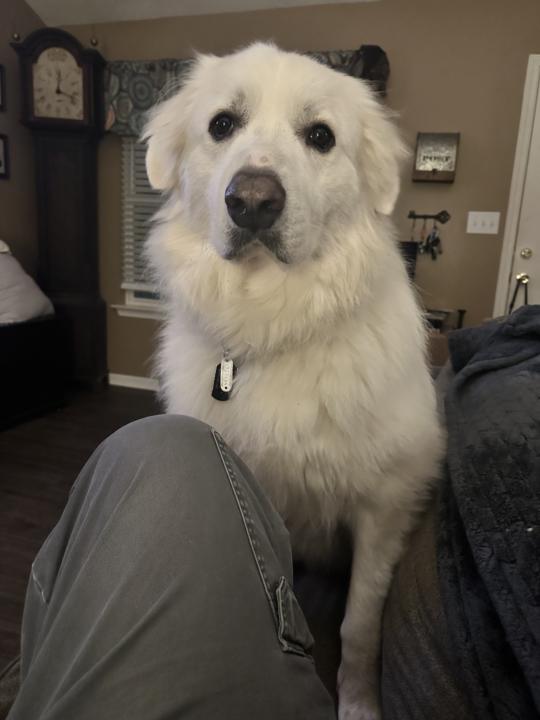
Good morning everyone, I hope you all got some decent rest last night! I certainly was until our 135lb Great Pyrenees, Ghost got me up at 5am to let him out to go use the bathroom! 🤪 I thought I'd start a new poll this morning to see where everyone is in their dispatch business journey! Just figured it would be interesting to see how progress is going for folks here in the community. Are you forming your LLC and acquiring your EIN, or have you finished that process and now building your website and setting up a company email domain, or have you finished all of that and are actually seeking carriers to onboard, or have you gotten to the point where you've now signed at least one carrier and are actively dispatching? I'm still in the LLC/EIN phase while I go through the course, but that won't take long at all to get going. I hope everyone has a great and productive day, and I can't wait to see where everyone places themselves in their journey!
Poll
5 members have voted
1 like • Dec '25
@Mamed Aslanov we have five cats in addition to our dog. Thankfully, none of them bug us while we’re asleep to go out at night. Mostly I’ll be booking loads at my desk and our male cat will scratch at the door wanting to go out during the day. LOL
1-10 of 11

@andrew-clark-8189
Happy husband and father, former Driver of over 10yrs/1mil miles, and current Freight Broker, expanding entrepreneurship into truck dispatching.
Active 239d ago
Joined Dec 2, 2025
North Carolina
Powered by