Activity
Mon
Wed
Fri
Sun
Apr
May
Jun
Jul
Aug
Sep
Oct
Nov
Dec
Jan
Feb
Mar
What is this?
Less
More
Memberships
Holistically, Realistically!
14 members • Free
Hashimoto Healing
22 members • Free
Women's Peptide Collective
1.4k members • Free
Health with Hashimoto's
208 members • Free
Peptides & Biohacking Hub
1.1k members • Free
Peptides for Newbies
3.3k members • Free
KRISTINA’S PEPTIDE JUNKIES 24
873 members • Free
Pep Talk - For Better Health
2.7k members • Free
Peptide People by Peptide Guru
139 members • Free
8 contributions to Holistically, Realistically!

18h •
More Collaborations Coming!
Yesterday, we had the pleasure of welcoming @Claire Grace, our Resident Water Specialist who will be answering water questions and hosting a couple water discussions each month. Today, let's welcome, Christine Knight IFS. She will be providing insight on overcoming emotional triggers through simple daily practice & AI tools to help get to the root cause in subconscious & heal. She will help us work on listening skills, how to spot our blindspots in life, financial abundance, etc... If you are interested in more direct contact, join her group https://www.skool.com/rapidly-evolving-life/about?ref=07dab7fea6d54b0285df3f4854f59a7d What other collaborations would you be interested in seeing here? It has to have something to do with living better, as holistically as realistically possible. Holistic Skin Care? Light Therapy? Breathwork? (Working on this!!) Physical Fitness?


0 likes • 5h
Breath work! For my anxiety please lol
1d •
Pass the No Immunity for Glyphosate and Pesticide Injury Accountability Acts!
In a surprise move, President Donald Trump gave Bayer legal immunity for Monsanto's glyphosate-based Roundup weed killer under the Defense Production Act. This comes on top of the Supreme Court agreeing to hear Monsanto v. Durnell. If Bayer wins that case, all pesticides for any use would be shielded, leaving victims without recourse or compensation. To undo Trump's Executive Order, Congressman Thomas Massie has introduced the "No Immunity for Glyphosate Act," and, in case the Supreme Court rules in Bayer's favor, Senator Cory Booker has introduced the "Pesticide Injury Accountability Act." TAKE ACTION: Tell Congress to Pass the No Immunity for Glyphosate and Pesticide Injury Accountability Acts! Comment DONE! And, then share the link on your socials!
1 like • 1d
Done!
3d •
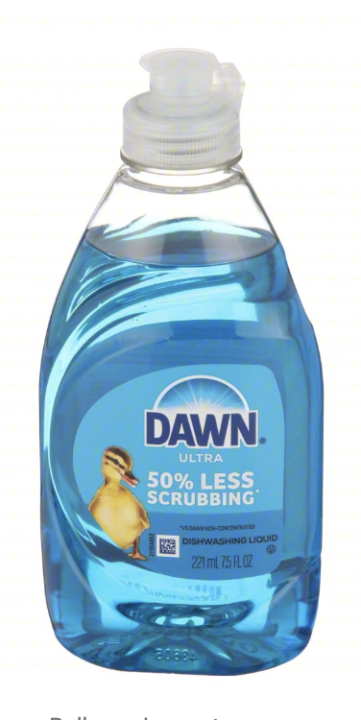
What's in your Dish Detergent?
Dawn dish soap sits in nearly every American kitchen, marketed as the gentle soap that's "tough on grease, soft on hands." Wildlife rescue organizations even endorse it for cleaning oil-soaked animals, creating a halo effect that makes consumers believe it's completely safe. But beneath Dawn's squeaky-clean marketing lies a cocktail of synthetic chemicals that may be doing more harm than good to your health and the environment. Dawn's most brilliant marketing coup isn't their commercials—it's their partnership with wildlife rescue organizations. For decades, we've seen heartwarming images of volunteers gently washing oil-covered ducks and seals with Dawn, accompanied by the tagline "Dawn helps save wildlife." **The Emotional Manipulation**: These campaigns trigger powerful emotions—who doesn't want to save adorable animals? By associating their product with wildlife rescue, Dawn creates an unshakeable perception that their soap is not only safe but actually beneficial for the environment. **The Hidden Truth**: What they don't tell you is that Dawn is used in oil spill cleanups not because it's gentle, but because it's so harsh it can break down crude oil. The same aggressive surfactants that strip oil from bird feathers are stripping the natural protective oils from your skin every time you wash dishes. **The Halo Effect**: This wildlife association has created a "health halo" where consumers assume that if it's safe enough for rescued animals, it must be safe for their families. Dawn has successfully transformed a harsh industrial degreaser into a trusted household staple through emotional marketing. **The Irony**: While Dawn helps clean up environmental disasters, its everyday use contributes to water pollution through the very chemicals that make it effective against oil spills. Despite its "gentle" reputation, Dawn contains several concerning ingredients that most consumers never think twice about: **Sodium Lauryl Sulfate (SLS)** - This harsh detergent creates those satisfying suds but can strip your skin's natural protective barrier, leading to dryness, irritation, and increased absorption of other chemicals. SLS is so effective at breaking down oils that it's used in clinical studies to intentionally irritate skin for testing purposes.
1 like • 2d
@Laura Williams I do somewhere lol! I am also due for lab work, this week so I should have a better understanding of my levels next week. I’m praying and hoping my levels are down! Would you want to wait for me to get my new blood work done? I do see an endocrinologist which prescribed me Levo. Which really didn’t do much just helped me cope I had to do all the research on my own to bring down inflammation. Build up my immunity and clean up my mitochondrial.
1 like • 1d
@Laura Williams Sounds great! So excited to kick this crap out!!! I will keep you posted when I get the results. Appreciate you Laura! 💜🦋
2d •
What brands do to use?
Crest Toothpaste up for the next segment! Listerine after. What oral hygiene products do you use?
1 like • 2d
I use send Sensedoyne extra sensitive with whitening. Which I know is toxic with all the fluoride 🙈
1 like • 2d
@Laura Williams WOOHOOO excited! I see all the classroom information you have as soon as I get a chance or a break today I will be reading it. 🤓
9d •
Welcome! Thank you for joining :-)
Before you begin, please go to the Required Classroom and read the waiver. Once you have read it come back here and comment AGREE, then you are free to start earning points while you learn. **To level up, you have to get "likes" on your posts. So, I encourage you to like as many posts as you can so we all help each other grow in this community. There are some classrooms that will not be accessible until you reach certain levels. ** This Community has just opened. It is still being put together. You are welcome to go through what's available, but please give me some time to get it up and running. I'd also be happy to hear suggestions if you think of something we should add or even if you see a typo :-) There is so much more to come! Thanks again and I hope you stay so we can grow this community together.
1 like • 2d
@Jen Dietrich Hey! I’m sick with bronchitis, fun times! thanks for asking. How are you doing?
2 likes • 2d
@Jen Dietrich Oh no! I’m so sorry to hear that! You’re in my prayers Jen 🙏 Please keep me updated.
1-8 of 8

Active 5h ago
Joined Mar 1, 2026
Powered by