Activity
Mon
Wed
Fri
Sun
Apr
May
Jun
Jul
Aug
Sep
Oct
Nov
Dec
Jan
Feb
Mar
What is this?
Less
More
Owned by Laura
Supporting Friends trying to be Holistic, but keeping it Realistic! Detox - Nutrition - Supplements - Peptides - Water and more!
Memberships
Holistic Product Tester Group
30.2k members • Free
HolisticAmerican-HealthAcademy
3.6k members • Free
Exploring Peptides Community
11.3k members • Free
My Amazing Life Circle
34 members • Free
ACEs Healing Institute™
22 members • Free
Trigger-HAPPY 🔫⚡🙃🐛🦋💓
90 members • Free
Homeopathy Skool™
114 members • Free
Skool Growth Free Training Hub
6.4k members • Free
Skool Nexus
132 members • Free
13 contributions to Holistically, Realistically!

16h •
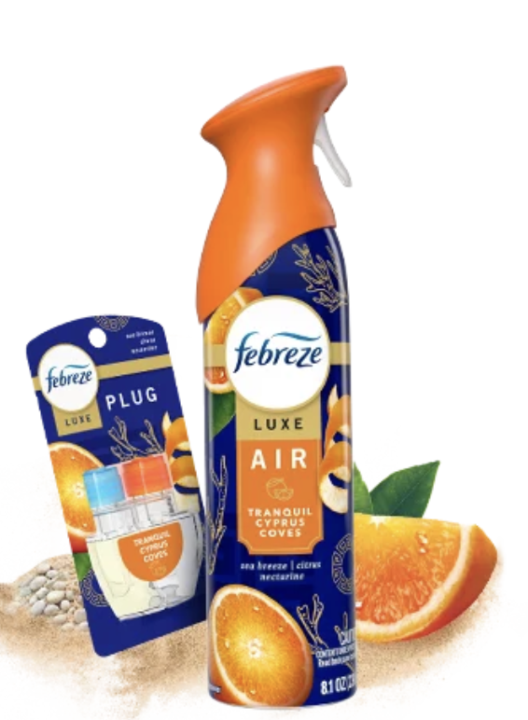
🧴 This Week’s Spotlight: What’s Really Inside Febreze
Febreze is one of the most recognizable “freshening” sprays in the country. It’s in millions of homes, cars, classrooms, and offices. But while the label promises clean air and odor removal, the ingredient list tells a very different story. 🚨 What’s Actually in That Mist? Despite the marketing language around “freshness,” Febreze contains a blend of synthetic chemicals that can affect indoor air quality and human health. - Phthalates — Often hidden under the word fragrance, these chemicals are linked to hormone disruption, reproductive concerns, asthma, and developmental effects in children (EWG, n.d.; PubMed, n.d.). - Benzisothiazolinone (BIT) — A preservative associated with skin and respiratory sensitization. The EU has restricted its use due to safety concerns (ECHA, n.d.). - Propylene Glycol — Considered generally safe but known to irritate eyes and airways, especially for those with asthma or sensitivities (EPA, n.d.). - Synthetic Fragrance Blends — A single scent can contain dozens of undisclosed chemicals, many derived from petroleum, which may trigger headaches, dizziness, or breathing issues (EWG, n.d.). 🫁 How These Chemicals Affect Your Home Environment Regular use of Febreze has been associated with: - Respiratory irritation from inhaling fine mist particles - Endocrine disruption linked to phthalate exposure - Allergic reactions such as headaches, rashes, and sensitivities - Increased indoor air pollution, since the product masks odors rather than removing them (EPA, n.d.) 🎭 The Odor‑Elimination Myth Febreze doesn’t actually “erase” odors. It uses cyclodextrin to temporarily trap some odor molecules while layering synthetic fragrance on top. The smell isn’t gone—you’re just breathing a chemical cover‑up (EWG, n.d.). 🌿 Cleaner, Safer Ways to Freshen Your Space - Open windows for natural airflow - Use baking soda to absorb odors - Diffuse pure essential oils - Clean with white vinegar solutions Fresh air doesn’t require a chemical fog. Simple, low‑toxic methods often work better—and support your long‑term health.
2 likes • 7h
When you’re ready let me know, I might have a coupon.
3d •
Level Up 🔼 🔼 🔼
Another group I'm in runs a Level Up Post Weekly to get all of us as high as possible to be able to use all the features. Since the group is so new, even I am only on level 2. Let's all LEVEL UP!!! Post, like, comment and like again!
3 likes • 1d
[attachment]
1 like • 13h
Get respect with a status emoji next to your name. ⭐ Star — top 1% of discovery 🔥 Fire — 30d activity streak 🐐 Goat — highest earner 🥷 Ninja — $300k MRR 💎 Diamond — $100k MRR 👑 Crown — $30k MRR 🚀 Rocket — $10k MRR
17h •
More Collaborations Coming!
Yesterday, we had the pleasure of welcoming @Claire Grace, our Resident Water Specialist who will be answering water questions and hosting a couple water discussions each month. Today, let's welcome, Christine Knight IFS. She will be providing insight on overcoming emotional triggers through simple daily practice & AI tools to help get to the root cause in subconscious & heal. She will help us work on listening skills, how to spot our blindspots in life, financial abundance, etc... If you are interested in more direct contact, join her group https://www.skool.com/rapidly-evolving-life/about?ref=07dab7fea6d54b0285df3f4854f59a7d What other collaborations would you be interested in seeing here? It has to have something to do with living better, as holistically as realistically possible. Holistic Skin Care? Light Therapy? Breathwork? (Working on this!!) Physical Fitness?

2 likes • 17h
@Jen Dietrich Noted! I'm newly learning about this. A device is on my big personal purchase list for this year!
1 like • 16h
@Christine Knight IFS This is going to be great!
17h •
Survey Time
What kind of topics would you like to see Christine Knight start off with? I hope your as excited as I am! If there's a different topic you'd like to see, post it in the comments!
Poll
6 members have voted
1
0
2d •
What's in Your Drinking Water?
Currently, we have 1 Drinking water discussion per month. The March discussion is scheduled for 3/13. All discussions will start between 10am -12pm. ***I'm looking for 5 people to give me their city and state, so I can look up what is in your water and prepare the discussion for 3/13 with actual information.*** P.S. I met a water specialist a few weeks ago. I asked her to join and take over this segment. Cross your fingers she says, YES! The way she explains what's in our water will make you never look at it the same again!
2 likes • 1d
I’ll leave that for @Claire Grace Im not sure of the answer. I know I wouldn’t be able to, but maybe she can!! She’s our water expert!
1 like • 18h
She has to do some research first!
1-10 of 13

@laura-williams-6518
Health, Nutrition, Supplement & Peptide Coach.
Helping people feel their best.
Active 3h ago
Joined Feb 17, 2026
New Jersey
Powered by