Activity
Mon
Wed
Fri
Sun
Oct
Nov
Dec
Jan
Feb
Mar
Apr
May
Jun
Jul
Aug
Sep
What is this?
Less
More
Liberty Politics Discussion
5k
5.0
Free
4 contributions to Liberty Politics Discussion
Dec '25 •
Islam is not a religion
It is a demonic warrior cult bent on the death and destruction of the Judeo-Christian West. It is a plague and needs to be eradicated.
0 likes • Dec '25
@Maria Soukkar John 8:57-58. Then the Jews said to Him, “You are not yet fifty years old, and have You seen Abraham?” Jesus said to them, “Most assuredly, I say to you, before Abraham was, I AM.”
0 likes • Dec '25
@Khalid Aziz ??? What?

Dec '25 •
Gun Shows: Safest Place? Why Mass Shootings Aren't Here!
“The safest place I’ve ever felt? A gun show.” In this episode of Libertarian Leadership Academy, veteran candidate Joe Hannoush sits down with C. Michael Pickens to challenge common narratives about guns, gun-free zones, and public safety. From why mass shootings don’t happen at gun shows to why criminals don’t follow “no guns” signs, Joe explains why new laws don’t magically stop crime—and why this message matters. 🎯 Take the next step:👉 Join the Libertarian Leadership Academy and learn how to run for office:http://www.libertarianleadership.org/ 👉 Join a supportive community of different libertarian groups and activists:📘 Facebook: https://www.facebook.com/Libertarianleadershipacademy📺 YouTube: https://www.youtube.com/@LibertarianLeadershipAcademy Leadership starts with understanding—and action.

0 likes • Dec '25
https://youtube.com/shorts/cmbH76Ovklk?si=96LBXyOZjrClpdgE

Dec '25 •
The Plot to Slaughter Christians at a Christmas Market
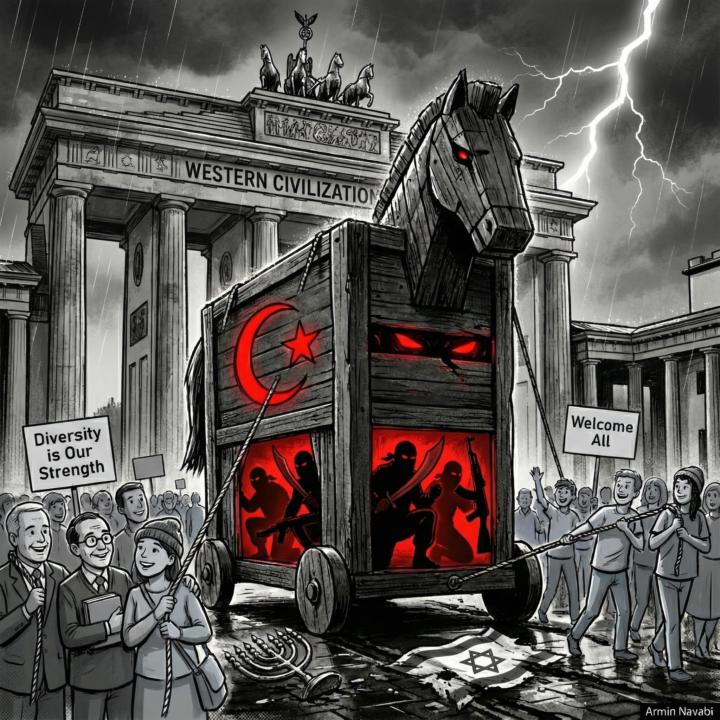
There is an old saying in the Middle East that isn't a metaphor. It is a schedule. It whispers a promise that the West refuses to hear: "First the Saturday people, then the Sunday people." For years, you were told that the rage burning across the Middle East was about borders, or maps, or the specific grievances of "Palestinians." You were told it was local. You were lied to. I saw a beautiful civilization, my own home of Iran, suffocated by this exact ideology. I know what the early stages look like because I have lived through the end result. This past weekend in Bavaria, the schedule moved forward. Five men sat in a room plotting to drive a vehicle through a crowded Christmas market. These were not desperate refugees fleeing persecution. They were three Moroccans, a Syrian, and an Egyptian imam who used the pulpit to demand blood. Their target was not an embassy or a military base. It was families drinking hot chocolate. It was children looking at lights. They did not plan this slaughter because of a settlement in the West Bank. They planned it because you are Christian, because you are secular, and because you exist. The Jewish people are simply the first line of defense in a war against civilization itself. When that line breaks, the violence does not stop. It expands. If you think you can buy safety by looking away when they come for the Jews, you are tragically mistaken. When they are done with Saturday, they are coming for Sunday. To invite this ideology into your home and call it diversity is not tolerance. It is not multiculturalism. It is a slow, agonizing suicide.
4 likes • Dec '25
@Michael Martin which is why we preach "relationship"...with Jesus Christ. NOT religion.
6 likes • Dec '25
Compassion without discernment is naivety.

Dec '25 •
If Islam Is Violent, Why Are So Many Muslims Peaceful?
This question is a lot like asking, “𝘐𝘧 𝘊𝘩𝘳𝘪𝘴𝘵𝘪𝘢𝘯𝘪𝘵𝘺 𝘱𝘳𝘦𝘢𝘤𝘩𝘦𝘴 𝘩𝘶𝘮𝘪𝘭𝘪𝘵𝘺, 𝘧𝘰𝘳𝘨𝘪𝘷𝘦𝘯𝘦𝘴𝘴, 𝘢𝘯𝘥 𝘵𝘶𝘳𝘯𝘪𝘯𝘨 𝘵𝘩𝘦 𝘰𝘵𝘩𝘦𝘳 𝘤𝘩𝘦𝘦𝘬, 𝘸𝘩𝘺 𝘢𝘳𝘦 𝘴𝘰 𝘮𝘢𝘯𝘺 𝘊𝘩𝘳𝘪𝘴𝘵𝘪𝘢𝘯𝘴 𝘢𝘳𝘳𝘰𝘨𝘢𝘯𝘵, 𝘪𝘯𝘵𝘰𝘭𝘦𝘳𝘢𝘯𝘵, 𝘢𝘯𝘥 𝘷𝘪𝘯𝘥𝘪𝘤𝘵𝘪𝘷𝘦?” The answer in both cases is painfully obvious: in any religion or ideology, plenty of people profess the creed without actually practicing it. Hypocrites are everywhere. Let’s be honest—hypocrisy is the most ecumenical tradition on Earth. It’s often easier for a Christian to lash out, moralize, or sneer than to forgive. Likewise, it’s far easier for a Muslim to live a normal life—go to work, raise a family, mind their own business—than to strap on a suicide vest or answer a call to jihad. Most people, regardless of faith, prefer peace, comfort, and stability to martyrdom. Shocking, I know. There’s also the issue of belief versus understanding. Many adherents of any religion don’t deeply know their own theology. Islam adds an extra wrinkle here: the emphasis on reciting the Quran in Arabic—often without comprehension—means that devotion can be more about ritual than understanding. The words and sounds are believed to matter spiritually, even if their meaning doesn’t fully register with the reciter. As a result, many Muslims simply aren’t engaging deeply with the more troubling or violent passages at all. Then there’s reality. Especially in the West, Muslims are surrounded by—and often attracted to—Western norms: individual liberty, relative tolerance, economic opportunity, and personal freedom. That’s frequently why they’re here. People who flee authoritarian or theocratic societies generally aren’t eager to recreate the same nightmare in their new home. Peaceful behavior, in that context, isn’t mysterious—it’s rational self-interest. But here’s where libertarians stop pretending this is just an abstract theology seminar. Ideas matter, and numbers matter. As Islam gains greater social and institutional presence—more adherents, more mosques, more “cultural centers,” more political deference—the odds increase that some fraction of believers will start taking the faith’s coercive and violent doctrines seriously. Not metaphorically. Not “out of context.” Literally.
0 likes • Dec '25
Simply put, the key difference between Christianity and Islam is that Christians are willing to die for their faith (and have in the millions) while Muslims are committed to killing for their faith.
0 likes • Dec '25
@Far Seer Are you talking about the possibility of being drafted into service?
1-4 of 4