Activity
Mon
Wed
Fri
Sun
Sep
Oct
Nov
Dec
Jan
Feb
Mar
Apr
May
Jun
Jul
Aug
What is this?
Less
More
Memberships
Leaders In Progress
15 members • $5/m
55 contributions to Leaders In Progress

May 22 •
I built a team of 6 AI agents. It taught me something about real teams.
I set up an orchestration in Claude Code with 6 agents - planner, coder, reviewer, tester, documenter, and committer. Each one does exactly what the name says. To make it work I had to define each role clearly - what they own, where one stops and the next begins. When the role definitions were vague, the whole thing broke down. When they were clear, I could ship a new feature in 3 prompts. What I noticed -> that's exactly what happens with real teams. Unclear roles create friction. Clear roles create flow. I've been managing teams for years and I think I just learned something from AI about how to do it better. Has anyone else noticed something like this - where working with AI taught you something about working with people?

1 like • May 25
@Gerard Pietrykiewicz I'd love so!
May 8 •
Meeting the CTO
Yesterday I and an opportunity to meet AMD CTO in person fir the first time and had a small q&a session with my team. What was extraordinary was his clarity on our vision and conviction in our ability to execute on this vision. We asked him some really hard questions, and without a single blink he pulled up his phone and showed us photos from customer deployment sights, standing next to equipment he was envisioning years back. (I am purposely showing this in broad terms, NDA and all). I don't think he has vastly better skills than my direct manager, but his clarity and conviction was infectious. I was left with a feeling that this is what made him a CTO. Which leaves me with a question- how can we practice this on daily basis with our teams?
1 like • May 15
This is a great observation, and I think it’s a key differentiator between an executive and a team member. What I’ve observed (a generalization is coming next) is that many team members don’t care much about clarity. If they are, for example, technical, they often just do what they are told without thinking about Why, How it connects to the bigger picture (or even why the bigger picture matters if their role feels small), or how other people’s roles differ from theirs (for example, the difference between a Scrum Master and a Product Owner). I’ve noticed that during my clarity workshops, some participants even experience physical discomfort and pain when I force them to connect their work to the bigger picture and answer Why we are doing this but not that. Executives are completely different beasts. They are sharp, and they turn into sharks the moment something is unclear in what you are proposing or teaching. They keep pushing until they achieve crystal clarity.
May 2 •
Join our introspectives - they help
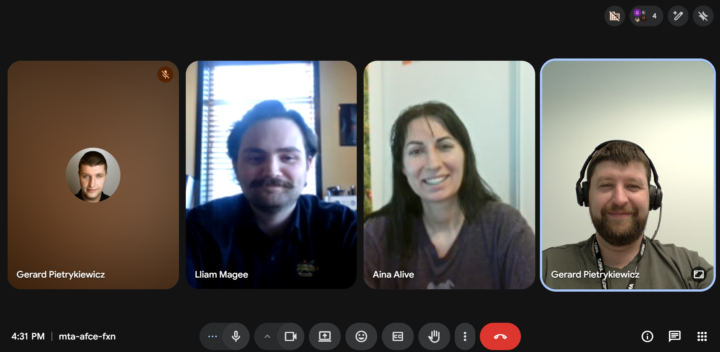
Thank you @Aina Alive and @Lliam Magee for joining this month introspective. I find them super useful, especially since each time we talk about problems, we learn form each other how to solve them. I am grateful for your participation because it gives me a forum where I can share and recieve. Next one will be at the end of May.
1 like • May 15
always a pleasure!
May 15 •
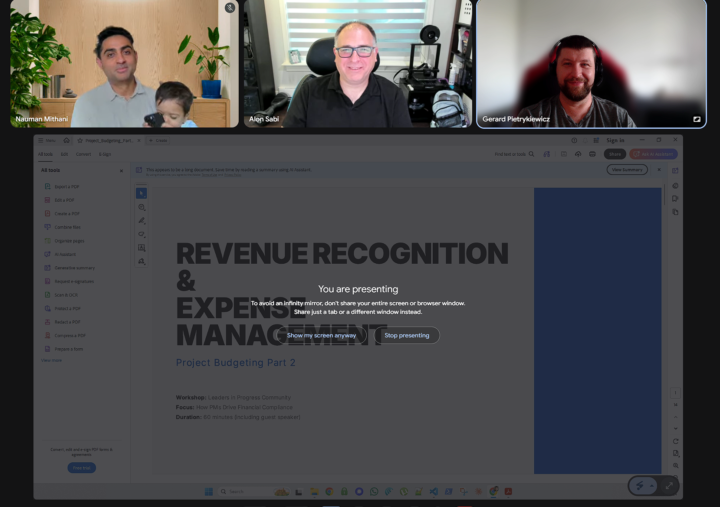
I can SRED now
We had a good workshop today. I will post the materials for it in the classroom soon for all of you to have access to. The next workshop will be about leadership development, but I don't have a specific topic just yet. Suggestions are always appreciated.
1 like • May 15
Thank you, Gerard! Looking forward to the recording!
Apr 24 •
The message I didn't send
Had a frustrating day today. Wrote a few messages I really wanted to send but I didn't send them. Not because I was being smart about it. It's just because I know by now that writing while annoyed is usually a bad idea. What comes out is not really what I mean, it's just what I feel at that moment. I waited a bit, re-read them. After some editing I shiped them and probably with better result. Self-awareness is one of those leadership traits that sounds soft until you see what happens without it. Do you have a rule you follow when you're about to send something you might regret?
1 like • May 2
I found myself on two edges. At first, I would give myself time to cool down and then genuinely believe I was overreacting. So I wouldn’t address it. In reality, nothing was resolved. The emotions were suppressed, and the issue itself stayed open, even if it was small. Then I tried the opposite. I would speak or write in the moment, with the mindset that I will apologize for the tone later, but the issue needs to be addressed now. That helped with speed, and at least people knew there was a problem. Over time, it affected perception. The message was there, yet the delivery started to define how I was seen, and biases around being an emotional female didn’t help. So I combined the approaches. When I feel emotional, I write everything out, but I don’t send it. The next day I don’t reread it either, because I don’t want to re-enter that state. Instead, I turn it into a problem. I feed it into AI and ask it to structure it as a business case. Then I adjust it from that level — what is the issue, what needs to change, what outcome I’m aiming for. This way the emotions are processed, the issue is still addressed, and the message lands in a format people can actually work with.
1-10 of 55

Active 23d ago
Joined May 13, 2025
ENFP
Toronto
Powered by