Activity
Mon
Wed
Fri
Sun
Aug
Sep
Oct
Nov
Dec
Jan
Feb
Mar
Apr
May
Jun
Jul
What is this?
Less
More
Memberships
Make $1k-$10k in 30 days
19.5k members • Free
Advox Academy
108 members • Free
8 contributions to Make $1k-$10k in 30 days

Mar 4 •
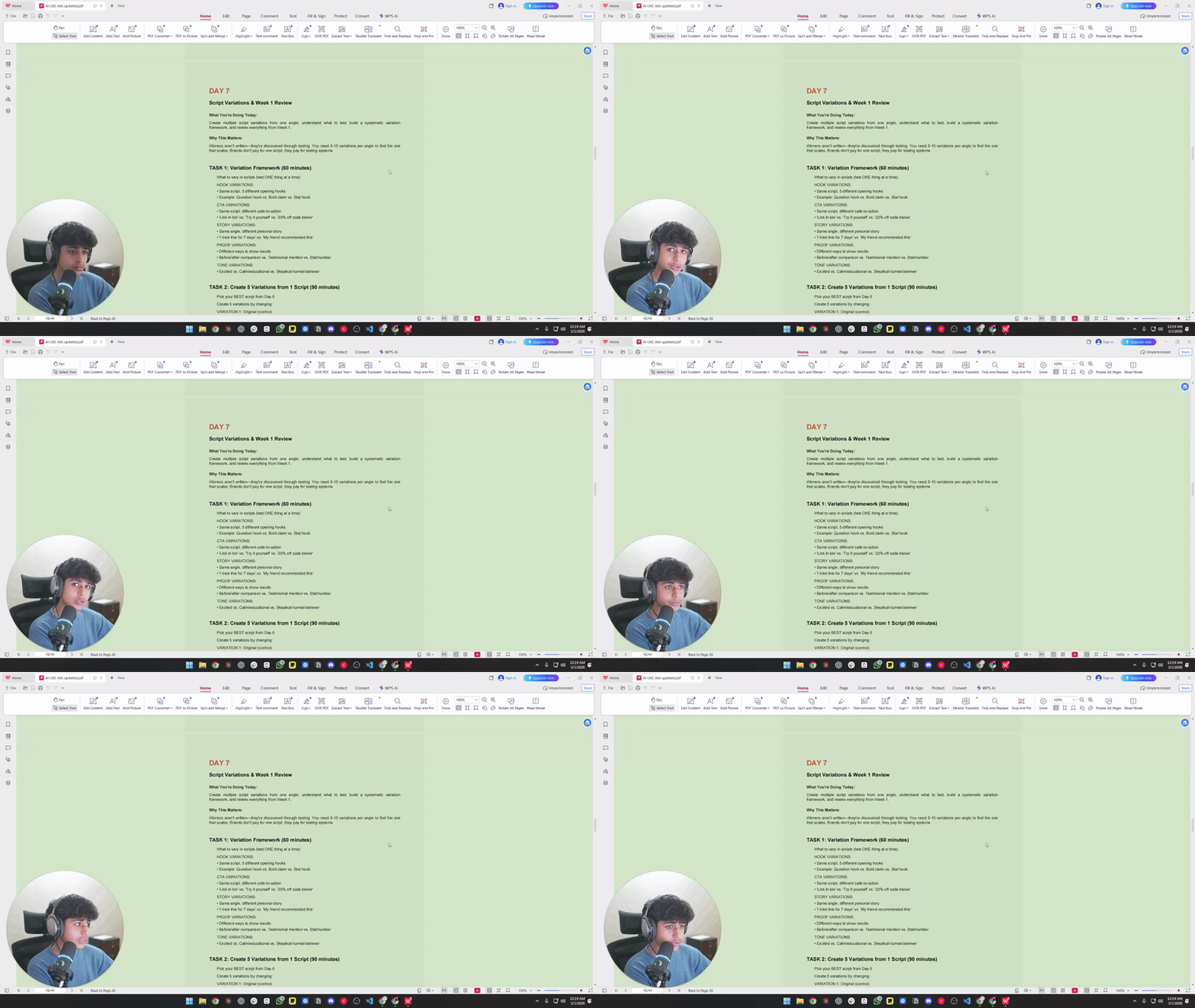
AI UGC ADS Day 7
AI UGC ADS – Day 7 : Script Variations & Testing Framework 🎯 Goal of the day: Today was about learning how to create multiple variations of the same script and understanding how creative testing works in advertising. Instead of producing only one ad, brands create several variations of the same ad to test which one performs best. I learned how to build a systematic variation framework, how to test different elements of a script, and how to think like a media buyer instead of just a script writer. 🔎 What I Did Today I learned that winning ads are not written once — they are discovered through testing. Brands rarely run a single ad. Instead, they run 5–10 variations of the same ad, changing small elements to see which version performs best. These variations help brands understand: • Which hook stops the scroll • Which CTA drives more clicks • Which proof builds the most trust • Which tone connects with the audience The most important rule is: Change only ONE element at a time. If multiple elements change at once, it becomes impossible to understand which change improved the performance. 1️⃣ Hook Variations The hook is the first 3–5 seconds of the video. This is the moment where the viewer decides whether to continue watching or scroll away. The script remains the same, but the opening line changes. Examples of hook variations: • Question Hook • Bold Claim Hook • Statistic Hook • Curiosity Hook • Direct Hook Example: “If your acne keeps coming back no matter what you try… listen.” Another variation: “Why does acne always come back right when your skin starts clearing?” Testing hooks helps determine which opening grabs the most attention. 2️⃣ CTA Variations CTA means Call To Action. This is the ending part of the video where you guide the viewer on what to do next. Different CTAs can influence how many viewers actually take action. Examples: • “Link in bio.” • “Try it yourself.” • “Check the link and see if it works for you.” • “Use the discount code below.” Even small CTA changes can affect click-through rates and conversions.
0 likes • Mar 10
@Mubashira Baig 🙌
0 likes • Mar 10
@Agha Saad 🙌
Mar 3 •
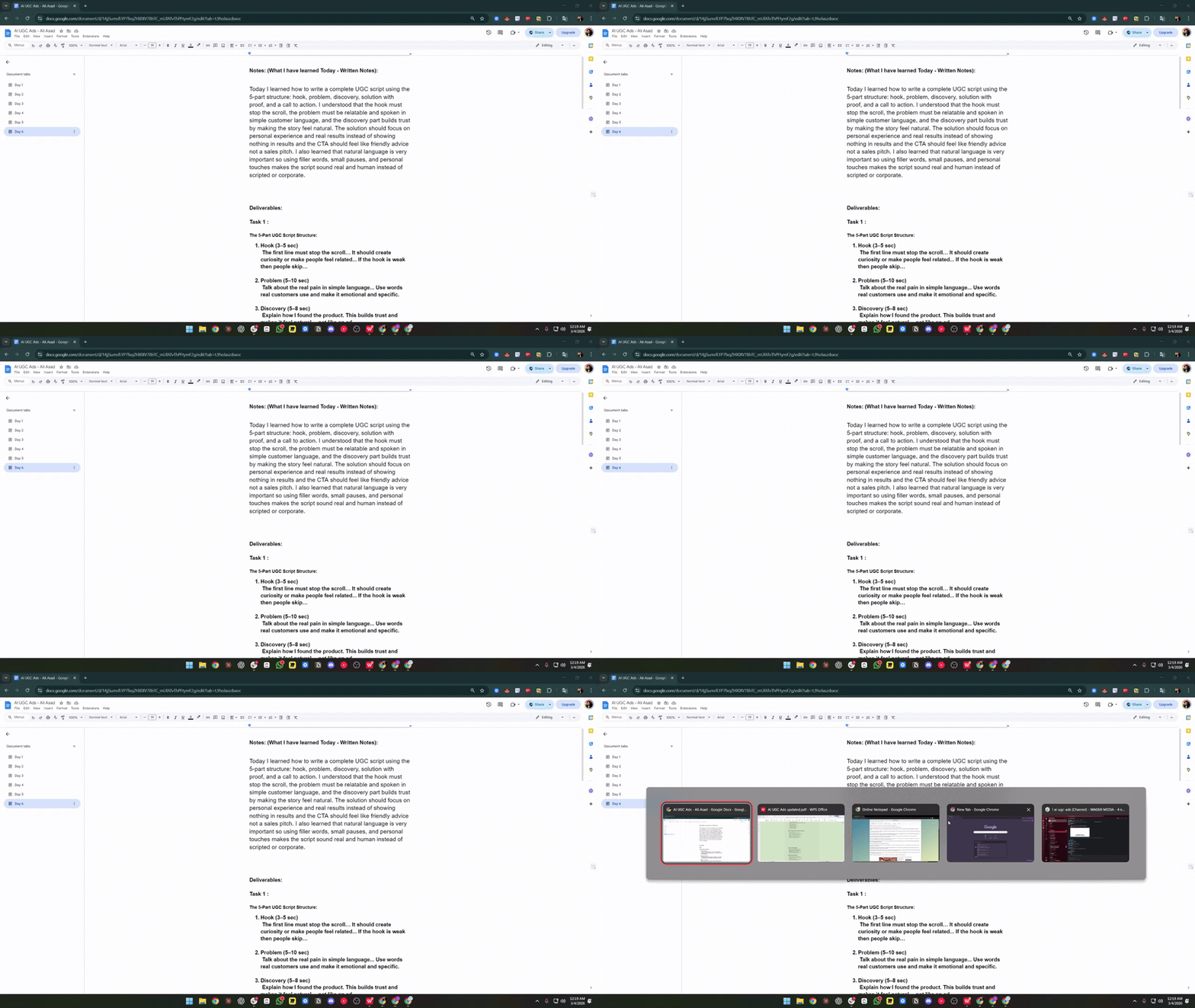
AI UGC ADS Day 6
AI UGC ADS – Day 6 : UGC Script Structure & Natural Writing 🎯 Goal of the day: Today was about learning how to write complete UGC scripts that convert and don’t sound like ads. I learned the exact 5-part structure behind high-performing UGC videos and how to make scripts sound natural, conversational, and human. 🔎 What I Did Today I studied the 5-part UGC script formula, which is: • Hook (3–5 seconds)• Problem (5–10 seconds)• Discovery / Transition (5–8 seconds)• Solution + Proof (20–30 seconds)• Call To Action (5–8 seconds) I understood that this structure is not just for AI UGC ads — it works for almost any type of video because it follows human psychology. 1️⃣ Hook The first 3–5 seconds are everything. If the hook is weak, people scroll. The hook must create curiosity, tension, or relatability. It should feel direct and engaging. Example: “If your acne keeps coming back no matter what you try… listen.” The hook alone decides whether the viewer continues watching. 2️⃣ Problem After the hook, we speak in customer language, not brand language. No corporate tone. No technical words. Talk like a real person complaining to a friend. Example: “I’ve been dealing with breakouts for years. Honestly, nothing worked long term.” This makes the viewer feel understood. 3️⃣ Discovery This is where trust is built. Instead of saying “buy this product,” you explain how you found it. Maybe you saw it online. Maybe a friend recommended it. This makes the script feel organic and not scripted. 4️⃣ Solution + Proof This is the biggest part of the script. You don’t list ingredients. You don’t talk about features. You share: • What changed • How it felt • How long it took • What results you saw People care about transformation, not technical details. 5️⃣ Call To Action (CTA) The CTA must be soft. Not: “Buy now.” But: “If you’re stuck in the same cycle, maybe try this once and see.” It should feel like advice from a friend, not pressure from a brand. 🗣 Natural Language Techniques (Very Important)
4
0
Feb 24 •
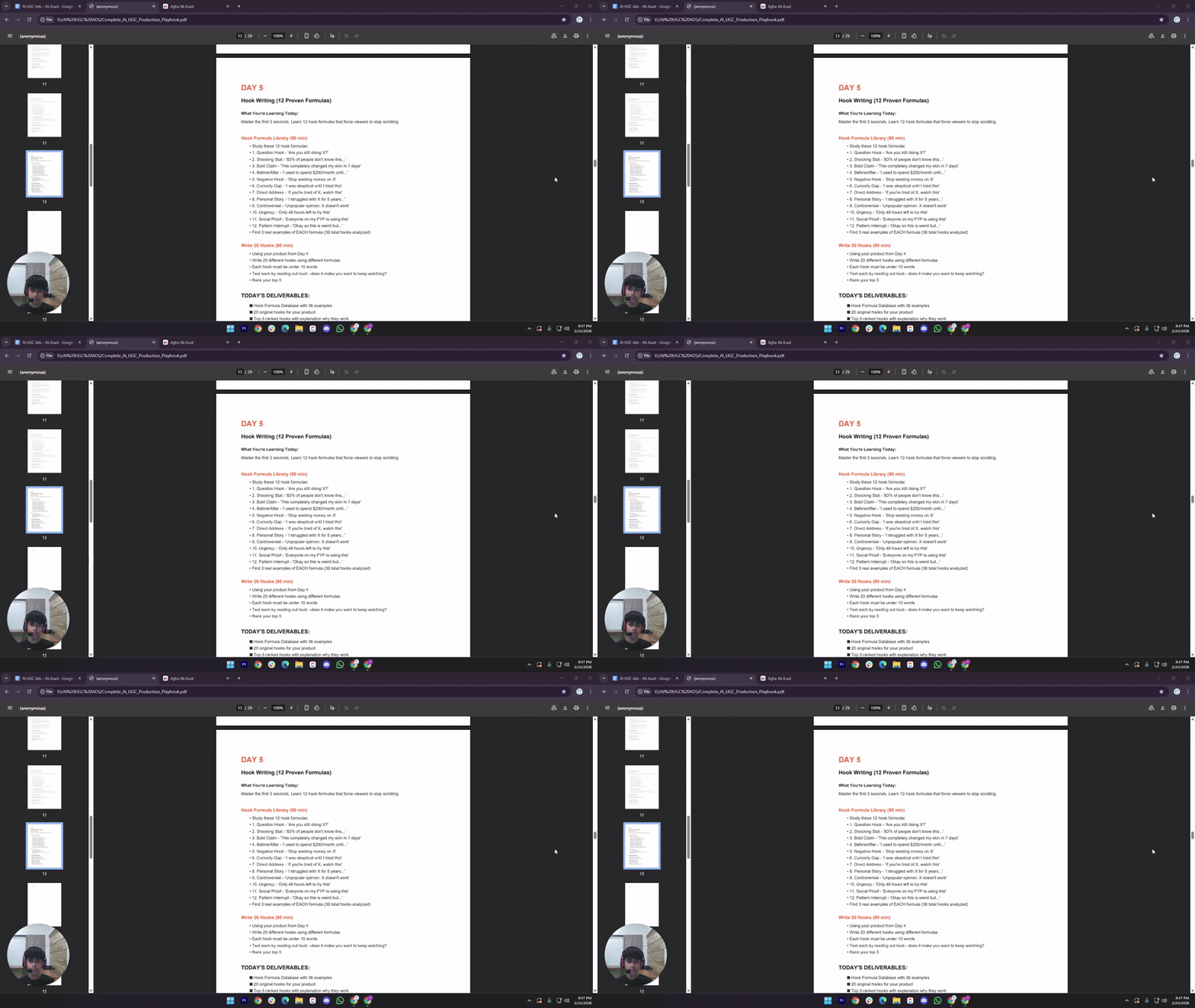
AI UGC ADS Day 5
AI UGC ADS – Day 5 : Hook Writing Mastery\ 🎯 Goal of the day:Today was all about mastering the first 3 seconds of an ad — the Hook. I learned that if the hook fails, the whole ad fails. The hook decides whether someone keeps watching or scrolls away. 🔎 What I did I studied 12 powerful hook formulas that are designed to stop scrolling and trigger emotions like curiosity, pain, urgency, or hope. The 12 hook formulas were: • Question • Shocking Stat • Bold Claim • Before–After • Negative Hook • Curiosity Gap • Direct Address • Personal Story • Controversial • Urgency • Social Proof • Pattern Interrupt For each formula, I understood how it works psychologically and why it forces attention. For example: Question Hook “Why won’t my acne disappear?”→ Makes the viewer answer in their head and stay to find out. Bold Claim “This cleared my acne in 7 days.”→ Promises a specific result and creates hope. Negative Hook “Stop popping your pimples.”→ Feels direct and calls out a common mistake. Controversial “Most acne products don’t work.”→ Creates tension and curiosity. After studying the formulas, I used the same product from Day 4: Acne Treatment Serum. I wrote 20 hooks, each under 10 words, using different formulas .Then I tested them by reading them out loud and asking: “Would this make me stop scrolling?” 🏆 Top 5 Ranked Hooks & Why They Work 1. Stop popping your pimples... Direct, personal, and calls out a common mistake. 2. Unpopular opinion: Most acne products suck. Bold and controversial — creates curiosity. 3. I used to hide my face. Emotional and relatable — builds connection fast. 4. Most people treat acne the wrong way. Creates doubt and makes viewers question themselves. 5. This cleared my acne in 7 days. Specific result + timeframe = strong promise. 💡 What I learned • Hooks are not just sentences — they are psychological triggers. • The first 3 seconds carry the entire ad. • Good hooks are short, bold, emotional, and specific. • Bad hooks sound generic and safe.
0 likes • Feb 24
@Agha Saad JazakAllah Brother ❤️
0 likes • Feb 24
@Agha Saad hahahaha
Feb 23 •
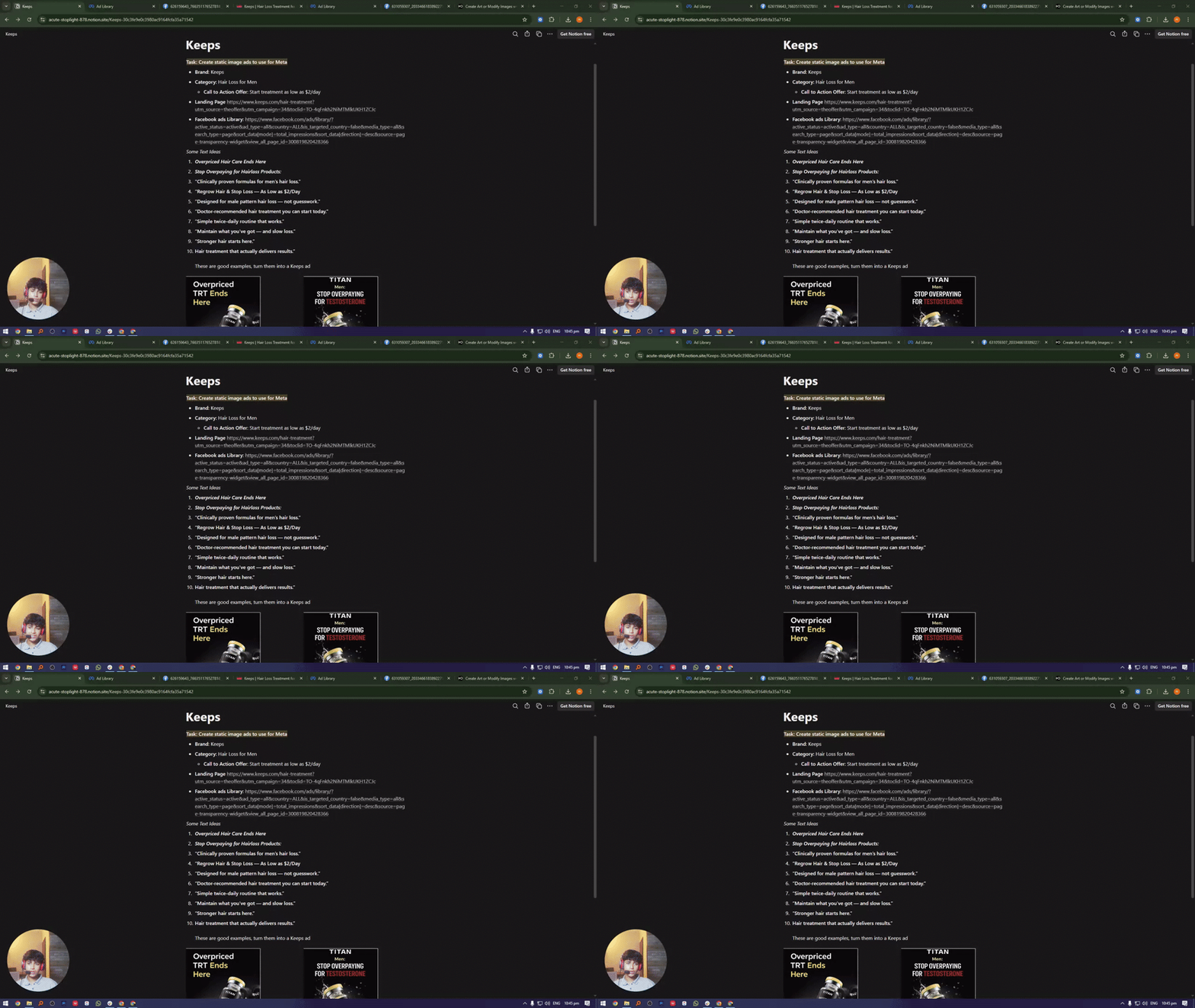
AI Image Generation (Client Work)
AI Image Generation (Client Work) AI Creative Production for Hair Loss Brand 🎯 Goal Apply AI tools to complete real client work by recreating reference ads for a hair loss brand using AI-generated creatives. 🔎 What I did Worked on a client project for a hair loss brand (Keeps). The client provided: • Landing page • Website screenshots • Facebook Ads Library references (Hims, Happy Head, etc.) • Text ideas and headlines My task was to recreate similar ad styles but customized for the Keeps brand. Process: • Took reference ads from competitors • Uploaded them into OpenArt • Added brand assets (logo, bottle reference, website screenshots) • Used ChatGPT to refine and structure prompts • Generated images using DALL·E • Adjusted prompts when AI made errors (e.g., wrong bottle material/design) • Created 5 ads with 2 variations each (10 total creatives) All ads were generated in about 1–1.5 hours. 💡 Key Learning AI is powerful, but it requires direction.If you overload prompts, results decline. Breaking the process step-by-step improves output quality. Small details (like correct packaging material) significantly impact realism and brand accuracy. 🚀 Takeaway AI can significantly speed up creative production for client work. With the right references, structured prompting, and manual oversight, it’s possible to produce multiple high-quality ad variations efficiently. Back to the AI UGC Ads journey tomorrow.
Feb 20 •
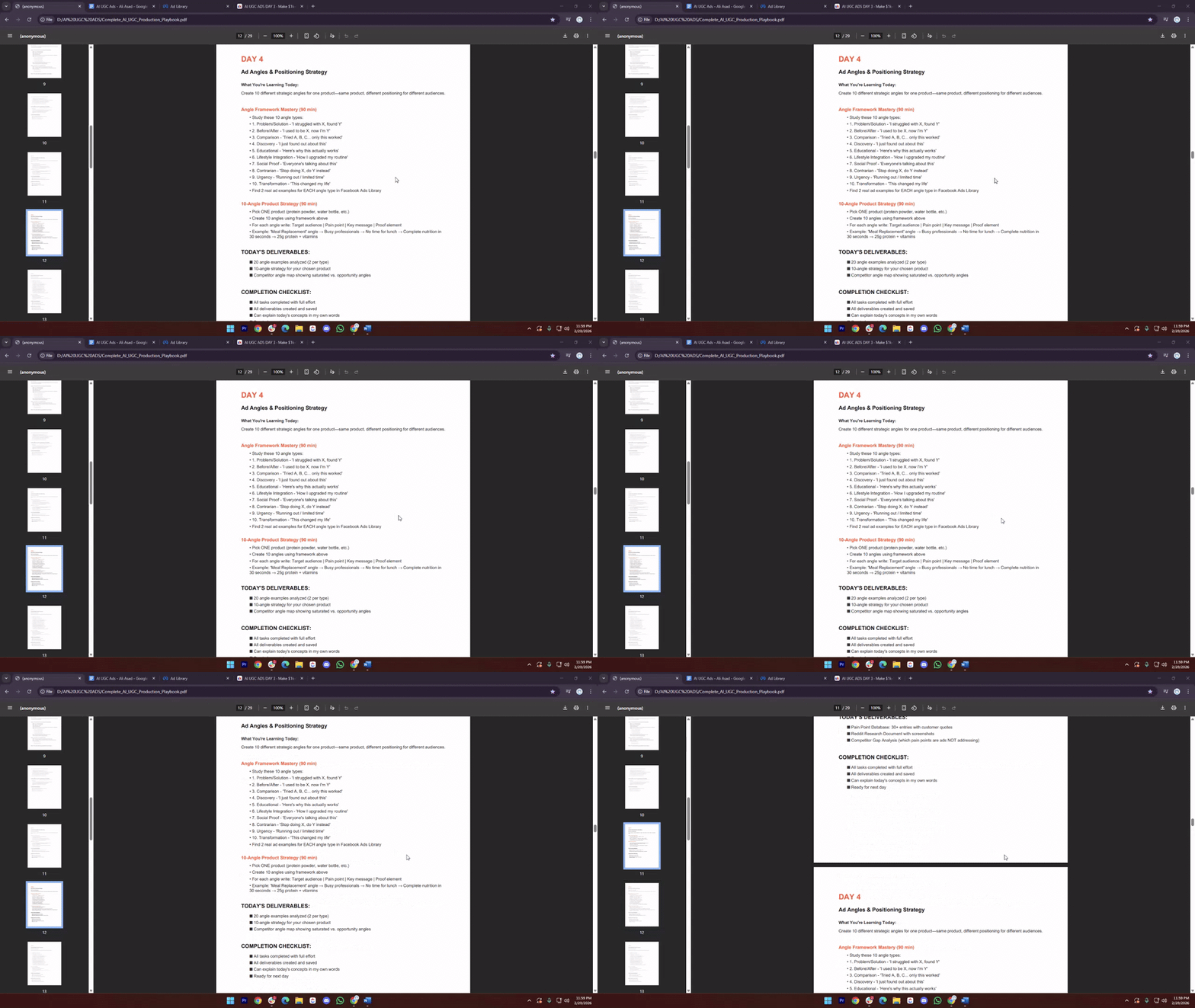
AI UGC ADS Day 4
AI UGC ADS – Day 4 : Angles & Positioning Strategy 🎯 Goal of the day: Today was about learning how to sell one product in multiple ways using different angles. The product stays the same, but the message changes depending on the audience and their pain point. 🔎 What I did I studied 10 core ad angles and understood how each one positions the same product differently. The 10 angles were: Problem–Solution Before–After Comparison Discovery Educational Lifestyle Integration Social Proof Contrarian Urgency Transformation Then I chose one product only: an Acne Treatment Serum. Instead of changing the product, I created 10 different positioning strategies for different audiences. For each angle, I clearly defined:• Target audience• Their main pain point• Key message• Proof element For example: Problem–Solution Target: Teenagers with constant breakouts and Pain point: Low confidence and embarrassment Message: “I struggled with acne for years. This finally helped. Proof: Salicylic acid + visible results in 14 days Before–After Target: Students Pain point: Getting bullied or feeling insecure Message: “This was my skin 2 weeks ago vs now.”Proof: Real before/after pictures Educational Target: Logical buyers Pain point: Don’t trust random products Message: “Here’s why this serum works. Proof: Science-backed ingredients Lifestyle Integration Target: Busy young adults Pain point: No time for long routines Message: “Takes only 30 seconds every night. Proof: Simple application process I also analyzed competitors and noticed most brands overuse before–after and social proof angles. Opportunity angles with less competition were Educational, Contrarian, Lifestyle-based positioning 💡 What I learned is that one product can be marketed in many different ways. Positioning is not about changing the product. It’s about changing the message to match the audience. ✅ Tasks completed Studied and analyzed 10 ad angle frameworks. Created 10 angle strategies for one acne serum product.
1-8 of 8