Activity
Mon
Wed
Fri
Sun
Jul
Aug
Sep
Oct
Nov
Dec
Jan
Feb
Mar
Apr
May
Jun
What is this?
Less
More
Memberships
Crust & Crumb Academy
1k members • Free
The Aligned Founders Club
23 members • Free
11 contributions to Crust & Crumb Academy

May 12 •
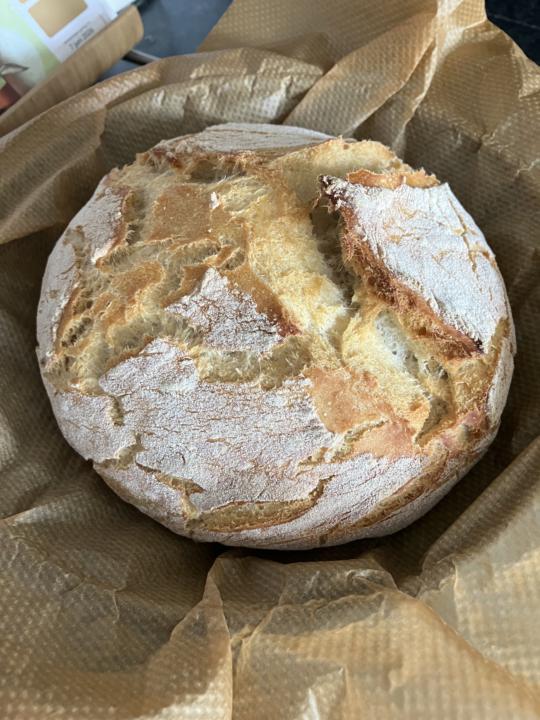
Better results…
Hi there, a while ago I had some troubles with my dough, it’s stickyness, it’s consistency… Lately it goes a lot better, with some better results in my opinion… so, thanks for all the motivating words along the way!
1 like • May 14
@Henry Hunter this handeling looks so easy, but thanks for showing this once more!
1 like • May 14
@Henry Hunter , indeed, I kept trrying… My loaf looks better on the outside now, in the process my dough is now also better to handle. My biggest worry still is the inside… to my feeling it is not airy enough and the whole is suit dence and firm. After one day it becomes more and more like a little brick. Why is this? Does this relate with “handling the dough”? Or with the amount of salt? (Maybe I don’t use enough) How is this with you all?

⭐
Apr 21 •
🎬 New video premiering right now: Hydration Confidence
Just dropped. Come watch with me. I'll be in the chat answering questions in real time. This one takes the fear out of the number on the recipe card. If you've ever stared at an 80% hydration dough and wondered what you got yourself into, this is for you. See you in the chat. ~ Henry ⭐🔥
4 likes • Apr 21
Thanks for sharing this educational video! It helps understanding the dough and helps with my confidence-build 🙏
Apr 15 •
Poor baking skills
@Henry Hunter, for a little while now, I’m a member of this community. Ever since the start my goal was to learn and make a good loaf with my sourdough or with yeast. I’ve tried many times now, but only once my loaf had a good looking shape with a beautiful spring in the oven. My loaf is tasty but it always stays rather flat. There is a constant returning mistake, my dough is often very, very sticky, and stays sticky, no matter what. It becomes impossible to form a boule and getting a seal is nowhere near. My two last attempts ended up with the garbage because after kneading, or better trying to, the consistency changed not at all. I have been looking for answers, and I think now that the cause of my problems lies in the first rest after mixing the flower with the wet ingrediënts. Mayby my rest is too long and my dough overproofed…? I read that the dough is often “forgiving” but unfortunaly I don’t experience it like this… I don’t want to give up but it would be nice to know what it is that I do wrong here… Thanks for sharing your experience and for your patience!
2 likes • Apr 17
@Henry Hunter these are the pictures of my bake. Since I hadn’t seen the classroom about flour yet as I began my bake, I mixed 250gr flour with 12% proteïne and 150gr flour with 7% proteïne
3 likes • Apr 17
This is how it looks on the inside, this time I have a good feeling… thanks to all the tips and tricks and aspecially the lessons about wheat! It’s great to experience this kind of support!! I’m very greatfull 🥰
⭐
Mar 30 •
A Baker Told Me to Wash My Hands. Everything Changed After That.
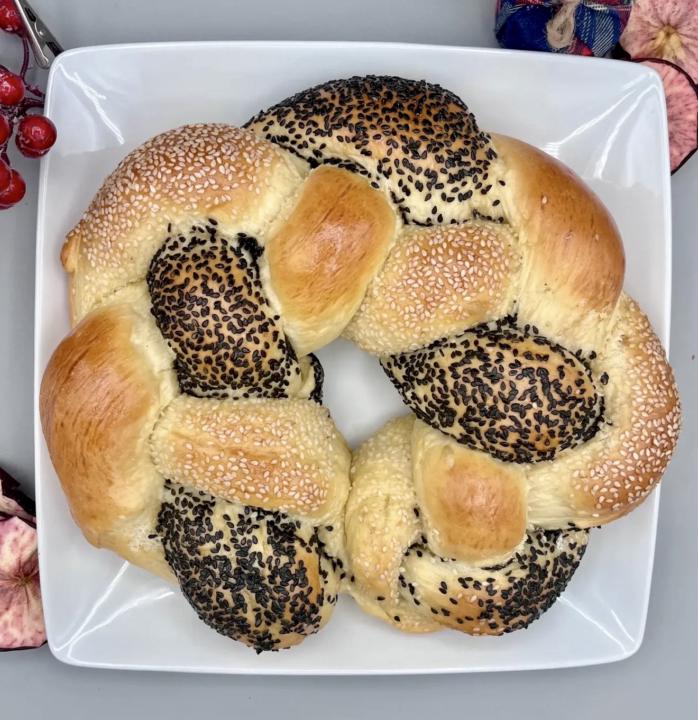
Let me introduce myself, because a lot of you are new here and you deserve to know who’s on the other side of this community. I’m Henry Hunter. Army veteran, former advertising executive, cookbook author, and the guy who got completely obsessed with bread and never looked back. It started when I was 22, still in the military, stationed in Germany. I rented a small place from a baker named Herr Sherman. He owned the bakery downstairs. To keep the rent low, he put me to work in the shop. Looking back, he probably just saw a strong young soldier who could haul 50-pound bags of flour. So that’s what I did. I carried sacks, cleaned up, moved trays. Mostly I just watched. At the time, I didn’t realize I was being educated. Every Thursday he made challah, and people would line up outside for it. Only once a week. I asked him why it was so special. He stopped what he was doing, looked at me, and said, “Come here, Henry. Wash your hands.” That night he showed me what that bread meant. The braids represent unity and community. The round shape symbolizes the unending cycle of life. Before the bread went into the oven, he’d take a small piece, wrap it in foil, and place it in the back of the oven as an offering. Then he’d say a quiet prayer. I still do that today. Every single time. Before that night, like most Americans, I thought bread came in a plastic bag and lasted two weeks on the counter. Herr Sherman’s bakery was the first place I saw what real bread actually was. Mixed that morning. Fermented properly. Shaped by hand. Made by someone who understood that what he was doing mattered beyond the transaction. Once you’ve experienced bread like that, you can’t go back. You can’t un-taste it. You can’t unknow what it means. That experience also eventually pushed me to write The Loaf and the Lie, the story of how we lost real bread in America when industrial baking took over in the mid-20th century, and why so many people are finding their way back to it now. That book traces directly back to a Thursday night in a German bakery and a man who took the time to explain why what he was making mattered.
4 likes • Mar 30
Thank you for sharing your story and your inspiring look on bread and every variety. I still have so much to learn! But here’s the best place for this journey 👍
⭐
Mar 29 •
Three weeks and a FREE book for you
That’s what we just did together. Naan. Market Day White. And today… your first real sourdough loaf. I’ve watched so many of you step up and do the work. You showed up. You asked the hard questions. You shared your bakes, the wins and the ones that fought you. That’s what this place is built on. 👊 I couldn’t be more proud of you. So I want to give something back. I wrote Sourdough for the Rest of Us a while back and I'm happy to say, that it has helped hundreds of bakers and I want you to have it. It’s not the hardback, it’s a PDF and a flipbook, but it’s everything you need to keep going. Starter care. Fermentation. The Foolproof Loaf. Troubleshooting. Real schedules for real life. It’s yours. Free. As many of you as want it. Bread belongs to everybody. Always has. 🙌 Grab it here: https://skoo.ly/sourdough-book I personally love the flipbook version. Just saying. Now go check on your loaves. 👀🔥 Henry ⭐🔥

2 likes • Mar 29
Thanks so much Henry!! I will read it with great interest, what an inspirational person you are!
1-10 of 11
@veerle-van-coile-5092
Gepensioneerd, gepassioneerde oma, nog steeds actief
Active 5d ago
Joined Feb 23, 2026
Bruges