Activity
Mon
Wed
Fri
Sun
Aug
Sep
Oct
Nov
Dec
Jan
Feb
Mar
Apr
May
Jun
What is this?
Less
More
Memberships
InnerDevelopment@Work
512 members • Free
31 contributions to InnerDevelopment@Work
7d •
From Dialogue to Action
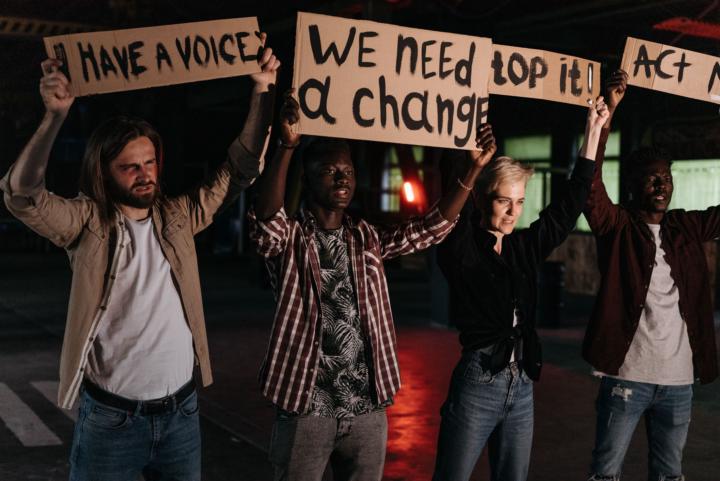
Three weeks ago I wrote about data and statistics; the cold architecture of global inequality. Two weeks ago I wrote about imagination, whether we can understand a person we’ve never met, and what kind of imagination actually gets us closer to someone else’s reality. Last weekend the course “The World as a Village of 100 People” moved into its third chapter: Transformation. **Now that we understand and now that we’ve imagined, how do we act without reproducing the very dynamics we’re trying to dismantle?** It is, I’ve come to believe, the hardest question of the three. In our village of 100 people, one of the villagers stopped me in my tracks this past weekend. She is a young woman, aged between 20 and 24. She lives in the deepest poverty: one of 68 people who together control just 3% of the village’s wealth. She has no housing, no education, no water, no sanitation, no internet. She has electricity. That is all. When asked what she most wanted, she didn’t ask for a donation. She didn’t ask for a handout. She said: "Don’t just help me. Make sure no other person can ever land in my position". She was asking for systemic change. She was asking us to go to the root cause. Not treat the symptom, not make ourselves feel better with a gesture, but fix the conditions that made her situation possible in the first place. It is a completely different ask. And most of our systems (aid, development, philanthropy) are not designed to deliver it. This is not a new problem. It is an old one, repeating itself with remarkable consistency across generations of well-meaning effort. A striking example is PlayPumps International, a project that installed merry-go-round water pumps in rural African communities, designed so that children playing would simultaneously pump clean water. It was ingenious, it was photogenic, and it attracted significant funding. And it failed because nobody adequately consulted the communities who would use them. The pumps were harder to operate than hand pumps, broke down without accessible spare parts, and placed an unexpected burden on women and children to keep them running. A solution designed without asking the people it was designed for.
14d •
Can we understand a person we never met?
The short course “The World as a Village of 100 People” is structured around four weekends each with their own theme. Last time I wrote about week one - Orientation. We looked at and discussed the data, the statistics, the cold architecture of global inequality. This week we moved into something harder to measure: Imagination. CAN WE UNDERSTAND A PERSON WE NEVER MET? It sounds like such a simple question, but it isn’t. Most of us move through life in circles of sameness. We build relationships with people who share our education level, our income bracket, our ethnicity, our worldview. Even when we think we’re being open, the algorithms of social media are quietly doing the opposite. They push us deeper into our own corner, reinforcing what we already believe, showing us more of what we already see. The concept of ubuntu — I am because we are — tells us that we are incomplete without the other. A person is a person through other people. But which people? And how do we reach the ones we never encounter? Because even our imagination has its limits. It is shaped by what we have lived, what we have read, what we have been allowed to see. We don’t imagine freely, we imagine from somewhere. And that somewhere is always, unavoidably, ourselves. This is where the course introduced an idea that stayed with me long after the session ended. Most non-fiction is written in first or third person. "I experienced this." "She lived through that." The reader remains at a safe distance. Moved, perhaps, but separate. Second person is much rarer, and for good reason: it is uncomfortable. “You wake up before dawn.” “You fold a torn page carefully into the seam of your pants because you have no bag, no shelf, no box of your own.” Suddenly there is no distance. The grammar has placed you inside someone else’s life before you decided whether you were ready to go there. It doesn’t ask permission. It just takes you. But here is the question that unsettled me: is that understanding, or is it a literary trick? The immersion feels real. The empathy feels genuine. And yet, circumstances haven’t changed. Only the reader’s comfort has.
Apr 20 •
The World as a Village of 100 People
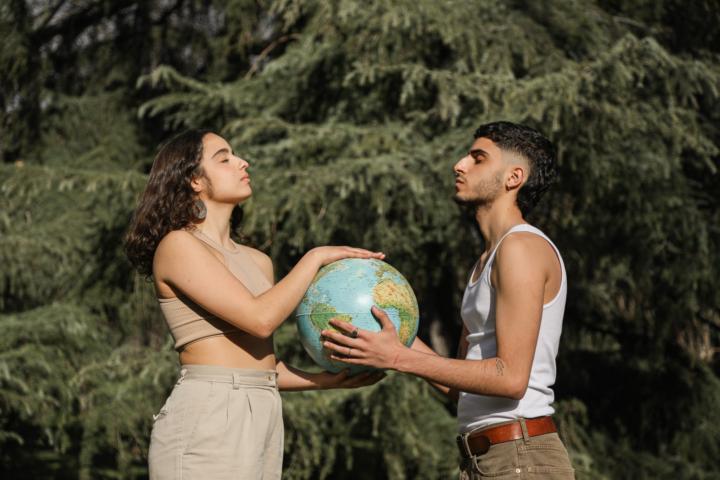
Thought this would be of interest to share as applications are currently open for a United World College (UWC)-endorsed online short course “The World as a Village of 100 People.” This online course invites participants to explore global inequality, identity, interdependence, and citizenship through an immersive simulation-based learning experience. Using the imaginative framework of a “village of 100 people,” participants will examine how global systems shape everyday life and how communities make decisions about their shared future. Through dialogue, role-based learning, and a structured Citizen Assembly, participants will practice empathy, ethical representation, systems thinking, and collaborative decision-making. The Geographical Imaginations Expedition & Institute (The GIEI) is an education and civic learning initiative that uses human geography, dialogue, and systems thinking to help young people and communities better understand global interdependence, inequality, and planetary futures. The GIEI designs learning experiences and research projects that cultivate imagination, critical thinking, and collective agency around global challenges. If anyone does sign up it would be fabulous to share your learning back here with the community ☺️

1 like • 25d
@Nadene Canning Just posted my first insights!
0 likes • 25d
@Nadene Canning 😁
25d •
The World as a Village of 100 People
The title of this United World College (UWC) endorsed online short course intrigued me so much that I applied and… I got accepted as one of 13 villagers entering the experience together! We are a deliberate mix: different continents, countries, genders and ages. Over four weeks, we will imagine the world as a village of 100 people while exploring global inequality, identity, interdependence and citizenship. We are guided by facilitator Kevin Fox, Human Geographer and founder of The Geographical Imaginations Expedition & Institute. Last weekend we had the first two sessions that were all about orientation: meeting the other villagers and looking at/discussing statistics. One thing became immediately clear: we all see through our own lens but often unconsciously adopt a dominant perspective when observing the world. Chimamanda Ngozi Adichie called it the danger of a single story. I’d call it something more uncomfortable: the quiet acceptance of someone else’s definition of reality. That discomfort sits at the heart of what I want to explore in these four weeks, because the story of global inequality is not an accidental one. It is not a story of some nations simply failing to develop while others succeeded. The opening quote from the World Inequality Report 2026 says it plainly: inequality is a political choice. It is, in many ways, designed. Nations across the Global South are routinely labelled “underdeveloped”; a word that carries the assumption that the people there lack the capacity, financially and intellectually, to lift themselves without the guidance of the Global North. The so-called migration crisis is presented as a stand-alone emergency, stripped of its context: the decades of extraction, interference and deliberate policy choices that created the conditions for it.
29d •
What would your ideal curriculum look like?
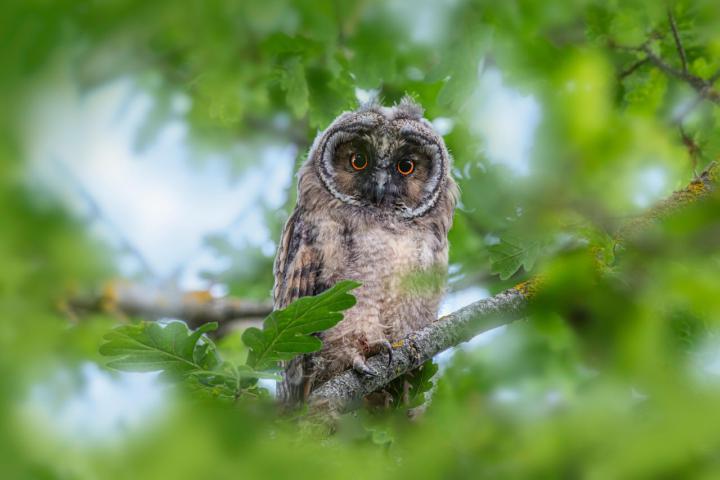
Imagine going back to school and being able to create your own curriculum. What would your ideal curriculum look like? And, why would you choose these subjects? Photo credits go to Erik Karits on Pixabay
4 likes • 29d
Cool question! Mine would be: - Anthropology (social behaviours, language, cultures) - Arts (learn by doing) - History (the true version with the good AND the bad) - Inner Development - Life skills - Meditation - Natural world - The art of doing nothing
2 likes • 29d
@Wim Beunderman Absolutely 💯
1-10 of 31
@nathalie-venis-randabel-6059
Former corporate executive turned farmer
Active 2d ago
Joined Feb 16, 2025
Mauritius
Powered by