Activity
Mon
Wed
Fri
Sun
Jun
Jul
Aug
Sep
Oct
Nov
Dec
Jan
Feb
Mar
Apr
May
What is this?
Less
More
Memberships
Constellations
48 members • Free
The AI Group
12 members • $3/month
WavyWorld
48.5k members • Free
Clief Notes
28k members • Free
40 contributions to Clief Notes

👑
⭐
7h •
I come asking for help!
Because of the Amazing support you all gave for the first Round Wylder (my step daughter) made it into the second round! I would love love love if any of you support her going to work with some of the best animal rescues in the world to just cast at least one free vote if you can! You can vote here! Not Ai related so sorry for that ! Wylder | Junior Ranger

0 likes • 2h
Good luck, my votes in.

1d •
Build the workflow, not the feature. The variations come for free.
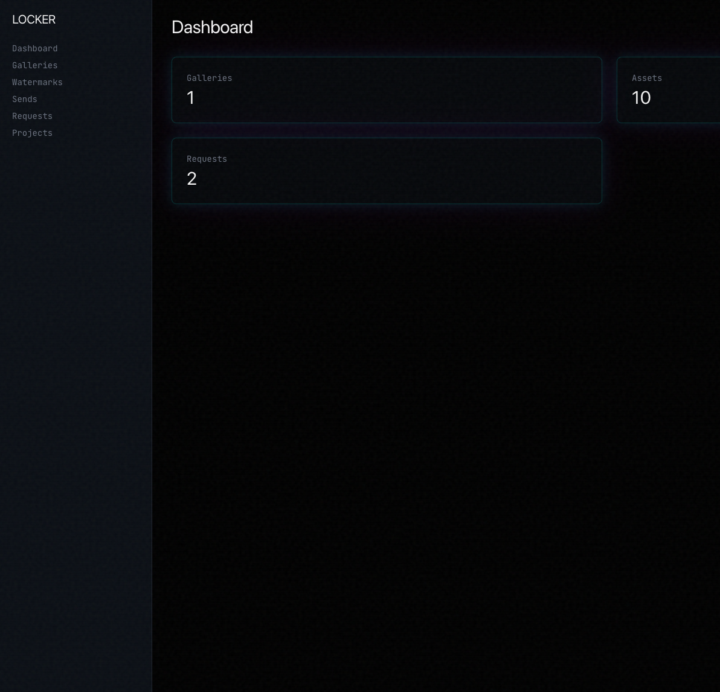
Shipped sends and the Locker into Beyond Content this afternoon. Third brand to get them. Took less than a day. The first time I built them, on Pushing Squares, it was real work. Spec, schema, auth flow, billing, gated downloads, the full stack. Days of thinking, not just typing. The second time, on creatioexnihilo.com, it was a port. Hours, not days. Same primitives, different brand surface. The third time, on Beyond Content, it was an afternoon. Copy the package. Re-wire the manifest. Swap the brand tokens. Ship. The pattern: The work isn't the feature. The work is the workflow that produces the feature. When I built sends the first time, I wasn't really building sends. I was building: - A schema shape that survives renaming - A deploy contract that doesn't care which brand it's serving - A Locker model that maps cleanly onto Stripe, Neon and R2 regardless of who owns the account - A handover surface so the next brand only touches config, not code Once that workflow existed, "ship sends to brand X" stopped being an engineering question. It became a config question. The takeaway If you find yourself building the same thing twice, the second build is the warning. Stop. Extract the workflow before the third one shows up. The first build pays for itself. The workflow pays forever. //A<3
1 like • 19h
This post honestly shifted something in my brain. I’m still early in learning systems thinking, but the way you described “the workflow being the product” made a lot click for me. Most of us beginners are still thinking feature-by-feature, while you’re thinking in reusable orchestration layers that can express different identities on top of the same foundation. What really stood out to me is how the experience still feels unique even though the underlying workflow is reusable. That’s the part I think most people miss. The system stays stable while the emotional and narrative layer changes. Your site genuinely felt different when I went through it. Not like “a website,” but like entering a world with its own logic and interface language. The terminal metaphor completely changed the feeling of something as simple as a contact form. As someone trying to learn this style of thinking, posts like this are incredibly valuable because they reveal that the real leverage isn’t just coding faster — it’s designing workflows and abstractions that survive across projects. Really inspiring work.
3d •
Cinematic prompt methodology, as an installable Claude workspace
Most AI image work fails at the brief, not the model. Three lines in. Generic out. People blame the tool. I shipped a fix. Pushing-creation installs into Claude. Drop reference images into refs/. Run /frames-brainstorm. Claude reads your refs, runs a DP-style interview, and writes the style pack live as you answer. /frames-shotlist drafts the full storyboard. /frames-shot polishes individual frames. Output is markdown. Drop it into PUSHING FRAMES, Midjourney, Sora, or any tool. → github.com/PUSHINGSQUARES/pushing-creation To install, paste this into Claude: "Set me up with pushing-creation from github.com/PUSHINGSQUARES/pushing-creation. Read INSTALL_WITH_CLAUDE.md and walk me through it." You don't get better output by prompting harder. You get better briefs by treating the model like a director of photography. Specificity transfers craft. Stop prompting. Start defining outcomes. Read the deep-dive: https://aris-space.com/documents/workspaces/pushing-creation

1 like • 3d
@Ari Evergreen from 0 to 24 fps in one second… fully installed cinematic thinking 😄
4d •
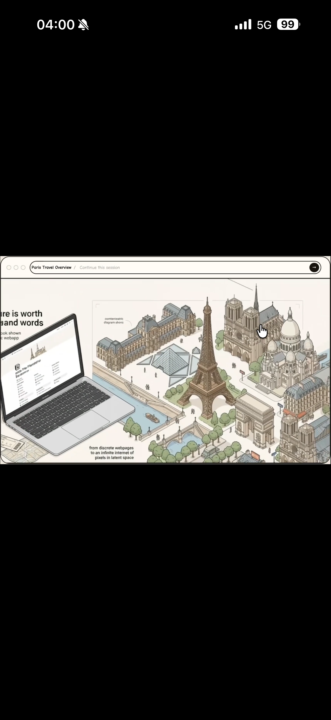
This made me rethink how we design interfaces
I ran into something recently that kind of messed with how I think about interfaces. It’s called “Flipbook” — instead of clicking buttons or filling forms, you just explore by clicking into an image. Every click generates a new visual. No UI in the traditional sense… just navigation through meaning. Addy Amani shared it here:👉 https://www.linkedin.com/in/addy-amani/ It made me realize how much of what we build is still “input → output” when maybe people understand things faster when they can see them instead of filling them out. Not saying this replaces anything yet… but it definitely made me pause. Feels like there’s something here.
0 likes • 4d
@Shirsho Guha Yeah, it really shifts it from input/output to exploration. Makes me rethink how we design flows, maybe less forms, more environments.

9d •
🏆 Weekly Comp #2: The Artifact Sprint 🏆
💰 Week 1 winner @Ian Barriopedro took home $200 cash. 🎟️ This week the prize gets bigger. ✨ Winner gets a FREE seat in The Lyceum. ✨ https://www.skool.com/quantum-quill-lyceum-1116/12-weeks-real-projects-250k-in-prizes-lets-talk?p=e850567b 🎯 Pick your cohort: Technical, Business, or Creator. Your call. 📋 THE CHALLENGE: "The Returning Client" You just got hired again. Different client this time. Meet Marcus. 👋 📎 Download the full client brief attached to this post. 🛠️ YOUR DELIVERABLE An interactive artifact built in Claude that does what Marcus asked for. ✍️ Plus a 100 word writeup covering: - 👤 Who it's for - ⚙️ What it does - 🎨 One design choice you made and why 📐 THE RULES ✅ It has to work ✅ It has to sound like Marcus, not a bank ✅ The writeup matters ⚖️ Judging: Myself, Jake, and the mods. 🎟️ Who can enter: Premium and VIP members only. Free members, this is your sign. Upgrade and you're in the running for a Lyceum seat. 🚀 📨 How to submit: Drop a screen recording or screenshot of your artifact, the link if you've got one, and your writeup in the comments below. 📅 Deadline: Saturday, May 2nd at 12:00 PM EST 🎉 Winner announced: Monday, May 4th at 12:00 PM EST 💡 A note before you start. This isn't a finance challenge. It's a design and voice challenge. You don't need to be a CFP to win this. Read the brief. Marcus tells you exactly what he wants and how he thinks. Your job is to build something that solves his problem and sounds like him. 🆕 If you've never built an artifact in Claude before, this is a great first one. The brief is clear, the scope is reasonable, and the bar is "would Marcus actually send this to a prospect?" 🔥 @Ian Barriopedro set the standard last week. Your turn. LFG 🚀
1 like • 5d
@Roc Lee Really liked the direction you took with this — it’s playful but still grounded. It honestly reminded me of those old-school learning programs like Oregon Trail or JumpStart, where you weren’t just calculating something, you were going through a journey. That made it feel a lot more approachable without losing the meaning behind it. The camping angle especially works because it turns something stressful into something you can actually move through step by step. Curious — did the metaphor come first, or did it evolve after you built the core logic?
1 like • 4d
@Roc Lee That actually comes through it doesn’t feel like a typical money tool at all. I like that you leaned into making it approachable instead of just accurate. A lot of people would’ve just built a calculator and called it a day, but you made it something people would actually want to engage with. The “play with it without overthinking” part is real too that’s probably where most tools lose people. Funny enough I went the opposite direction on mine more like sitting across from Marcus on the first call so it’s cool seeing how both approaches are solving the same problem in different ways. If you had more time to polish visuals, it would’ve been even crazier.
1-10 of 40

@luis-arias-2984
Learning AI and automation by building real systems. Working on a trading bot with data, APIs, and local AI models like Ollama.
Active 2h ago
Joined Mar 28, 2026
ENTJ
Miami, FL.
Powered by