Activity
Mon
Wed
Fri
Sun
Aug
Sep
Oct
Nov
Dec
Jan
Feb
Mar
Apr
May
Jun
Jul
What is this?
Less
More
Memberships
Sourdough Improvement
81 members • Free
Crust & Crumb Academy
1.1k members • Free
36 contributions to Crust & Crumb Academy

⭐
🔥
21d •
🎥 New Lesson: How to Freeze Your Bread the Right Way
If a loaf isn't going to be eaten within a day or two, the freezer is usually your best friend. In this lesson, we look at what actually causes bread to go stale, why the refrigerator often makes the problem worse, and how to freeze, thaw, and refresh your bread so it keeps as much of its original quality as possible. You'll learn: 🥖 Why bread goes stale ❄️ Why freezing works 🚫 Why the refrigerator isn't always the answer 🍞 How to freeze whole loaves and sliced bread 🔥 How to bring frozen bread back to life A simple skill. A big difference. 🎬 Watch the lesson here: https://youtu.be/eiepOzOVDgk 🛍️ Member Discount from ModKitchn Many of you ask how I store bread at home. One of the tools I use is the ModKitchn Fresh Bread Storage Bag. It's designed for countertop storage and freezer use, making it a great option for keeping your bread fresher longer. ModKitchn has generously offered Crust & Crumb Academy members 10% off. 👉 https://modkitchn.com/discount/BAKINGGREATBREAD10 Use code: BAKINGGREATBREAD10 Thank you to Morgan and the team at ModKitchn for supporting bread bakers and our community. Perfection not required. Progress expected. Henry⭐🔥 Crust & Crumb Academy

3 likes • 17d
@Henry Hunter would you do this with a batard too? …Freeze solid, wrap, when ready to use, spritz, and into hot oven?? How long would you bake for a loaf??
May 21 •
Best way to freeze then defrost bread?
I’ve tried different ways to freeze bread. I would like to freeze it whole so I can defrost it and serve it with dinner. What’s your process please?
2 likes • May 21
@Candi Brown-McGriff thank you Candi!
2 likes • May 21
@JoAnn Amato thank you!
⭐
🔥
May 13 •
WORD OF THE DAY: SOAKER 🌾💧
This is one of those old-school techniques that quietly fixes a lot of whole grain baking problems. A soaker is simply pre-hydrating whole grain flour, oats, seeds, cracked grains, or bran before mixing the final dough. Why does that matter? Because bran is sharp. At a microscopic level, those bran flakes can weaken gluten development and hold back your rise. A soaker softens the bran and lets the grain absorb water before it starts competing with the dough for hydration. That usually means: 🥖 Better extensibility 🥖 Better rise 🥖 Softer crumb 🥖 Better overall structure You generally start thinking about using a soaker once whole grain flour climbs above about 30% of the total flour in the dough. Below that, the gluten can usually handle things just fine on its own. Small technique. Big difference. Do me a big favor and like and subscribe while there if this is helpful to you.
5 likes • May 13
And I’m another note, I’ve seen on another Facebook group someone talking about using a small amount scalded flour in their bakes. I’m wondering if this is another form of Tangzhong??
5 likes • May 13
@Henry Hunter hahahhhaha but we all know this is the best place to LEARN!! Thanks for the details I’m going to try scalding for my lean rustic to see if I can get a bit longer freshness!
⭐
🔥
May 8 •
I’ll be Back
Family. I’m out this afternoon celebrating Ryan’s graduation from FMU. Master’s degree. Proud day. Get your poolish going and feed those starters tonight. Tomorrow is Pretzel Bread Day and you don’t want to be playing catch-up. I’ll be back late tonight from the ceremony. See you in the kitchen. ~Henry ⭐️🔥

10 likes • May 8
Oh Henry! How proud you must be!! What a wonderful accomplishment—congratulations Ryan!❤️

🔥
May 6 •
Levito Madre Benefits
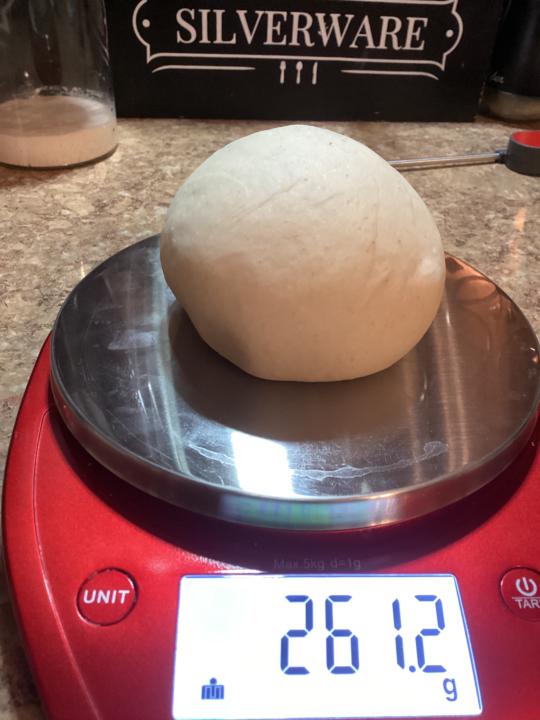
Lievito Madre is a stiff Italian sourdough starter (~45-50% hydration) that provides a milder, sweeter flavor profile, improved digestibility, and superior, fluffier texture in baked goods compared to liquid starters. Due to its low-acid, yeast-heavy fermentation, it is ideal for any dough but especially for rich, high-fat, and sweet doughs like panettone, brioche, and premium pizza. Levito Madre can be used in it’s stiff state or you can make a levain from it. Key Benefits of Lievito Madre - Superior Texture & Volume: Produces incredibly light, fluffy, and soft dough structures, making it perfect for enriched breads. Also works wonderfully in lean doughs - Mild Flavor Profile: Unlike tangy, acidic liquid starters, Lievito Madre creates a delicate, mild, and often sweet aroma due to high lactic acid production. - Enhanced Digestibility: Long fermentation breaks down gluten and antinutrients, making the final bread easier to digest. - Its stiff, strong structure helps doughs rise in recipes with high fat and sugar, such as panettone or pizza, without losing, strength. - Longer Shelf Life: Natural acids from the slow fermentation act as a preservative, keeping baked goods fresh for longer without mold. - Nutritional Benefits: Increases the availability of vitamins and minerals like magnesium and iron. - Ideal for Pizza: Produces a very airy, crunchy crust with high digestibility. Lievito Madre vs. Liquid Sourdough - Hydration: Stiff/Firm (45–50% water) vs. Liquid (usually 100% water). - Flavor: Mild and sweet vs. Often sour/acidic. - Bacteria/Yeast: Promotes more lactic acid bacteria and yeast growth, less acetic acid. Usage Tips - Because it is firm, it is sometimes "bathed" (soaked in water) to reduce acidity before refreshing. - It is often used in recipes requiring long, natural rising. Pictured below are the stages of fermentation, from just mixed to peak Happy Baking!! @Tracy Havlik @Donna Angelo @Sandy Chong @Ann Snow @Patt Stanaway @Deborah Karaban @Judy Lyle @Mauvette Bailey @JoAnn Amato @Colleen Vergara
3 likes • May 7
@Candi Brown-McGriff This is really good information! I just started reading about LM can you tell Where I can get the details for making One??
2 likes • May 8
@Candi Brown-McGriff thank you so I’m to feed 100g flour twice a day every day for 7 days?
1-10 of 36

@diane-defelice-8548
Sourdough is my therapy, and my happy place ❤️
Active 8h ago
Joined Feb 15, 2026