Activity
Mon
Wed
Fri
Sun
Nov
Dec
Jan
Feb
Mar
Apr
May
Jun
Jul
Aug
Sep
What is this?
Less
More
Owned by Jim
Understand living systems through permaculture principles, regenerative farming, safe medicinal herb use, and calm practical family resilience.
Understand bees as living systems through observation, biology, evidence, and thoughtful stewardship of colonies, landscapes, and community.
Sticky Business
78
Free
Faith & Flowers
16
Free
556 contributions to Oasis Builders
11h •
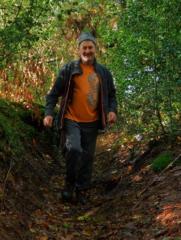
First part of preparing for autumn
The last week had me occupied with organising my workshop, tidying the log pile, cleaning the wood burners and chimneys (they heat, cook and make hot water). I'll be cleaning and waterproofing all my jackets and safety boots and storing away the garden furniture and outside kitchen. And finally sorting through the empty pots and seed trays, ready to begin cool weather seed sowing and propagation,if it all appeared to be in advance, the reason is that it is best done in the fading summer sunshine, rather than rushing in the first down pours and blustery cold weather.
🔥
0 likes • 48m
Amen to that... I'm in the process of installing a new heat pump, winterizing the pool and will shortly need to pull the plastic back over the high tunnel before the frost takes its toll. Winter is coming for us Northern Hemisphere folks with our Southern Hemishpere friends coming into Spring.
16h •
Gobbling grass and chewing the cud
Anyone with cows knows how happy they are when you give them fresh pastures, they almost skip and jump onto the field, wrapping their tounges , lassooing and pulling the grass into their stomachs as fast as they can. Then after about fifteen or twenty minutes they settle down and begin to ruminate, coughing up their bounty and chewing purposely. At the decline of summer into fall , myself I begin to chew the cud , and in reflection of the years accomplishments and failures, start to conceive being on new grass and different projects towards the end of the year and into the next, all based on adding to what's already here. This loop or cycle fits well into natural patterns of growth , renewal, and evolution. Just as the cow knows when it's time to stand up and move on to the new patch of grass, I'll be looking for new areas for regeneration. This photo is of our first house cow and a new born calf, it's not the best quality and was taken over twenty years ago, which seems like ancient history now . The third photo is the calf fully grown with her first calf .

🔥
0 likes • 12h
@Phillip Greenwood, I truly enjoy your thought process. I like the way you connected this to a natural cycle. We often think of growth as always doing something new, but there is also a season for stopping long enough to digest what has already happened. That is probably where some of the best learning takes place. What worked, what did not, what is worth carrying forward, and what needs to change before moving into the next patch. I especially like your last thought about regeneration. The next project does not necessarily have to replace what came before. It can build on what the last season taught us.
🔥
0 likes • 52m
@Phillip Greenwood Love the pics... I have been toiling with the idea of a 3' × 8' x 3' deep experimental aquaculture pond, basically a small aquatic polyculture for this next spring. The idea would raise bluegill in the summer and rainbow trout in the winter. Isn't theory wonderful :-) Keeping the width at 3', I could use a sheet of plywood for shade until the elderberries create shade.
🔥
12h •
Before Biodynamics Had a Name
In June 1924, a group of farmers gathered on an estate at Koberwitz, in what was then Germany and is now Poland. They had come to hear Rudolf Steiner speak about agriculture. Steiner was not primarily known as a farmer. He was a philosopher, writer, lecturer, and the founder of anthroposophy. His work had already moved into education, medicine, the arts, and other parts of human life. Agriculture came near the end of his life. From June 7 through June 16, 1924, Steiner gave eight lectures that later became known as the Agriculture Course. Those lectures eventually helped give rise to what we now call biodynamic agriculture. Before we get into what he actually taught, I think it is worth understanding the question underneath the course. Steiner was looking at a farm as more than a collection of separate problems. Soil, plants, animals, manure, food, weather, landscape, and the people caring for the land were relationships within a larger whole. That way of looking at a farm is one reason I think this is worth exploring through Roots Through Time. It does not mean that everything Steiner proposed should be accepted as scientific fact. Some of his agricultural ideas grew from observation. Others came directly from his anthroposophical worldview, including ideas about spiritual and cosmic influences that modern science does not establish in the same way. We can keep those things separate without dismissing the historical value of the questions he was asking. Over the next several Roots Through Time posts, I would like to work through these lectures slowly. We can look at what Steiner actually said, what farmers and biodynamic practitioners later did with those ideas, and what modern soil biology, ecology, agronomy, and observation can tell us today. More than a century later, one of the questions behind that gathering at Koberwitz is still useful. What changes when we stop looking at the pieces of a farm or garden separately and begin looking at the relationships among them?
🔥
0 likes • 3h
@Phillip Greenwood I picked up on another word in your message, 'instinctive". When we observe and listen to our instinct, we are more in tune with nature than most realize.
🔥
1 like • 2h
@James Humecky very cool... he has been at it for many years.
9d •
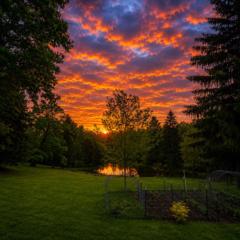
Tree Tubes: Helpful Tool or Hidden Trade-Off?
I’ve been looking more seriously at tree tubes for young trees and I’m curious what everyone here has experienced with them. The benefits seem obvious: deer and rabbit protection, wind protection, some sun protection, and often much faster early growth. But I also wonder if we sometimes confuse faster vertical growth with healthier establishment. Possible downsides I’ve been thinking about are thinner stems, overheating, excess humidity, rodent habitat, and whether trees become too dependent on that protected environment. I’m leaning toward using tubes as a temporary establishment tool, not assuming they’re automatically better for every tree or every site. For those who have used them, did they improve long-term tree health, or mostly just speed up early growth? Any drawbacks you didn’t notice until later?
🔥
0 likes • 4d
@Jon Shobe Yes, my thought is if I see a problem, I look to solve it. If I do not see a problem, I observe often to assure one does not appear. If it where my trees, I would watch to see if I get deer pressure and maybe even set up some trip lines before wrapping the trunk.
🔥
0 likes • 3h
@Jon Shobe Oh, so they zip tied, that is nice. I would watch during winter so snow does not ice over against the trunk. Nice part is that is easily released if needed. I like the holes for drainage. They should serve you and the trees well.
2d •
I'm not worried
I'm beginning to reluctantly embrace technology because I know it's a good tool, and already the wheels of humanity are, and have been wobbling for a long time. They say "keep your friends close and your enemies closer", and the progression of the machines is happening with or without me. My question is how much should we depend on this progression? When do we hold back, how can we keep unique skills secret? Or should we just be absorbed into the system. Given ultimate free time and no worries, what would you do with your time, because in the future, that's going to be how we sell out . As an example start by looking at BYD(building your dreams) and it's rapid expansion from nothing , and where 98% of the production is done by robotics.
🔥
0 likes • 2d
For me, it's not about whether we accept technology but more about what we choose to hand over to it. I use technology every day, including AI, and I see tremendous value in it for handling large amounts of data quickly. But I do not want convenience to quietly become dependence. There is a difference between using a tool to increase what we can do and losing the ability to function without the tool. An older self-sufficiency text I have makes an interesting point. It describes modern life as a balance between doing things ourselves and depending on increasingly complex organizations, and warns against either extreme. I think a balance is worth protecting. The key is if technology eventually gives me more free time, I would not spend it consuming more technology. I would use the time to build real skills. Getting more hours back into the day is my motive for technology. Maybe the question we should keep asking as technology advances is, "What should the machine do for us, and what should we deliberately continue doing for ourselves?"
🔥
0 likes • 21h
@Phillip Greenwood I'm too old to get in a taxi without a driver, so they will loose my business there. I see it as when cars first became popular, many in the buggy whip and saddle industry lost their job. I think low skill, low paying jobs will always be available just might change face. I tell my children, it will not be Ai that takes your job, it will be someone who knows Ai that will take your job. Coming out of high school in the 70's, everyone said computers and robotics was going to eliminate factory and warehouse jobs. My thought was I would learn how to fix computers and robots. Coming out of high school I became a licensed electrician to first have hand skills, survived off grid for about 10 years and then in my 30's went back to college. My thought is if there is a want to, there will always be a path. We talk about resilience, and caring for our family if times get tough. Being able to work with your hands or having a trade skill is so valuable in life. I am at a biodynamic farming conference this week and they had a round table discussion today. Farming alone has so many opportunities. Organic food is booming and these guys can grow/raise as much as they want only limited by labor availability and land size. Hopefully us seasoned folks can instill and pass along some of the skills we have learned over the last 50 years.
1-10 of 556
🔥
@james-flach-4044
I help families understand off grid living, grow real food, use herbs wisely, and build a more self-reliant home without fear or overwhelm.
0
Reply
Online now
Joined Dec 22, 2025
ENTP
Cookeville, TN 38506