Activity
Mon
Wed
Fri
Sun
Aug
Sep
Oct
Nov
Dec
Jan
Feb
Mar
Apr
May
Jun
Jul
What is this?
Less
More
Owned by Alisha
A baking-based community for people who look strong on the outside and are ready to rebuild self-trust by stopping self-abandonment on the inside.
Memberships
Lifestyle Founders Group™
12.9k members • Free
Arlan's Inner Circle
92 members • $1,000/month
Arlan's All-Access
294 members • $100/month
Crust & Crumb Academy
1.1k members • Free
Cooking with Ollie
250 members • Free
The Bread & Butter Way
391 members • Free
PE
Parents: End the Mental Crash
2 members • Free
Skoolers
166.2k members • Free
Ariel’s Bowling Academy
16 members • Free
7 contributions to Crust & Crumb Academy

⭐
🔥
Apr 21 •
🎙️ I'm on the Bake This Book Podcast — Plus a Giveaway You Don't Want to Miss
Hey everybody, I got the honor of being interviewed for the Bake This Book podcast, hosted by Eric Fabin of SourHouse (yes, the folks behind the Goldie starter heater we all know and love). The episode dropped today, and I'm excited to share it with you. This interview was conducted one week before I decided to start Crust & Crumb Academy. I wish I had you all to talk about then. We covered a lot of ground. The early days of baking. How this community came to life. What I've learned from teaching thousands of home bakers. And a few stories I don't think I've told anywhere else. Watch the episode on YouTube: https://youtu.be/aNNV5BMEQF8?si=HuQebR-MLcs7W5NI 🎁 And Now The Giveaway SourHouse and I are running a giveaway alongside the episode. One winner walks away with: A signed copy of Sourdough for the Rest of Us A pint-size SourHouse Starter Jar A SourHouse Bread Blanket How to enter: 1. Follow @lifeatsourhouse and @bakinggreatbread on Instagram 2. Add a comment to the giveaway post with your favorite tip, insight, or quote from the episode 3. Tag a friend who'd appreciate it That's it. Giveaway closes Thursday, April 23, 2026 at 1:00 PM ET. If you watch the episode, come back here and let me know what hit home for you. Thanks for being part of this community. None of this happens without you. Perfection is not required. Progress is. ~ Henry ⭐🔥

4 likes • Apr 21
Very cool!
⭐
🔥
Apr 3 •
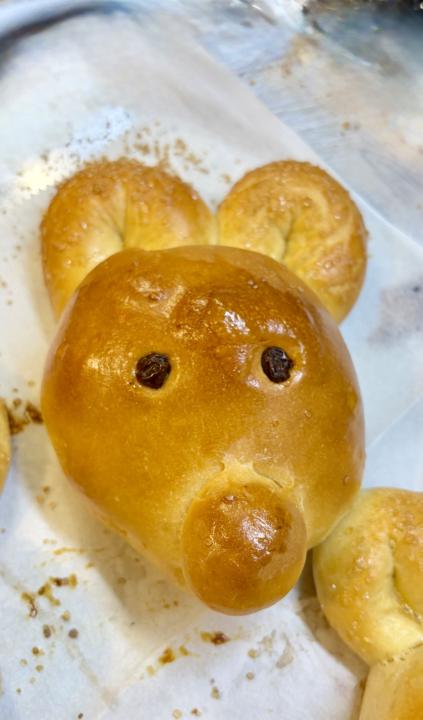
My Easter mice, I mean bunnies.
They look a little more like mice than they do bunnies. You guys need to outdo this. Here’s the recipe. https://pantry.bakinggreatbread.com/recipes/easter-bunny-bread?utm_source=skool&utm_medium=community&utm_campaign=recipe-share
2 likes • Apr 3
Some mice are cute too.
⭐
🔥
Apr 2 •
Old age is real
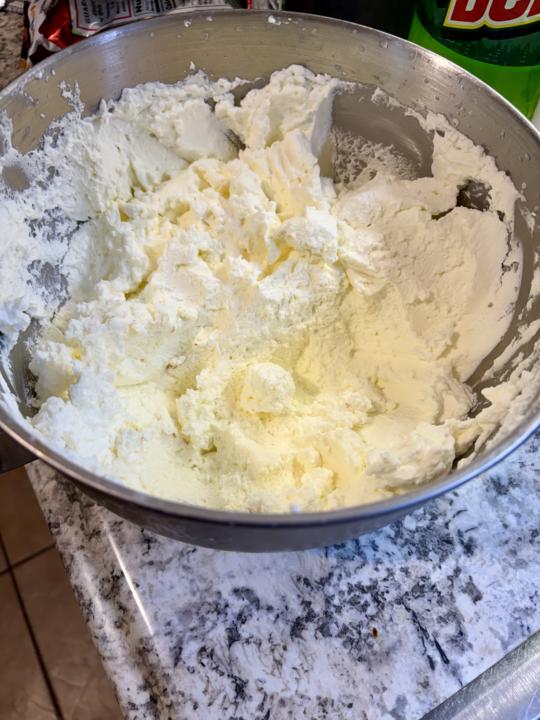
I just spent half the morning searching my house from pillar to post looking for my stand mixer bowl. The biggest bowl I have in the house and I can’t find it anywhere. I go through the cabinets, the closets the trash outside and there’s no bowl. How do you lose the bowl of your stand mixer? Finally, I just sat down thinking this is ridiculous and that’s when I remember, I made whipped cream in that bowl and it’s sitting in the bottom of my refrigerator. I feel so deflated. Help me.
4 likes • Apr 2
@Henry Hunter Yup. Is it old age or might we be wearing "many hats"? Because you are doing a whole lot!
4 likes • Apr 2
@Henry Hunter hehehe
⭐
🔥
Jan 28 •
How French Baguettes Met Vietnamese Prowess
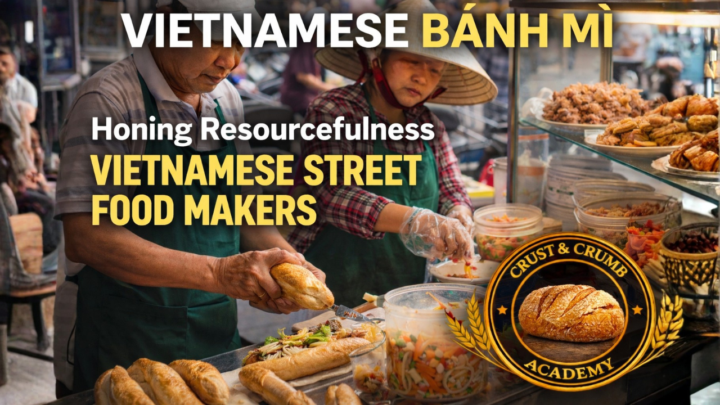
Saturday we're baking bánh mì baguettes together. But before we shape a single loaf, I want you to understand what you're making and where it came from. This bread exists because of collision. The French Arrive In the mid-1800s, France colonized Vietnam and brought their food culture with them. Baguettes, cheese, pâté, butter. The French baguette became a status symbol in Saigon, served in hotels and cafes to colonizers and wealthy Vietnamese. But there was a problem. Wheat doesn't grow well in Vietnam. It had to be imported, which made it expensive. Most Vietnamese couldn't afford pure wheat bread. Vietnamese Bakers Adapt Here's where it gets interesting. Vietnamese bakers started cutting the wheat flour with rice flour. Not because they thought it would taste better, but because they had to stretch what they had. Rice was abundant. Wheat was not. What they discovered by accident was something new. The rice flour created a lighter, crispier crust. The crumb became more delicate, almost cotton-like. The bread dried out faster, but that didn't matter because it was meant to be eaten fresh, same day. The Vietnamese baguette became its own thing: shorter, stubbier, crispier, and airier than its French ancestor. Necessity became innovation. The Sandwich Is Born After the French left in 1954, the baguette stayed. But it evolved. Street vendors in Saigon started stuffing these crispy baguettes with whatever was local and affordable. Pork, pâté, pickled daikon and carrots, fresh cilantro, jalapeños, cucumber, mayonnaise. East met West inside a bread roll. The bánh mì sandwich became fast food before fast food existed. Cheap, portable, satisfying. A perfect balance of textures and flavors: crispy crust, soft crumb, rich meat, acidic pickles, fresh herbs, and heat. Why This Matters For Saturday When you bake this bread, you're not just making a baguette. You're making a bread that was born from resourcefulness. A bread that took something imposed by colonizers and transformed it into something distinctly Vietnamese.
3 likes • Jan 28
Oh, this is good...an origin story! Love that.
1 like • Jan 28
@Henry Hunter Sure did. Im most in awe of the connection you make to the story of it all; "we are making banh mi on Saturday...banh mi's have really good baguettes, before we go straight to learning how to make them, let me create a throughline from one to the other". Never would have thought to do that, now I will! Its story telling at its finest.
⭐
🔥
Jan 28 •
New Recipe Added: Blueberry Puff Pastry Hand Pies
This is what I've been up to all afternoon This recipe builds on the laminated dough technique we covered in the recent Danish Pastry Bake Along. If you're looking for another application for that skill set, or if you want to practice your lamination with a simpler final product, this is it. What You'll Learn: - How to apply laminated dough technique to hand pies - Creating a stable fruit filling that won't make pastry soggy - Shaping and sealing techniques for individual pastries - Achieving professional bakery finish with egg wash and coarse sugar Key Teaching Points: - The importance of completely cooling your filling before assembly - Maintaining cold dough temperature throughout the process - Working with pastry scraps without compromising lamination - Recognizing proper bake doneness in laminated products The recipe includes the full laminated dough process from our Danish pastry lesson, plus detailed instructions for the blueberry filling and assembly. Students can also use store-bought puff pastry as noted in the recipe if they want to focus just on filling technique and finishing. This is an excellent intermediate-level project that reinforces lamination fundamentals while producing an impressive finished product. Recipe now available in the Recipe Pantry under Desserts/Pastry. https://pantry.bakinggreatbread.com/recipes/blueberry-puff-pastry-hand-pies?variant=yeasted

2 likes • Jan 28
@Candi Brown-McGriff I was thinking the same thing!
1-7 of 7

@alisha-smith-2729
I help people who look strong on the outside stop abandoning themselves on the inside — and rebuild self-trust through baking.
Active 1d ago
Joined Jan 25, 2026
INFJ
Austin, TX