Activity
Mon
Wed
Fri
Sun
Aug
Sep
Oct
Nov
Dec
Jan
Feb
Mar
Apr
May
Jun
What is this?
Less
More
Owned by Paul
A hub for all detection dog teams—professional, sport, and hobby—offering expert teaching, support, and shared learning.
Memberships
Conservation Dog Alliance
146 members • $30/year
Nose Worx Detection Skool
416 members • Free
Truffle Dog Club
437 members • Free
GLP-1 Real Talk Community
1k members • Free
Beyond The Leash
87 members • Free
Skoolers
168.4k members • Free
51 contributions to Beyond The Leash
6d •
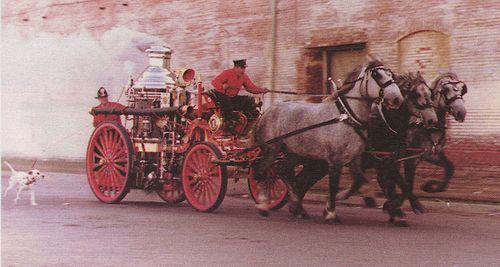
Dalmatians
Dalmatians are one of the few breeds with no definitive past that most agree on much less have proof for. Genetically they have yet to be linked with any current breeds as well. The country of origin is also shrouded in mystery. There is documentation of spotted dogs across cultures and continents which includes paintings of spotted dogs chasing a boar. Due to these findings, it is thought that the Dalmatian might be a cross between a Cretan Hound (which is still alive on the island of Crete) and a Bahakaa Dog. Apparently this cross resulted in dogs that were great with running alongside horses (foreshadowing?). According to some sources, the Dalmatian appeared in the Croatian province in the mid 1800s, but that is not where they are thought to have originated. Due to the Dalmatian being so versatilely skilled at being a great traveling companion and protector, they were used to trot alongside wagons and would attack anyone who threatened the troupe, commonly Romanian Gypsies. This could explain why their country of origin has been so difficult to pin down. The versatility has included jobs such as: dog of war, sentinel, hunter of large game and small rodents, herder, retriever, and entertainer. What they are most known for nowadays are being associated with horses and the fire brigade, especially in the USA. Historically Dalmatians would run under the carriage, beside the carriage or in front or behind. When their job switched from traveling guardsman to firehouse employee they would run ahead of the horse drawn fire carriage barking to alert those in the area, and who may be in the way, that they were to make way for emergency services. Then once at the emergency the Dalmatians would stay with horses not only to keep guard so that no one would steal them but also to keep them calm during all the mayhem. Once horsedrawn carriages were replaced by fire trucks the Dalmatian had no interest in switching from running beside a carriage to a truck. The did end up with a place of honor though and since the 1950s they sit beside the drivers of the Anheuser-Busch Clydesdales whenever they put on a show.
1 like • 3d
When I visited New York I saw Dalmatians in the fire stations and have a photo with one somewhere.
9d •
What To Do When Training Plateaus
When it comes to training your dog whether it is for detection, social skills or predation substitution there may come a time where training just seems to stagnate. Depending on what you are working on and what your goal is this may not be a bad thing per se but generally speaking we want our dogs to be their best and that means challenging them. Challenging our dogs, so they have the chance to improve and learn new skills, must be done strategically. It is important to have a strong foundation for what you need as well, that way, if the challenge is too difficult, your dog has a practiced and approved skill to fall back on. If this occurs just reevaluate and adjust in a way to ensure your dog is successful. Often times this includes setting up the problem different entirely or breaking it down into smaller steps. The other benefit of a strong foundation is that if your dog were to “fail” at the challenge then they are less likely to “fall apart” when the intended end goal is not met. Some suggestions for getting out of the plateau and on to progress would be to try a new area, different time of day, different reward, change the distance or even take some time off and, within reason, allow your dog and yourself to just go somewhere and exist. While dogs are constantly learning, this is true, they also need time to enjoy being outside, going out and just going on a sniffari. Obviously if your dog has a trigger that really gets them I would suggest avoiding areas that contain that trigger as best you can that way you and your dog can enjoy being outside together with very little pressure to perform. If this needs to be done in multiple short sessions throughout the day/week that is ok. What are some things that you have done when you notice training starting to plateau? Feel free to share so we may learn from each other!
1 like • 3d
We recently had to do this with a canine and changing the approached helped us to keep the training moving forward. This is why having plenty of "tools" in then tool box help when training canines.
12d •
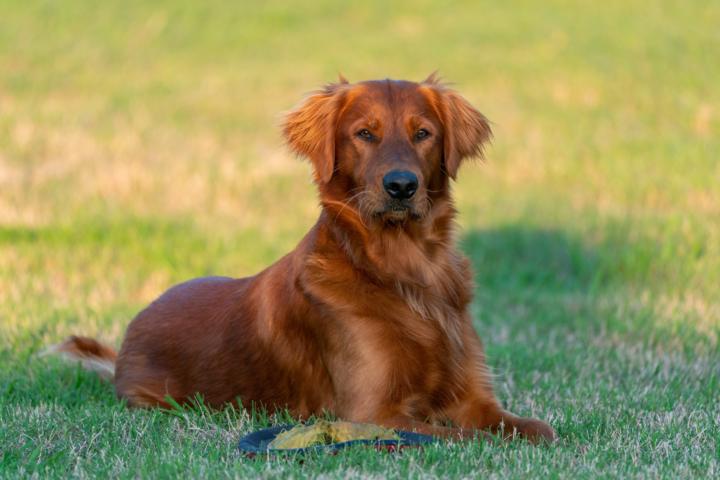
Golden Retriever
The Golden Retriever has been around since the 19th century with the breed considered to be a Scottish breed. The true origins of the Golden Retriever has changed so depending on who you ask the answer may be different. The original belief is that the Golden Retriever are direct descendants of some Russian circus dogs that were purchased by a gentleman named Lord Tweedmouth, known as Sir Dudley Marjoribanks at time of purchase. They were purchased with the purpose of hunting deer and due to their skills being acceptable they were later bred with a sandy colored bloodhound to reduce their size (they must have been massive) and improve their scenting capabilities. This origin story has since been debunked after the studbook of Lord Tweedmouth had been released by a descendant of his. This studbook shows that Tweedmouth had purchased an unregistered yellow retriever named “Nous” who was an offspring of two black retrievers. This is relevant because at the time the belief was that black dogs were better hunters and offspring that were any other color would be disposed of. Tweedmouth then bred Nous to a Tweed Water Spaniel (now extinct) named Belle and that the Golden Retrievers today are descendants of Nous and Belle. According to one source there are some chromo-lithograph pictures (which is a type of color photograph where the term is mainly used for 19th century photographs) on the cover of a magazine that shows 2 dogs with one highly resembling what looks to be a Golden Retriever. This magazine is titled “The Game Keeper” by Edmund Walker and the photo was after a painting done by Richard Ansdell. This magazine was printed 11 years before Tweedmouth purchased Nous. With this evidence the origin story of the Golden Retriever is still up for debate. There is plenty more information so I do encourage you to read the sources, particularly the GRCA.org source. One thing that can be agreed upon is the Golden Retriever was bred as a 19th century gundog and water retriever. This breed is skilled in hunting both on land and in water for pheasant, quail and deer for example. They are hardy, multitalented and excellent swimmers. They have a gentle and loving temperament (so don’t get one if you need a protection dog). This gentle and loving temperament does not mean they do not have a desire to work and will be easy going apartment dogs. They will still require exercise everyday both mentally and physically. They also thrive on having the human connection so being able to have time for your Golden is a must for their mental and emotional wellbeing.
1 like • 11d
I had a Golden that had the huge lions mane type coat. He was a great dog and when he passed it was 5 years before I got another dog.
16d •
Setting Up Your Yard to Mitigate Hunting Practice
This week I would like to talk about something that has become very much on the forefront of my mind especially as of late and that is setting up your yard to keep your dog from practicing unwanted behaviors. I will explain my living situation/set up with my dogs and what I plan to do to help with my specific concerns. As you may know I have 2 vizslas, Csili and Káosz, who are young and full of energy plus a pitbull named Lucas who is 12 years old. The vizslas each have their own thing that they “care” about the most. Káosz has a thing for lizards and Csili has a thing for birds (Káosz does as well but his is more for larger birds as we don’t see those ones as often so less practice to counter condition). We live in an RV where we are blessed to be able to have a little fenced yard and a dog door was able to be installed in the storage chute of my RV. Thanks to @Paul Bunker for his help with the dog door installation and the building of the platform so they can safely go in and out! My current fence started out as just 4ft tall livestock fencing supported with some posts and a gate but soon Káosz learned that lizards were ripe for being stalked just beyond the fence. This then turned into him hunting for them with no decompression available so his mind was not able to quiet. Even being out of the yard was no help since the lizards are everywhere on property and their existence consumed his mind. A solution was needed to block his view so now the whole fence is wrapped with garden fabric (double layer) to keep him from being able to look out and have his attention be expended on seeking lizards as this made even going on walks difficult let alone training. Unfortunately, an upgrade is needed due to Káosz learning that a 4ft tall fence is not tall enough to keep him in (thankfully this only happened about 3-4 times and I was on property for all but 2 of them. Both times he was quickly collected and returned home without having gone far). With this newfound information on his athletic skills Paul and I are going to upgrade the fence to a 6ft tall chain link fence with a proper privacy cover (it is from Alion Home if anyone needs some. If you have questions their customer service was very good and quick to respond. Will update on privacy cover once installed if anyone would like to know).
1 like • 14d
Managing the environment is the first (and often easiest) step in resolving an issue.

20d •
Noise over July 4th
Wondering what brand earmuffs you use for your dogs. A woman in my dog club is trying to find something to promote for Dog Assistance over July 4. Thank you in advance.
1 like • 14d
They work great! I used to have to medicate one of my dogs for fireworks and thunderstorms....now I just pop the ear muffs on and zero reaction to the noises. She happily wears them and just goes to sleep.
1-10 of 51
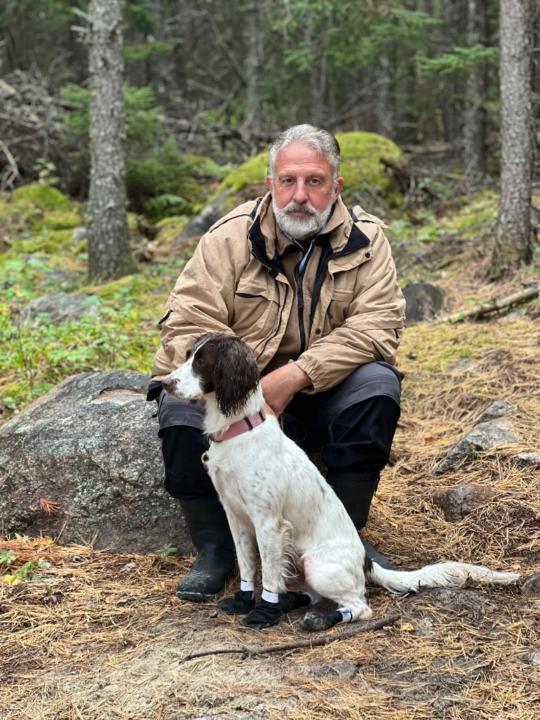
@paul-bunker-4145
Dog trainer and consultant specializing in detection in research and field deployments.
Active 1m ago
Joined Dec 18, 2025
INFJ
San Antonio, Texas