Apr 7 (edited) • Trusty Tidbits
Identifying Your Dog's Predatory Triggers and Threshold Levels
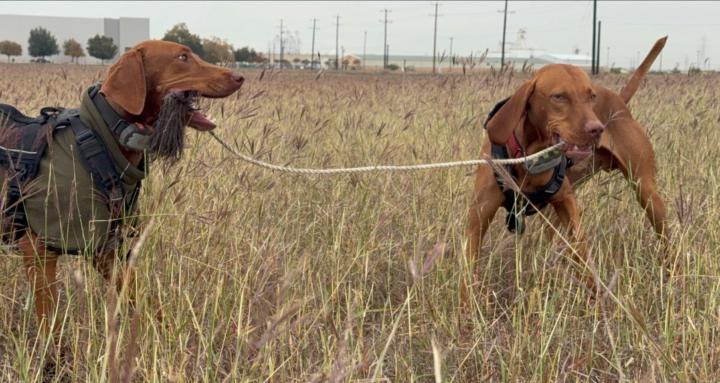
In order to understand and identify your dog’s predatory trigger it is highly beneficial to know what breed(s) of dog you have and to know what that breed was bred to do. For example, my Vizslas were bred to locate birds and other small game. Most dogs are not born with impulse control and so it must be taught otherwise they will see a trigger (or what I also call a stimulus) and want to chase after it.
The chase part of the predatory motor sequence is only the beginning of the upswing for the undesired portion of the PMS on dopamine, and other feel good hormones. The peak is if they are successful in grab biting. That is when the dopamine and other hormones will start to come down and the dog will start to relax in satisfaction.
Depending on what your dog is bred for, prefers on an individual level and personal experience the types of triggers will vary. Some dogs learn to use their eyes heavily to look for that exciting trigger. Some dogs will use their nose to sniff out a critter trail and some will use their ears to listen for a disturbance to bolt after. Many dogs will use all 3 of these approaches but not all at equal levels all of the time.
Paying attention to your dog while out on walks (even while on leash) is very important. This is the best and safest way to teach your dog how to be safe and have impulse control around wildlife. So be sure to not be on your phone and if you have to take an important phone call do your best to be in as little of a distracting area as possible while that call takes place (even if you are using Bluetooth or otherwise hands free).
So now let’s talk about threshold levels. There are three different thresholds that we should be aware of: under threshold, at threshold and over threshold.
You can think of them this way:
- Under threshold = green light
- At threshold = yellow light
- Over threshold = red light
Green light threshold, a dog is able to think, be engaged with you enthusiastically and listen to you when you give a command.
Yellow light threshold, a dog is toeing the line for thinking mode, they may ignore you and don’t seem to care about reinforcements (treats, toys, praise). At this stage your dog can either return to under threshold or be pushed to over threshold.
Red light threshold, a dog that is having an emotional/physical reaction (vocalizing, jumping/lunging at the end of their leash, running at the end of their leash back and forth, etc). At this stage your dog is over threshold and they are incapable of learning so it is best to distance yourself from the trigger as best as possible.
There is a delicate balance of whether or not to stay when your dog becomes over threshold that way your dog doesn’t have this intensity of a dopamine association with a specific spot in the park. This is where you have to take a few things into consideration:
- HOW over threshold is your dog?
- Do you have the time to wait it out or is this a busy day for you?
- Is it safe?
- If you do stay and your dog returns to being able to think and engage with you do you have reinforcements (treats and/or toys) to reward your dog with as you start to remove yourself away from the trigger?
Notice none of these were “How embarrassed are you?” or “Are people staring?”. That is because, just like with much of life, there is a learning period and sometimes that is a messy period that you just have to push through (with strategy and a plan).
This method essentially is utilizing something called Temporal Difference. There are many papers on it with plenty of ways this TD can be applied but for the world of dog training essentially all it is is your dog is learning in reverse. Your dog is learning that they are unable to chase the trigger and when they don’t chase it they get engagement from you. Over time your dog will learn that if they want to “scratch that itch” they can do that with you because that has been consistently successful. Over time you will chip away at the trigger being the peak desire to the trigger CUEING play and engagement with you. You are essentially rewiring your dog’s brain. This happens, without dampening the love for the outdoors, using a long history of positive learning.
7
11 comments
Identifying Your Dog's Predatory Triggers and Threshold Levels
powered by
skool.com/beyond-the-leash-9053
Off-leash freedom through Predation Substitution Training. Real dogs. Real results. Join owners building the bond they always wanted.
Suggested communities
Powered by