Activity
Mon
Wed
Fri
Sun
Aug
Sep
Oct
Nov
Dec
Jan
Feb
Mar
Apr
May
Jun
What is this?
Less
More
Owned by Sarah
Faith, freedom, and holistic living — join a community where we share tools and truth to live healthy, prepared, and self-reliant lives.
Memberships
Skoolers
168.1k members • Free
Skool Growth Free Training Hub
8.6k members • Free
Freedom Lovers Only
40 members • Free
Synthesizer: Free Skool Growth
44.4k members • Free
Oasis Builders
139 members • Free
LR
Living Ready Collective
35 members • Free
TH
The Holistic Hippy Mama
423 members • Free
Digital Growth Community
60.7k members • Free
The Creators Community
4.4k members • Free
34 contributions to Oasis Builders

2h •
Seed Libraries
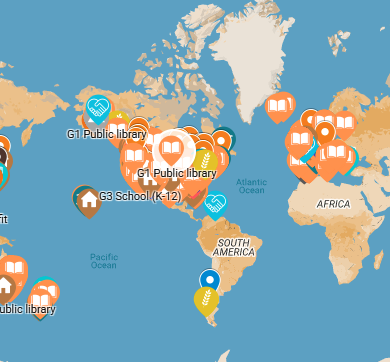
Most people think libraries are only for books... But did you know that hundreds of libraries across America also have FREE seed libraries? Just like checking out a book, you can often take home packets of vegetable, herb, flower, or native plant seeds to grow in your own garden. Many libraries simply ask that, if possible, you save a few seeds from your harvest and return them at the end of the season so someone else can grow them too. It's a wonderful example of neighbors helping neighbors. What kinds of seeds can you find? Depending on the library, you may discover: 🥕 Vegetables 🌻 Flowers 🌱 Culinary and medicinal herbs 🍅 Heirloom varieties 🦋 Native wildflowers for pollinators 🌽 Locally adapted plants that grow well in your region Some libraries even host seed-saving classes, gardening workshops, seed swaps, and demonstrations to help beginners learn how to grow their own food. Why are seed libraries becoming so popular? • They make gardening affordable. • They help preserve heirloom and locally adapted plant varieties. • They encourage self-sufficiency. • They support pollinators and biodiversity. • They bring communities together through a shared love of growing food. One of my favorite parts is that these libraries help preserve seeds that might otherwise disappear over time. As gardeners continue growing and sharing locally adapted varieties, they help maintain valuable genetic diversity for future generations. Want to find one near you? Check with your local public library or search the Seed Library Network's interactive map: Seed Library Network Map
0
0
🔥
2d •
Healping Chicken stay Cool in the Summer heat
I know a few of us have chickens so here are a couple tips. When the weather climbs into the 90s, water, shade, and airflow come first to cool our chickens. Chickens do not sweat like we do. They cool themselves by panting, holding their wings away from their body, and moving heat through their combs and wattles. Once these basics are in place, a few herbs and moisture-rich plants can add another layer of summer support. Fresh spearmint and lemon balm are commonly offered during hot weather. They are traditionally cooling herbs, and many chickens enjoy pecking at the fresh leaves. Purslane is another excellent summer plant because it naturally holds a lot of water while providing good nutrition. Chickweed, broadleaf plantain, and mallow can also make good additions when foraging or when finding them growing around the garden. One thing we want to remember is that herbs are not a replacement for good flock management. They are simply one more piece of the system. A handful of fresh herbs, a patch of edible weeds, or a few moisture-rich garden plants can help support the flock, although the foundation is still water, shade, and airflow. The goal is not to overcomplicate chicken care. It is to notice what the flock needs, use what is already growing around the home, and add support in a steady way. What herbs or garden plants do your chickens seem to enjoy most during the heat?
0 likes • 2h
I pulled up my foraging frame today and set it down in a new spot so that the chickens could have something else to do today besides roast in the heat. I took them more watermelon too. They do have shade and fresh water. I'll probably put more electrolytes in their water too.

3d •
Love/hate
What is the thing you love the most about gardening and the thing you dislike intensely. I hate it in mid summer when the grass burns off and everywhere is yellow, and I love planting trees and watching them grow to maturity.
0 likes • 2h
I don't like it about mid September when it's time to decide if I want to plant anything else because stuff is dying.
3d •
High Tech Jacket Prototype Pulls Drinking Water From Thin Air
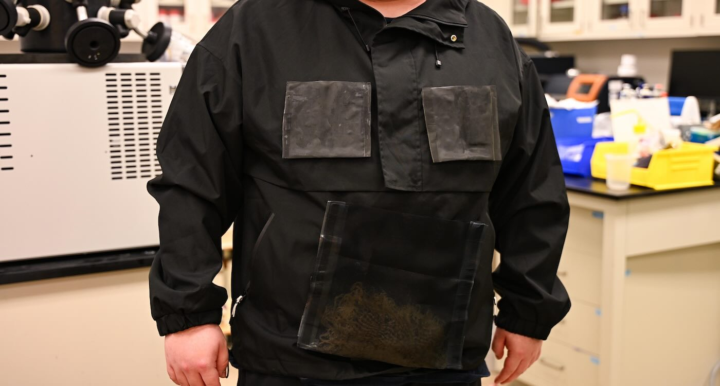
Very interesting news article I came across - A new high tech jacket developed by engineers at the University of Texas can pull drinking water from thin air. With the advance in fabric technology, the jacket can collect up to one-and-a-half pints of drinkable water a day, say scientists. They suggest the ground-breaking technology could benefit anyone who spends a lot of time in areas without easy access to drinking water, like hikers, campers, runners, agricultural workers, and soldiers. “Water harvesting from air is usually imagined as a stationary device such as a box, a panel. We wanted to rethink the form,” said research co-leader Professor Guihua Yu. By focusing on the fibers rather than building another bulky device, the researchers overcame a common problem in the field. He explained that the textile incorporated into the jacket collects moisture and funnels it to detachable harvesting units, which are then “placed in a foldable collector and heated to produce the water”. The jacket produced between 400 and 900 milliliters (0.7 to 1.5 pints) of drinkable water per day, depending on humidity levels, according to a study published in the journal Science Advances. Compared with conventional water-harvesting materials, the textile showed a three- to 10-fold improvement at scale. “The important advance here is that the team did not simply make another material that absorbs water,” said study co-author Professor Keith Johnston. “They designed a pathway for water to move quickly, from vapor in the air to liquid on the fiber surface, and then into the interior of the textile. The researchers are now eyeing applications beyond clothing – including backpacks, tents, emergency shelters and other outdoor gear, allowing items people carry every day to help collect water. They also plan to look at applying the technology to remote field operations, disaster response, and water access in arid or infrastructure-limited regions.
🔥
6d •
Weeds Can Be Soil Clues
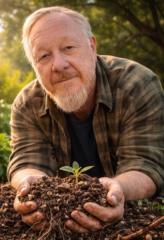
Recently we looked at how the soil surface gives us clues. Crusting, cracking, stale smells, disappearing mulch, and runoff can all show us what is happening in the garden. Weeds give us another layer of clues. Most of us have been trained to see weeds as something to pull, spray, or get rid of quickly. Sometimes that is the right move. Some weeds crowd young vegetables, spread by roots, or go to seed faster than we can keep up with them. Although before we pull everything, it helps to ask what the plant may be showing us. Plantain, chickweed, dandelion, or dock may point toward compacted, disturbed, or heavy soil. Rushes, sedges, buttercup, and horsetail often show up where soil stays wet. Mullein, yarrow, thistle, and pigweed can handle dry, open, disturbed ground. Nettles and lamb’s quarters often show up where fertility and nitrogen are stronger. One weed does not give us a complete soil report. It is a clue, not a final answer. We still need to use a soil test, a moisture check, a shovel, and common sense. A plant identification app can help. I use PictureThis quite often as a starting point. Apps are not perfect, but they can help us put a possible name to a plant. Before eating, using, or letting a plant spread, it is wise to compare it with another trusted source. In nature, bare soil does not stay bare for long. If we leave ground open, nature will send plants to shade the soil, hold moisture, feed insects, catch minerals, and begin rebuilding cover. For soil regeneration, nature is doing the hard work by planting every inch. Our goal is to manage with understanding. We can leave some flowering weeds on edges, pathways, or wild corners for pollinators, while keeping them away from vegetable rows and young plants. We can chop and drop some weeds before seed heads form, mulch open soil, and plant beds more densely to limit bare ground and reduce opportunistic seed germination. Some weeds are edible or useful herbs, including dandelion, plantain, chickweed, lamb’s quarters, purslane, violet, nettle, and cleavers, although proper identification is important before we eat or use a plant medicinally. We also avoid plants from roadsides, sprayed yards, pet areas, polluted soil, or places we do not know well.
Poll
7 members have voted
2 likes • 3d
Now that I've been foraging more, I seek to identify them first! I left some horseradish in my garden area this year because last year my neighbor went out in search of it!
1-10 of 34

@sarah-peterson
Christian wife, mom of 5, researcher & homesteader. Sharing resources on health, freedom, preparedness, faith, natural living, and self-reliance.
Active 48m ago
Joined Jun 8, 2026
S.E. Ohio