
Write something
Pinned

Nov '25 •
Welcome to Wise Divine Women Collective
Welcome to Wise Divine Women Collective wellness community for women ready to honor their bodies, balance their hormones, and walk in alignment with God’s design. This is a continuation of the Wise Divine Women Podcast, where I help you go from fed-up to faith-fueled, helping you become the wise divine woman that God has called you to be! You were never meant to navigate hormonal changes, fatigue, or confusion about your health alone. And you certainly weren’t meant to do it without your faith at the center. Inside the Wise Divine Women Collective, we bring together the power of biblical fasting, whole-food healing, and Spirit-led rhythms—designed specifically for Christian women 40+ who are ready to restore their bodies and renew their minds.

May 1 •
On Road…
While I’m on the road, something shifts for me. It gives me space… space I don’t always have at home. And in that space, I get to really listen—not just to the women I meet along the way—but to what’s stirring inside of me. What I’m being called to create. What actually matters. What will truly serve. Because when I’m home, there are so many moving pieces, so many responsibilities… and the thoughts don’t always get finished. But out here… I can complete them. I can follow the idea all the way through.I can sit in the quiet.I can hear clearly. And you’ve probably noticed… I come in strong, I’m present—and then I go quiet. That’s part of my process. But I also know I’m being called to show up more consistently, to be more present with you, to lead and share these thoughts as they’re unfolding—not just when they’re perfectly packaged. So here’s where I am… I’ve been deep in creation—and I can honestly say, something profound has come together. It’s not just a program. It’s the message. The mission. The “why” behind everything I’ve chosen to focus on—breast health, hormone health, and walking alongside women in a much deeper way. It’s been a reset for me too. A return to why this matters so much.Why you matter so much. And now… it’s coming to life. ✨ Ignite: The 10-Day Breast & Hormone ResetThis is where it begins.This is where we spark something.It’s about opening your eyes, connecting the dots, and setting your body—and your soul—in motion. ✨ Restore: The Breast & Hormone Health ProgramThis is where everything comes together.Thermography. Functional testing. The patterns I’ve seen over years of working with women. The deeper understanding of what your body has been trying to say.This is the integration. ✨ Root Cause Reset: The 1:1 ExperienceThis… is my heart.This is where we go deep. Fully personalized. Fully supported.A 90-day journey where we don’t guess—we listen, we test, we walk it out together.And I can’t even tell you how much I love this work.
1
0
Apr 18 •
You will be the first to know....
Something is coming, and I've been waiting to tell you this for a long time. 🌿 Sister, if you've ever sat in a doctor's office and walked out with a 'your labs are normal' and still felt everything but — this is for you. I'm officially opening the doors to my FDN practice and the Wise Divine Women Collective — a space where faith meets functional wellness, and where we stop guessing and start getting answers. Here's what I know to be true: ✦ Your body is not broken. ✦ Your symptoms are not "just aging." ✦ You were made for wholeness — Jeremiah 29:11 tells us so. Inside the Wise Divine Women Collective, you'll find: 🔬 Root cause health coaching (finally — testing, not guessing) 🌡️ Breast health education + thermography guidance 🎙️ The Wise Divine Women Podcast 🙏 A faith-filled sisterhood of women 40+ who are done settling We launch soon — and I want YOU on the inside before the doors open. 👇 Click the link below to get on the early access list. I'll be sending everything to my email community first. This is your sign. Let's find your way back to you. To your health & wholeness, Dana 🌿 #WiseDivineWomen #FunctionalHealth #HormoneHealth #BreastHealth #WomenOver40 #FaithAndWellness #Thermography #FDNPractitioner #WhereFaithMeetsFunctionalWellness #Perimenopause #RootCauseHealing https://mailchi.mp/450164863e0c/dana-irvine-fdnp-functional-health-and-wise-divine-women-collective
2
0
Apr 18 •
Hello Sisters
I wish each of you an incredible, restorative weekend! If you are like me, you have your to-do list on your phone, many moving parts flowing through your mind — and of course, your cold coffee in hand. Stop. Breathe. Before you take one more step into the busyness of this day, I want you to place your hand over your heart for just a moment. Feel that? That steady rhythm has been faithful to you through every hard season, every sleepless night, every moment you weren't sure you could keep going. You are still here. That is not small. This weekend, I am giving myself permission to be present — not perfect. To move slowly and with intention. To speak kindly to myself the way I would speak to the women I love most. And I am inviting you to do the same. Be thoughtful. Be gentle. Be full of love — starting with yourself. Your body is not your enemy. It is your most faithful companion. Treat her like it. "She is clothed with strength and dignity, and she laughs without fear of the future." — Proverbs 31:25 To your health & wholeness, Dana 🤍 If you need me please reach, I am here for you - now go be you!
Apr 1 •
What Is Thermography — And Why Every Woman Over 40 Needs to Know About It
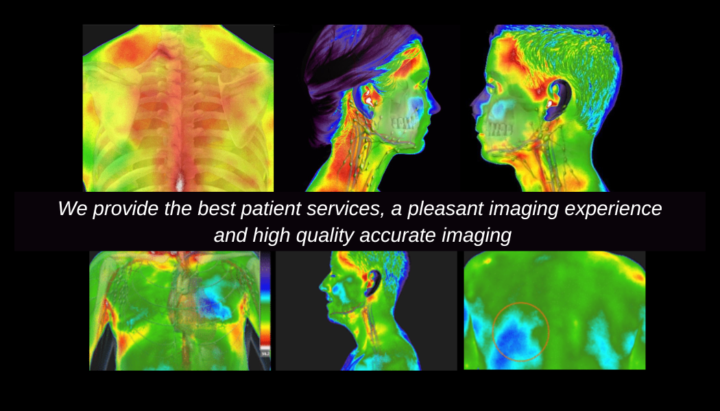
Your body has been speaking. Thermography helps us finally listen. If you've followed me for a while, you might know me as a functional health coach, a hormone nerd, a faith-filled woman who can't stop talking about testing, not guessing. But here's something that surprises even my longest-time followers — I've been a medical thermographer for nearly a decade. Today, I want to pull back the curtain on what thermography actually is, answer the questions I hear most often, and share why I believe it's one of the most powerful — and underused — tools available to us right now. Pour yourself something warm. Let's dive in. So… What Is Thermography? Thermography is a non-invasive, radiation-free imaging tool that uses an infrared camera to detect and map heat patterns across the body. What we're looking for: blood flow, congestion, inflammation, and physiological changes — often before symptoms even appear. The camera we use at Thermography Medical Clinic is designed by Fleur, right here in Canada. The imagery it produces is a colour-coded map of your body's thermal landscape: - 🟢 Green = within normal range - 🟡 Yellow / Red / White = varying levels of inflammation - 🔵 Blue / Deep Purple = congestion or areas running colder than they should - Those colours and patterns? They mean something. And that's where the real conversation begins. How Does It Actually Work? When you come in for a session, here's what to expect: You go through a health intake, then undress to the appropriate level for your scan (more on that in a moment). You stand for about 15 minutes to acclimate to room temperature — we're removing the impression of your bra, the heat from your clothes, and bringing your skin to a neutral baseline. The room is kept at a comfortable temperature — not too hot, not too cold. There are no drafts, no windows, and the room is completely private. It's just you, me, and the camera. We then photograph different regions of the body — left and right comparisons are essential — moving through the head, throat, neck, chest, upper back, breast, abdomen, pelvic floor, and (for full body studies) the legs, knees, feet, arms, and hands.
0
0
1-21 of 21
powered by
skool.com/wise-divine-women-collective-2150
This is your home for inspiration, encouragement, and transformation — a sacred space where faith meets functional health.
Suggested communities
Powered by