
Write something

May 8 •
I gave AI 200 of my case files and asked it to audit me. Here's what it found that I didn't even know I was doing.
I copied my case notes from over 200 cases I have worked as a Field Service Engineer at General Motors, (removing personal information) and pasted it into a single document. I uploaded this document along with a transcript of my book, Hotwire Your Skills, to Claude AI. I then asked Claude to analyze my case summaries and compare to my published diagnostic process -- to determine if I am subconsciously/unknowingly doing any additional diagnostic steps outside of what I am aware of. I also asked it to give me an analyzed rating on how well I am following the process I preach. I also asked it for insights on the most common type of problems I handle. The results shocked me. First, it revealed 7 diagnostic steps I perform consistently across hundreds of cases that are not published in my book. Steps I didn't even realize I was doing until an AI read hundreds of my own case notes back to me. The biggest one? "Like-Unit Comparison" — pulling an identical vehicle off the lot to compare behavior side-by-side. It showed up in the majority of my cases and is arguably my single most powerful diagnostic tool. A few of the other unnamed steps it found: — Pre-Visit Phone Triage: arriving with a diagnosis already partially formed — Aftermarket Mod Screening: catching non-GM parts early — Multi-Stakeholder Briefing: aligning the service manager, advisor, and tech as a team before touching the vehicle — etc. Second, it graded my framework execution. The good news: my concern verification and repair verification are strong — I consistently exceed what my book prescribes. The honest feedback: I sometimes start testing before I've written a formal game plan, and a few cases show component replacement happening on strong suspicion rather than confirmed root cause. Fair point. Third — and this one genuinely surprised me — 29% of my entire caseload resolves as "vehicle operating as designed." No defect. No repair needed. Just a vehicle doing exactly what it was engineered to do, with a customer (or dealer) who didn't know that.
0
0
Apr 29 •
The Laws of Automotive Service
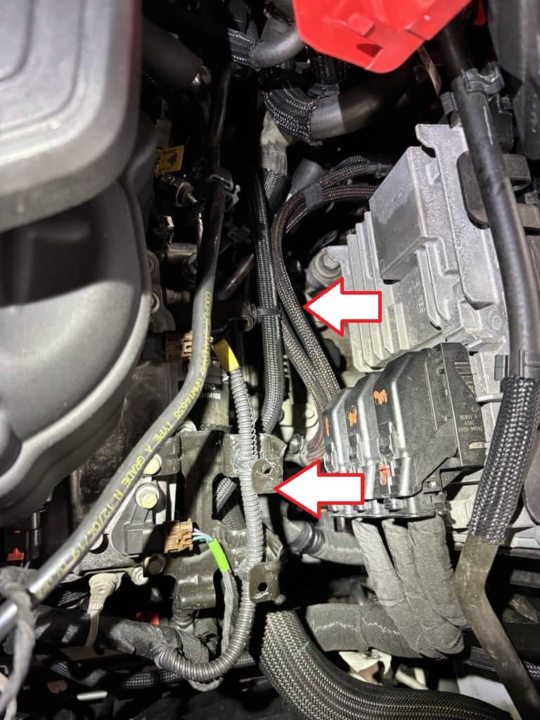
The concept of “law” has been on my mind a lot lately. Not those laws made by governments. I mean a “law” as something that is always true. Like how things fall down when you drop them. Or how an object in motion stays in motion unless acted upon by an outside force. That’s a law. It tells us what will happen every time when something specific happens first. Here’s the truth about these laws: when we do something, we get a result. It shows up in life, in nature, and in our work every single day. I’ve spent about 8 years in the automotive service world. Over that time, clear patterns have stood out to me. Not guesses. Not opinions. Patterns. I’ve narrowed it down to 3 simple laws for working on cars: 1. The Law of Recency This law states that what has been done to the vehicle recently (prior to the current customer concern) has a very high likelihood of being related to the current concern. If something was touched or fixed recently, there’s a strong chance it’s tied to the problem now. 2. The Law of Proximity This law states that what is physically located close to the system and/or component of concern is very likely contributing to the current customer concern. If it’s close to the problem area, it’s not there by accident. It’s likely part of the problem. 3. The Law of Design Intent This law states that if the vehicle, system, or component in focus is not being operated, installed, or fastened in the manner in which it was designed to be, then problems or failure will result. If something isn’t installed or working the way it was designed to, it will cause you problems. Every time. Let me give you a couple of examples. I once was tasked with an intermittent no-crank concern on a prison bus. This stumped a shop for 3 months, particularly because the issue would come and go without any rhyme or reason. What I ultimately found was a very extensive aftermarket change to the dash wiring harness to accommodate a GPS tracker. This illustrates the importance of the 'Law of Recency' -- reviewing what had recently taken place to the vehicle can steer you in the right direction long before too much time is wasted.
Apr 24 •
'Maybe' And 'Someday' Are Where Dreams Go To Die
I had a big dream... And I let it die. I walked away from it because I lost my vision. And if I’m being honest, I felt like I looked stupid trying to figure it out in public. So I went quiet. But over the past year, I couldn't shake this thought: There are a lot of technicians out there doing everything 'right'—showing up early, staying late, working hard—and still hitting a ceiling they can’t explain. They're working 50+ hours a week…turning wrenches nonstop…and still feeling stuck. Not because they’re lazy. Not because they don’t care. But because most technicians never get the kind of exposure that sharpens real diagnostic thinking. I know, because I've been there. The guys who can actually think through a problem—who don’t guess, don’t throw parts, don’t rely on luck—They don’t chase pay. They name their price. Something about this never made sense to me. How is it that I can walk into a dealership, look at a system I’ve never seen before, and find and fix a fault in only a couple hours… When someone who’s been there 20+ years has been stuck on it for months? It’s not experience. It’s not talent. And it’s definitely not luck. What I’ve realized is—it comes down to a few things most people never get taught. Number 1: I don’t guess. I follow a process. If you're process oriented like me, check out my book Hotwire Your Skills! Number 2: I don’t go in hoping I’ll find something—I go in KNOWING there’s an answer, and it’s just a matter of working toward it. Number 3: I don’t rush to replace parts. I slow down long enough to understand how the system is actually supposed to work. And Number 4, over time, something develops—You begin to recognize patterns. Things that used to feel random… start to stand out. Call it instinct, call it experience, call it whatever you want. But it’s built. Not given. That’s what I’ve seen. And this is exactly what I want to start putting into words, because more techs are capable of this than they realize. Seriously! What I find in my everyday work is this: Technicians are more capable than they realize!
1
0

Feb 19 •
Oil overflow
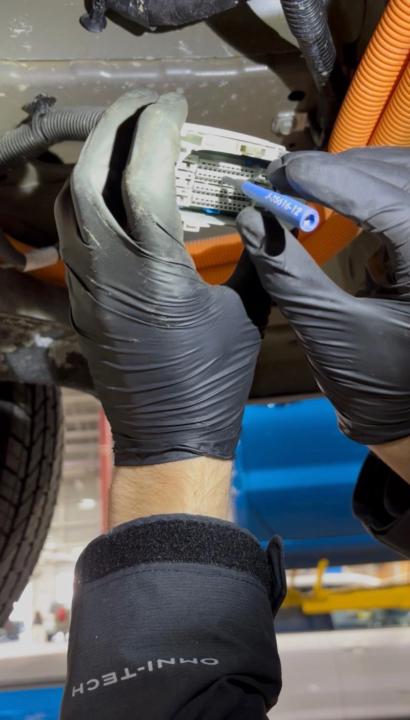
Hello Torque Authority! I hope that this following message will not offend the hub: I’m struggling with an issue for far too long with both Toyota dealership and 3rd party mechanics, so I’ve figured to drop a question here. I own a 1.4L D-4D 1NDTV Yaris from 2011. I have always used high end diesel, even additional additives and made sure the regeneration occurs (I have enabled the indicator light to show me when it triggers). I end up with P2463 (soot accumulation) I also ended up twice with P252F (oil level over capacity). If I trigger a manual regeneration, the soot goes down to 15%. The first time the oil level went overboard, the following were replaced: gasket EGR cooler, gasket EGR valve, gasket EGR inlet, gasket EGR. The car accelerates normal, the engines runs smooth, the sound of the engine is constant as always. Have you encountered and tackled this before? Thank you in advance, Răzvan
Dec '25 •
Torque Spotlight
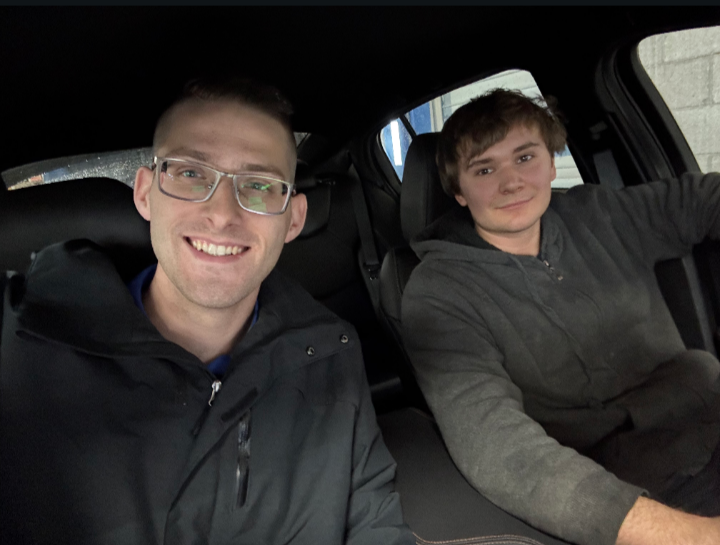
Today we're highlighting our very own @Alek Bielenda ! I recently had the privilege of working with him on a vehicle inspection. Alek is the man!! Every so often, a technician walks into the shop with a level of drive that can’t be taught—only developed. That person is Alek, a rising technician whose commitment, pace of learning, and professional presence already set him apart. Alek may be newer to the field, but you wouldn’t know it by watching him work. He approaches every task with the same seriousness and curiosity you’d expect from a seasoned veteran. He doesn’t just complete the job—he studies it, breaks it down, and makes sure he understands the why behind every step. That mindset is what separates a good tech from a great one, and Alek is clearly on the latter path. What stands out most is his hunger to excel. In an industry where it’s easy to settle into routine, Alek refuses to coast. He’s constantly seeking additional technical information, clarifying systems, learning new diagnostic strategies, and sharpening his understanding of the vehicles he works on. Ask a question, and he’ll either know the answer—or he’ll hunt it down, verify it, and bring it back with clarity and confidence. But knowledge alone doesn’t make a top-tier technician. Professionalism does—and Alek brings that in full force. Whether he’s engaging with coworkers, approaching a repair order, or representing the shop, he shows respect for the craft and the people around him. He listens well, communicates clearly, and carries himself with the kind of reliability that customers and team members notice. These qualities—technical aptitude, rapid learning, and genuine professionalism—form a combination that’s rare in a newer technician. And they’re exactly why Alek is already earning trust, handling increased responsibility, and making measurable contributions to the team. Alek’s trajectory is obvious: he’s going places. His foundation is strong, his work ethic is sharp, even when his growth curve appears steep. What he’s building now—through repetition, curiosity, and consistent effort—will become the backbone of a long, successful career in the automotive industry.
1-17 of 17
powered by
skool.com/torque-authority-hub-5709
Torque Authority exists to give every automotive technician the process, mindset, and business model to diagnose anythingand earn what they deserve.
Suggested communities
Powered by