
18h (edited) • Permaculture 🌵🦋🐝🐓🦃🦢🦆🐐
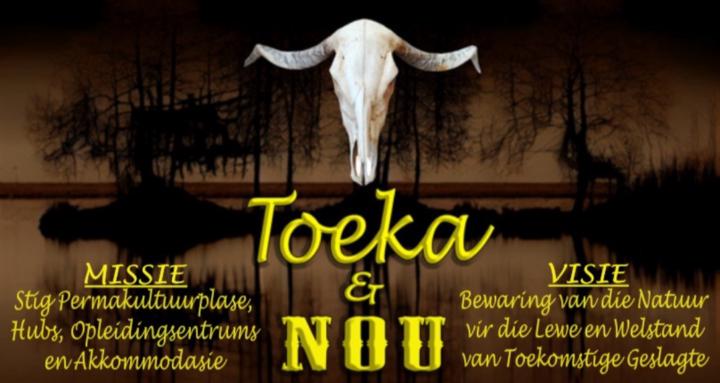
Toeka & Nou Misson and Vision
PRESENT
DON’T KILL THE WORLD
Preserving Natural Resources For Future Generations.
Natural resources are essential to human survival and the overall health of the planet.
These resources include animals, water, air, minerals, timber, farming land, wildlife, among others.
The depletion of these resources can have a severe impact on future generations.
Therefore, it is essential to conserve natural resources to ensure that they are available for future generation.
The Benefits of Conserving Natural Resources for Future Generations
1. Environment Benefits
1. Conserving natural resources has significant environmental benefits. When we conserve
natural resources, we help to protect and preserve the environment.
◦ For example, conserving forests helps to reduce deforestation, which is a leading cause of climate change. Trees absorb carbon dioxide from the atmosphere, and when they are cut down, the carbon dioxide is released back into the atmosphere. By conserving forests, we can help to reduce the amount of carbon dioxide in the atmosphere, which can help to mitigate the effects of climate change.
2. Economic Benefits
1. Conserving natural resources also has economic benefits. When we conserve natural
resources, we reduce the need to extract new resources. This can help to reduce the cost of
production and make products more affordable.
◦ For example, conserving water can help to reduce the cost of water treatment and
distribution, which can help to make water more affordable for everyone.
3. Social Benefits
1. Conserving natural resources also has social benefits. When conserve natural resources, we
help to ensure that future generations have access to the resources that they need to survive and thrive.
◦ For example, conserving forests can help to ensure that future generations have access to
timber and other forest products. This can help to support local economies and provide
opportunities for future generations.
4. Health Benefits
1. Conserving natural resources also has health Benefits. When we conserve natural resources,
we help to reduce pollution and improve the quality of the air and water. This can help to
reduce the risk of respiratory diseases and other health problems.
◦ For example, conserving water can help reduce the risk of water-borne diseases, which can be deadly.
5. Cultural Benefits
1. Conserving natural resources also has cultural benefits. Natural resources are often an
important part of cultural heritage and can have significant spiritual and cultural value.
◦ For example, conserving forests can help to preserve sacred sites and protect the cultural
heritage of indigenous communities.
Conserving natural resources is essential for the health of the planet and future generations. It has significant environmental, economic, social, health and cultural benefits. By conserving natural resources, we can help to protect the environment, support local economies, improve public health,
and preserve cultural heritage. We all have a role to play in conserving natural resources, and we must work together to ensure that future generations have access to the resources that they need to survive and thrive.
Adopted a Permaculture Design
Permaculture is more than than just a farming technique; it’s a holistic design framework that
revolves around the flow of energy within ecosystems. Permaculture farming is when food growing becomes a part of this ecosystem design. A permaculture design aims to close the energy cycle and support nature in its ability to provide abundance.
The Difference between Agriculture, Organic and Permaculture
Agriculture: The science or practice of farming, including cultivation of the soil for the
growing of crops and the rearing of animals to provide food, wool, and other products.
Organic farming: Organic farming nurtures both nature and us, the consumers. It also
treasures soil health as the foundation for sustainable farming practices and it promotes the use of natural fertilisers. Organic farming optimises the natural carbon cycle. The wast
from plants becomes the food (fertiliser) of another. Organic farmers also integrate
animals to help provide fertiliser and pest control.
Permaculture Design: The development of agriculture ecosystems intended to be
sustainable and self-sufficient. Permaculture Design and planning steps beyond
agriculture and organic farming. A permaculture design aims to close the energy cycle and support nature in its ability to provide abundance.
There Are 12 Principles In Designing Permaculture Spaces
1. Observe And Interact
2. Catch And Store Energy
3. Obtain A Yield
4. Apply Self-Regulation And Accept Feedback
5. Use And Value Renewable Resources And Services
6. Produce No Wast
7. Design From Patterns To Details
8. Integrate Rather Than Segregate
9. Use Small And Slow Solutions
10. Use And Value Diversity
11. Use Edges And Value The Marginal
12. Creatively Use And Respond To Change
Conclusion
Permaculture is a way for one to deepen their connections with the wisdom in nature by using the ecosystem and its services and integrating it into the well-being and progression of humankind.
The 12 Permaculture Design principles are based on three foundational ethical concepts; Fair Share, People Care, and Earth Care.
Industrial agriculture, like monoculture, is to produce the most produce at the cheapest cost, regardless of the environmental implications. In contrast, Permaculture considers all environmental implications and uses them to design its spaces.
We know now that Agriculture is the general practice of cultivating livestock and plants to make as much produce as possible at the lowest rate and quickest time. Permaculture is the tool to integrate the ecosystem and its patterns into our way of life and the way we farm our food.
Short-term Goals
Purchase First Investment Properties and Farms
Accommodation Facilities for All Employees and Trainees
Build Training Centre and Equip with Equipment
Waist Management
Long-term Goals
Established Permaculture Design Farm
Establish 5-star Entrepreneur Development Hubs, and Training Centres in all Enclosed Nature Conservation Areas that will be Purchased
Fully booked workshops
Full breeding of indigenous game and livestock
Accommodation Facilities for Disable, Elderly and Handicapped People on these Enclosed Nature Conservation Areas
Established Rehabilitation Centres for Homeless People with and without Children that can’t Afford Education, Training Skills and Learning to Open Doors for Their Future
3
0 comments
Toeka & Nou Misson and Vision
powered by
skool.com/toeka-nou-masterminds-1188
Preserving the life and well-being of future generations.
Suggested communities
Powered by