

23d •
Mofongo: The African Kitchen Lives On
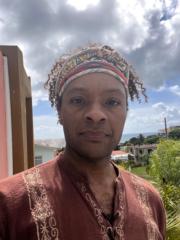
I love when food opens a bigger conversation. Yesterday it was mofongo. Lorenzo was telling me how he makes this dish at home in Puerto Rico. Lorenzo also makes trifongo. Lorenzon and his partner Stan live near the beach. They have plantains and bananas on their land. Plantains are the main ingredient in mofongo. So many of our dishes trace back to Africa. They traveled. They adapted. But they never lost their spirit. I found this recipe on YouTube, but I haven't tried it. Next year I’ll be spending more time in Puerto Rico and St. Croix. I’m looking forward to eating more traditional dishes. Let’s talk about it —What’s a dish that connects you to your ancestors? What’s always on your table?
Feb 14 •
Happy Valentines Day
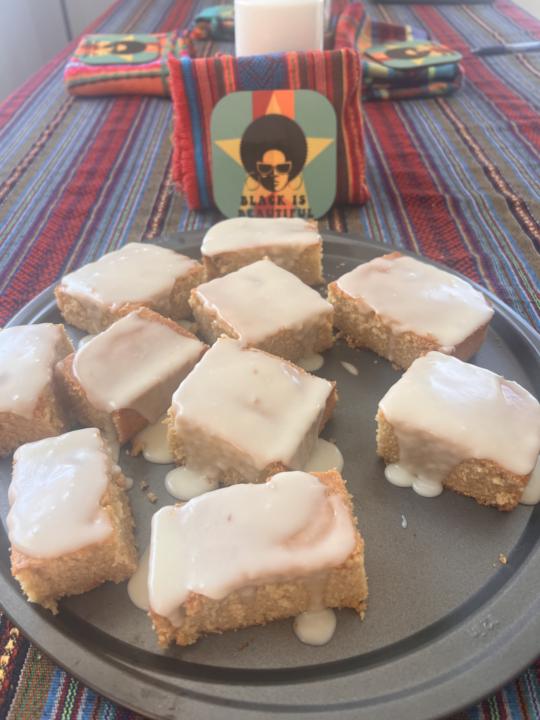
In remembering my ancestors on this love holiday, I decided to make a treat that was popular in my family before the 1960s….Lemon Cornbread Pound Cake with a Lemon Glaze. This dessert was made on special occasions like today. Cornmeal was an inexpensive dry good and it was used to make cornbreads, a batter for fish and meat, Johnny cakes, hush puppies, etc. But Black folks also used it in desserts before boxed pound cake mix became popular. Here’s a shout out to the ancestors.
Jan 13 •
Egusi, Ancestry, and the Flavors That Traveled With Us
I never get tired of African food—I could honestly eat it every day. One of my all-time favorite dishes is egusi. Egusi is made all throughout West Africa and is often served with fufu or pounded yam. I truly believe egusi inspired callaloo in the Caribbean—our ancestors carried the knowledge, the flavors, and the spirit across the ocean. While I was in Nigeria, my plan was to film my cook in the kitchen, but it didn’t happen, and I was honestly disappointed. Still, the experience stayed with me. I recently found an online recipe for Yoruba-style egusi that I haven’t tried yet—but it’s definitely on my list. Food is memory. Food is culture. Food is connection. What are your favorite dishes? 👇🏾🍲
Jan 18 •
Ancestral Heat: Spices, Castles, and a Call to Ethiopia
A few days ago, Alicia Elias—Director of Global Operations at the Across the King’s River Foundation and a “dedicated soldier” in the King’s Circle—messaged me on WhatsApp with a simple question: “Are you going to cook something with your spices this weekend?” She had sent me Ethiopian spices. Ethiopian coffee. And a jar of honey too. The honey is dark—and it has cumin in it. So good. Every gift pointed back to the kitchen—to heat, flavor, and intention. That’s when the spices really came into focus. A big bag of berbere and a small bag of mitmita. “The mitmita—be careful with it,” she warned. "They put that in kitfo and dulet. It’s also used on the side of the food like a pepper sauce. You dip your fingers in it after picking up the food with injera.” Ancient flavors. Thoughtful gifts. Tradition passed hand to hand. I’m a lucky man. And Alicia and I are excited. We’re planning a retreat to Ethiopia this September. We’ll explore ancient sites in Addis Ababa and travel north to Gondar—the Camelot of Africa—where stone castles still remember ancient kings. You’ll experience a traditional Ethiopian coffee ceremony too. King’s Circle members—and a few others—will get the best discounted rate, and you’ll be able to secure a spot before I mention it to anyone else in my fan base. We’re limiting the trip to ten people. There are only ten seats—and you can be one of them. We’ll have all the details for y’all soon. In the meantime, back to Alicia’s question. What should I cook with the spices? Lamb tibs is one of my favorite Ethiopian dishes. I’ve never made it at home, but with these spices, it feels like the right moment to try. I’ll fire up the pan this afternoon and let you know how it turns out. And in the meantime, think about coming to Ethiopia with us. Some invitations don’t come from people. They come from your ancestors.
Jan 12 •
A Moment in the Kitchen, A Vision for King’s Circle
King’s Circle is growing. In time, we’ll explore cuisine as culture. We’ll explore African, African American, African Caribbean, and African Latino culinary traditions. We’re building toward a living classroom in King’s Circle. It will include shared recipes, conversations with chefs, and stories rooted in history, migration, and creativity. This is just the beginning. There’s so much more to come. In this clip, my friend Orphee from Benin is preparing a dish for me in my kitchen. He made this dish when he visited me with his partner in Oakland last year. It’s a moment filled with memory, generosity, and connection. Orphee teaches traditional dance from Benin. His work is deeply tied to culture, rhythm, and spiritual life. Soon, you’ll get to meet Orphee in King’s Circle. He’ll share his thoughts on Vodun, cuisine, and dance. I began studying the Fon language, one of the major languages of Benin. I started studying Fon in preparation for shooting the film Becoming Light Again with Akua. The film will take place mostly in Benin. Learning the language has been part of my commitment to meet cultures with care and respect. I’ll be sharing my Fon language-learning journey with you in King’s Circle as well. This is the kind of learning we’re cultivating in King’s Circle. Lived culture. Shared openly. Carried forward together.
1-5 of 5
Leaderboard (30-day)
1
+111
2
+101
3

+99
4

+47
5
+40
Powered by