
Write something

Jun 15 •
Your estrogen might be "normal" and still be causing symptoms
One of the biggest misconceptions in women's health is that estrogen is only a problem when it's "high." In reality, estrogen can become problematic when it's too low, too high, or building up faster than your body can clear it, which is called estrogen dominance. This is especially common during perimenopause when:✔️ Ovulation becomes inconsistent✔️ Cycles become irregular✔️ Hormone fluctuations become more dramatic✔️ Detox pathways slow down (BUT you can still have estrogen dominance even when all of the above are "normal"). You may experience: • Bloating • Breast tenderness • Mood swings • Fatigue • Heavy periods • Spotting between cycles • Increased PMS symptoms or anger/rage 💡 Healthy hormones aren't just about what you make. They're also about what you clear. Here are 3 ways to support healthy estrogen metabolism naturally: 🥦 Eat more cruciferous vegetables. Broccoli, cauliflower, Brussels sprouts, cabbage, kale, and arugula contain compounds that help support healthy estrogen metabolism. 🌱 Increase fiber intake. Fiber helps bind and remove excess hormones through the digestive tract. If you're not pooping regularly, you're not clearing hormones efficiently. 💊 Don't overlook key nutrients. Your liver relies on nutrients such as: • B vitamins • Magnesium • Choline These nutrients help support methylation and detoxification pathways that are involved in hormone clearance. Remember: Estrogen isn't the enemy. The goal is balance, making sure your body can properly use, process, and eliminate hormones the way it was designed to.
2
0
Jun 14 •
Those late-night wakeups
If you're waking up between 2am-4am and tried all the things: GABA, magnesium, sleeping pills, etc., it might actually be your blood sugar. While you sleep, your body still needs fuel. If your blood sugar drops too low, your brain sees it as a threat. To protect you, it releases stress hormones: • Cortisol • Adrenaline • Glucagon These hormones raise blood sugar, but they also wake you up. Your body is choosing survival over sleep. Common triggers: - Not eating enough during the day - Skipping dinner - Low protein intake - Very low-carb diets - Alcohol at night - Long gaps between dinner and bed Even “healthy eating” can backfire if total intake is too low. Try a small snack before bed, preferably a protein with a complex carb and minimal fat. Try this out if you're struggling with sleep and let me know if it helps.
2
0
May 21 •
Tinnitus, Ear Ringing, Allergies, and Hormones
This is a long one but bear with me. It's worth the read if you're going through this. If you’re in your 30's, 40s, or beyond and suddenly dealing with: ✔ Ringing ears (tinnitus) ✔ Ear fullness or pressure ✔ Weird vibrations/fluttering sensations ✔ Increased sound sensitivity ✔ More allergy symptoms than usual ✔ Feeling “wired,” anxious, or overstimulated You are not imagining it. This is one of those things that many people experience but don't realize it might be tied to hormones. For me personally, it's probably my worst symptom (tinnitus and allergies). Many women notice ear symptoms during perimenopause and menopause because your hormones affect your ears, nervous system, immune system, and inflammation levels. What’s actually happening? Your ears are not isolated little body parts. They are deeply connected to: - Hormones - Blood flow - The nervous system - Histamine/allergy pathways - Inflammation - Muscle tension (jaw/neck/TMJ) During perimenopause, estrogen and progesterone fluctuate dramatically. Those shifts can affect the inner ear and auditory system in several ways. 1. Estrogen helps protect the ears Estrogen supports: - Healthy blood flow to the inner ear - Auditory nerve function - Neurotransmitters that calm the nervous system (like GABA and serotonin) - Fluid balance and inflammation regulation When estrogen fluctuates or declines, the auditory system can become more sensitive. This may show up as: - Ringing (tinnitus) - Ear fullness or pressure - Sound sensitivity - Feeling like your ears are “off” even when hearing tests are normal Many women notice symptoms fluctuate around ovulation, PMS, or during major hormone shifts. 2. Histamine & allergies often ramp up in perimenopause Estrogen and histamine are connected. When estrogen fluctuates, histamine can become more active. Histamine isn’t just allergies, it also influences inflammation, blood vessels, and fluid regulation. That can mean: - More sinus congestion - Eustachian tube dysfunction (pressure/fullness) - Ear popping, muffled hearing, or fluid sensations - More ringing or sensitivity in the ears - Increased seasonal allergy symptoms
1
0
May 20 •
Welcome new members!
Hi @Ara Richardson and @Amélie Lynn ! Welcome to the community and thank you so much for being here. Please feel free to ask any questions you have or bring up any topics you’re interested in. While this group is new and growing, this is a great time to ask anything you’re curious about. My goal is to ensure that the information here is helpful to you. Thank you!
0
0
May 16 •
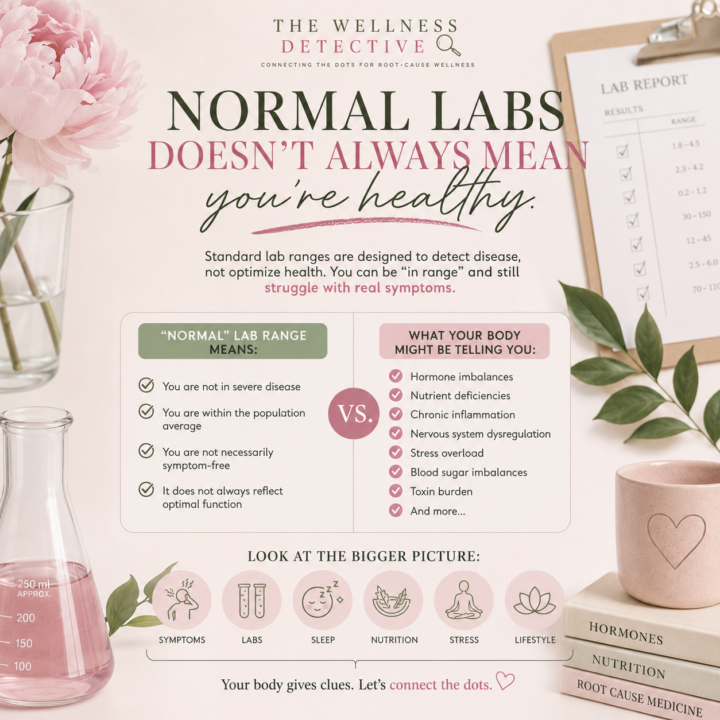
Why your labs look normal, but you don't feel normal.
How many times have you heard: 'your labs look normal" or even that they look "good"? This was one of the things that really drove me crazy because I KNEW something wasn't right and yet every basic test I had came back "normal"; even in the ER, there was nothing visibly wrong on my blood work. I hear this a lot from clients, family, and friends too. So why do so many people still feel exhausted, inflamed, anxious, dizzy, burned out, foggy, or unlike themselves but have "normal" blood work? One of the biggest problems in wellness is that “normal” does NOT always mean: optimal, symptom-free, or healthy for YOU. There is also a great lack of individualization in modern medicine's lab work. Most standard lab ranges are designed to identify severe disease (aka you're basically one foot in the grave before anything looks off), not necessarily early dysfunction, hormone shifts, nutrient depletion, chronic stress, inflammation, or nervous system imbalance. Their levels are also far from optimal ranges where most people really should fall into. That means you can technically fall “within range” and STILL struggle with symptoms like fatigue, weight gain, hair loss, anxiety, dizziness, poor sleep, brain fog, burnout, hormone chaos, chronic inflammation, etc. etc. etc. This is why context matters. Lab markers should never be looked at completely isolated from: ✨symptoms ✨stress level ✨sleep ✨nutrition ✨inflammation ✨nervous system health ✨hormones ✨lifestyle patterns Our bodies are constantly giving us clues. Sometimes the issue isn’t that “nothing is wrong”, it’s that nobody has connected the dots yet. This is a HUGE reason why I created this community. 💗 Have you ever been told your labs were “normal” even though you felt awful?
3
0
1-7 of 7
powered by

skool.com/the-wellness-detective-2249
Uncover the WHY behind symptoms & find real answers. If you have strange symptoms, autoimmunity, hormone troubles, this community is for you.
Suggested communities
Powered by