
Write something

15d •
Girard-Perregaux Gyromatic: The Lesson the Vintage Market Still Hasn't Learned
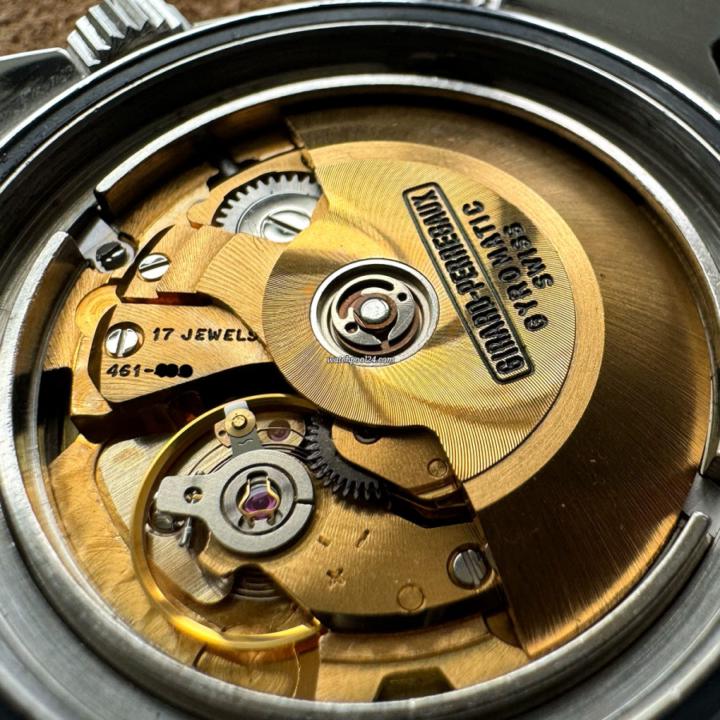
There's a watch I often use as an informal "test" with people getting into vintage collecting. I show them a late-1960s Gyromatic HF and ask: what do you think it's worth? The answer is almost always a fraction of the piece's real value. Then I explain what they're actually looking at — and that's when things shift. Not because I talked anyone into anything, but because I showed facts the market simply doesn't tell anymore. 1. The Problem the Gyromatic Was Built to Solve To understand why the Gyromatic matters, you have to start with the technical problem the entire industry was wrestling with in the 1950s. Early automatic movements (Harwood in the 1920s, then Rolex's and Eterna's solutions in the '30s and '40s) used rotors connected to click wheels: mechanisms that converted the rotor's back-and-forth oscillation into a single winding direction for the mainspring. They worked, but with two clear limits: they generated significant mechanical friction, and they lost efficiency with wear — especially when the goal was to slim down the movement or improve long-term reliability. Girard-Perregaux tackled the problem in 1956-57 with the Calibre 21: not an automatic movement built from scratch, but a winding module fitted to a manual ébauche (initially from Peseux, later Adolf Schild). The solution was elegant, and for its time, radical: replace traditional click mechanisms with two unidirectional clutches mounted on precision ruby rollers. GP called them Gyrotrons — hence the name of the whole system, Gyromatic. 2. How the Gyrotrone Actually Works (and Why It's Clever) This is worth getting into in detail, because it's the part almost nobody explains properly. The system uses two Gyrotron wheels, not one. The reason is simple: the rotor oscillates in both directions as the wrist moves, and the system needs to convert both directions of rotation into useful winding energy. One Gyrotron wheel handles clockwise rotation, the other handles counter-clockwise. Each wheel runs on ruby bearings that minimize internal friction and protect the components from premature wear — a structural detail, not a decorative one.
20d •
The Calibers Used in Vintage Franken Watches
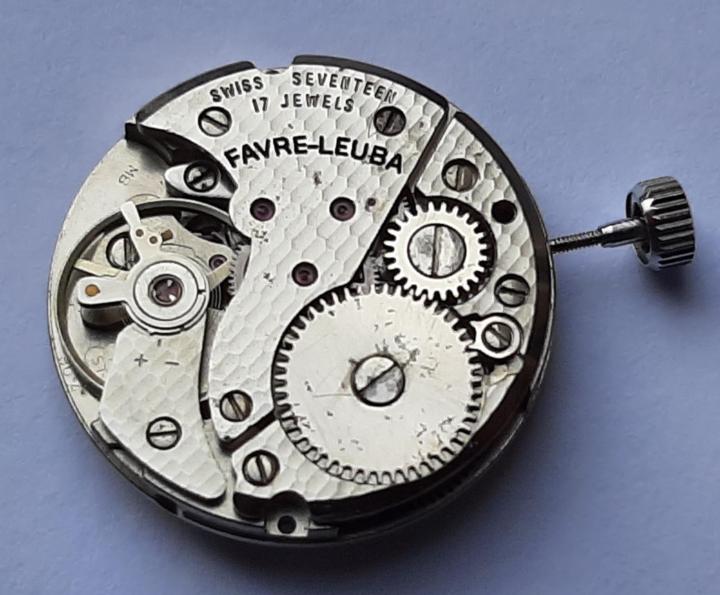
In the market for reassembled vintage watches, two movements appear with notable regularity: the Lorsa 238 and the FHF ST 96. They are not high-grade calibers, but they are frequently used precisely for this reason. They are inexpensive, easy to find on the spare parts market, and sufficiently “credible” to pass off an assembled watch as an original piece from the 1960s or 1970s. The Lorsa 238 The Lorsa 238 is a French movement produced by Lorsa in Annemasse. It is not a Swiss caliber, even though many watches fitted with it are presented as such. The Lorsa mark is a cross in a shield. It looks like the Swiss cross, but it isn't - it is the cross used in Savoie. It is a simple but well-made manual-winding movement, with a diameter of around 10½–11 lines and a height of approximately 3.9 mm. In its most common version, the 238A, it is fitted with the Incabloc shock protection system and beats at 18,000 vibrations per hour. It generally has 17 jewels. The “Lorsa” name or its small shield logo is often found on the balance bridge or the barrel bridge. The shape of the bridges is fairly square and recognizable. It should be noted that the Lorsa 238 is an honest and robust movement for the price range it belonged to. However, no major watch manufacturer ever used it as it was. It was an entry-level ebauche, mainly intended for private-label production or mid-to-low range brands. The FHF ST 96 The FHF ST 96, produced by the Fabrique d’Horlogerie de Fontainemelon, is a much more widespread Swiss movement. It is one of the most standardized ebauches of the 1960s and 1970s. It has a diameter of 11½ lines and a height of 4.5 mm. It is fitted with 17 jewels, the Incabloc shock protection system, and beats at 18,000 vibrations per hour. The power reserve is around 48 hours. There is also a version with a date, designated ST 96-4. The movement almost always carries a clearly visible “FHF” shield along with the marking “ST 96”. It has a clean construction and is relatively easy to identify. Its mark is of a stilized FHF in a shield-like cartouche.
0
0
25d •
The Speculation on Gold and Its Impact on Vintage Watchmaking
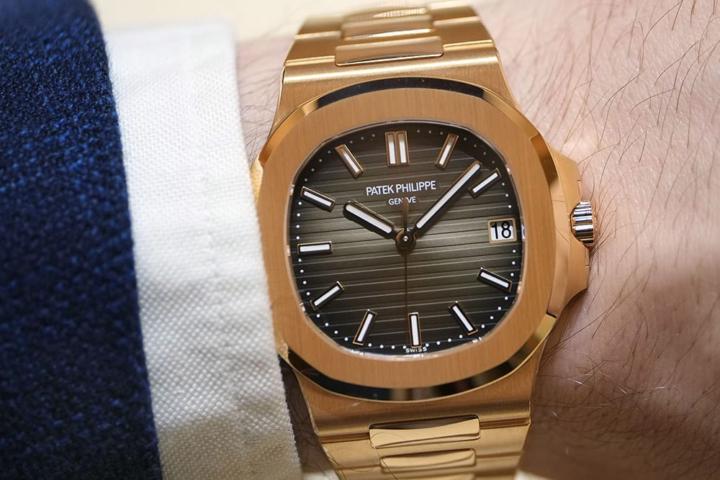
In recent years, the price of gold has resumed a sustained upward trend, once again attracting the attention of investors, central banks, and savers. This movement has had concrete consequences on the vintage watch market, particularly on watches with gold cases. Understanding how the price of the precious metal influences the value of watches has become increasingly relevant for those who buy, sell, or collect vintage pieces. The Speculation on Gold: Causes and Context Gold has historically been considered a safe-haven asset, a refuge toward which capital flows during periods of economic, political, or geopolitical uncertainty. In recent years, however, the rise in its price has not been driven solely by short-term factors, but also by deeper structural dynamics. Central banks in several countries, particularly China, India, Turkey, and various emerging nations, have significantly increased their gold purchases, reducing their reliance on the US dollar in their reserves. At the same time, geopolitical tensions, concerns over inflation, and the search for tangible assets by investors have sustained strong demand. Unlike previous cycles, this upward phase does not appear to be merely a short-term speculative movement. A more profound shift is taking place in the way gold is perceived and accumulated, both at an institutional level and by private investors. This context has pushed the price of the metal to new historical highs, with consequences that have extended to sectors seemingly distant from it, including vintage watchmaking. The Price of Gold in Recent Years To understand the impact on watches, it is useful to look at how the price of gold has moved in recent years. After peaking in 2020, when it briefly surpassed $2,000 per ounce during the pandemic, gold experienced a period of relative stability between 2021 and 2023, generally oscillating between $1,700 and $2,000. From 2024 onward, a more decisive recovery began, with the price surpassing $2,500 per ounce and continuing to rise, reaching values above $2,800–2,900 per ounce at times.
0
0
29d •
The Legacy of the 2824: Time to Say it's Over
The Swiss movement market is facing a structural problem that has been building for years and - like the proverbial elephant in the room - is now becoming increasingly difficult to ignore. At the center of this issue lies the continued dominance of an aging platform: the ETA 2824 and its main successor, the Sellita SW200. While these movements have served the industry well for decades, their prolonged use is turning into a serious long-term risk for a significant part of Swiss watchmaking. The History of the 2824: A Movement Built to Last The ETA 2824-2 was introduced in 1971. It was not an entirely original design created from scratch. The movement was developed by ETA based on an existing architecture from A. Schild (AS), one of the most important Swiss ebauche manufacturers of the time. Specifically, the 2824 evolved from the A. Schild AS 2066 and AS 2168 family of movements. When ETA absorbed A. Schild in the early 1970s, the company took this already proven and reliable base and refined it into a more modern, robust, and industrially efficient caliber. This is why the 2824 shares many technical similarities with earlier A. Schild designs: its core layout, gear train, and general architecture were not revolutionary, but rather an evolution and industrialization of existing, well-tested solutions. This background helps explain the movement’s long-term success. It combined the reliability of older A. Schild designs with ETA’s production capabilities and quality control, resulting in a movement that was both dependable and cost-effective to manufacture in large volumes. Over the following decades, the 2824 became one of the most widely used automatic movements in Swiss watchmaking, particularly in the mid-range segment. When Swatch Group began restricting the supply of ETA movements to third-party brands around 2010–2013, Sellita stepped in with the SW200. Although Sellita introduced some improvements, particularly in finishing and certain technical details in later versions, the SW200 remained structurally very close to the original 2824-2. In practice, a large portion of the industry simply replaced one version of the same movement architecture with another.
1
0

May 29 •
The Movado Polyplan: One of the True Pioneers of the Modern Wristwatch
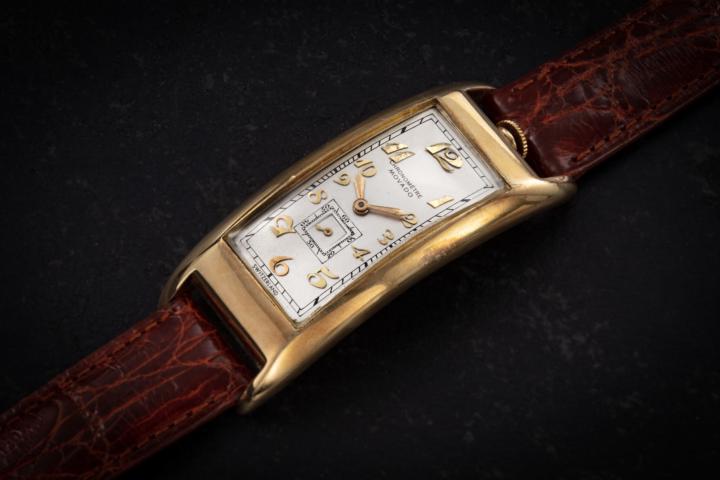
In 1912, while the wristwatch was still taking its first uncertain steps after the launch of the first custom-built wristwatches (not adaptrations of pocket watches), Movado introduced a model that represented a significant technical and conceptual leap: the Polyplan. Indeed, at that time, most wristwatches were still essentially pocket watches fitted with two lugs and a strap. Movado chose to tackle the problem in a completely different and much bolder way. Movado in 1912: A Company on the Rise When the Polyplan was released in 1912, Movado was not yet the giant it would later become, but it was already an ambitious and forward-thinking company within the Swiss watch industry. Founded in 1881 by Achille Ditesheim in La Chaux-de-Fonds, the firm had changed its name in 1903 to “Movado” — a word from Esperanto meaning “always in motion.” This choice already revealed a modern, dynamic vision. By the early 1910s, Movado found itself in a very interesting position: it was not one of the ancient, aristocratic houses like Patek Philippe or Vacheron Constantin, but it was rising fast thanks to a strong focus on technical innovation and bold entrepreneurship. Those were crucial years. The wristwatch was moving from a curious novelty to a real trend. Movado, sensing the potential earlier than many others, began investing seriously in developing solutions specifically designed for the wrist, rather than simply adapting old pocket watch movements. The Polyplan was born directly from this mindset: not just another watch with two lugs, but a genuine attempt to rethink the entire architecture of the movement to fit the human wrist. The Brilliant Idea Behind the Polyplan Instead of keeping the movement flat as everyone else had always done, Movado’s engineers designed it folded across three different levels. This solution, which gave the watch its name “Polyplan”, allowed them to dramatically reduce the overall thickness and, more importantly, to create a case with an ergonomically natural curvature that followed the shape of the wrist. For the first time, it was no longer the wrist that had to adapt to the watch, but the watch that adapted to the wrist.
0
0
1-9 of 9
powered by

skool.com/the-watch-manual-5755
Learn how to know watches — and never get fooled. No hype, no fluff, for beginners and enthusiasts. Expert guidance from Franz.
Suggested communities
Powered by