Activity
Mon
Wed
Fri
Sun
Aug
Sep
Oct
Nov
Dec
Jan
Feb
Mar
Apr
May
Jun
What is this?
Less
More
Owned by Franz
Learn how to know watches — and never get fooled. No hype, no fluff, for beginners and enthusiasts. Expert guidance from Franz.
Memberships
Synthesizer: Free Skool Growth
44.4k members • Free
Watch Lover | Community
2.7k members • Free
Skoolers
168.2k members • Free
84 contributions to The Watch Manual

7h •
📌 VIP MEMBERS: EXCLUSIVE WATCH DEALS INSIDE
I have direct relationships with independent watchmakers and microbrands — people who make serious watches in small numbers, without the inflated prices that come with big-name marketing. I select the deals personally. My goal is simple: help you spend less and get more. No commissions, no affiliates — just watches I'd buy myself, at prices I negotiate directly with the people who make them. VIP members get access to these deals in the VIP section — visible only to them, for as long as each offer lasts - I will briefly present them here as a comment on this thread. If you're already VIP: check the VIP section. If you're not yet VIP: upgrade for $59/month. One good deal and the subscription pays for itself. — Franz
0
0
2d •
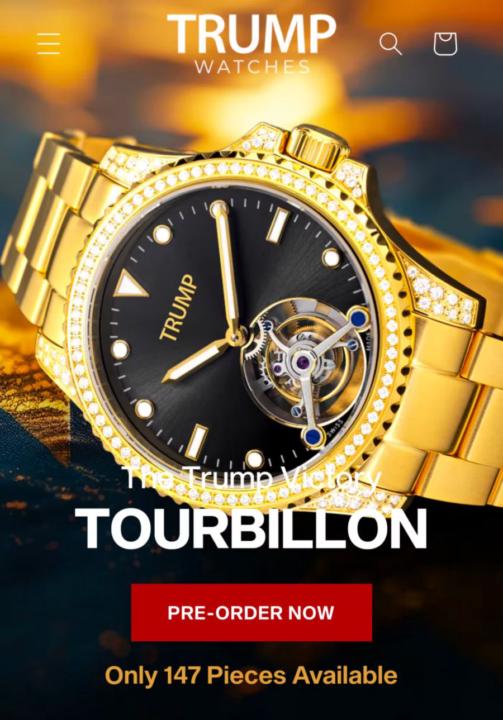
Trump Watches, $4.7 Million in Royalties, and What the Numbers Actually Tell You
The story of Trump's watches isn't really a watch story. It's a masterclass in how a name on a dial can be worth more than everything inside the case combined — and a useful anatomy lesson in how celebrity licensing, anonymous corporate structures, and a very specific buyer psychology interact in the luxury-adjacent market. Let's take it apart properly. The $4.7 Million: What It Actually Is The figure comes from Trump's 2025 financial disclosure filed with the US Office of Government Ethics — listed as royalties from "Trump Watches," part of at least $8.3 million in total royalties from books and branded merchandise. This is Trump's licensing cut, not total retail revenue. The watches are actually made and sold by TheBestWatchesOnEarth LLC, a company that licensed Trump's name, image and likeness. At a standard celebrity licensing rate of 10–20%, total retail revenue was likely somewhere between $23 million and $47 million. Trump's contribution to the product was exclusively his name and public persona. He's been doing this since the early 2000s, when a Donald J. Trump watch collection sold at Macy's for under $1,000 apiece. The product changes. The mechanism doesn't. The Victory Tourbillon at $100,000: The Cost Breakdown This is the headline piece, and the numbers are worth laying out precisely because they illustrate something important about how "luxury" pricing works when the brand value does all the heavy lifting. The movement is the TX 07 tourbillon — confirmed by Swiss national broadcaster SRF to be produced by BCP Tourbillons SA, the La Chaux-de-Fonds atelier of watchmaker Olivier Mory. "We rarely have a customer who attracts so much attention. For us, it's a normal order," Mory told SRF. His movements sell in bulk at CHF 2,200–5,500 depending on volume. To understand what that movement is actually worth in an honestly positioned watch, here's the reference frame: the same BCP caliber family appears in the Bremont Terra Nova Dual-Time Tourbillon at $31,600, the Louis Erard x Alain Silberstein Regulator Tourbillon at CHF 15,900, the Yema Yachtingraf Tourbillon at $9,990, and the BA111OD Chapter 4 at CHF 6,700. Those are market-rate prices for BCP-powered watches with proper finishing and honest positioning. In April 2026, BA111OD acquired BCP Tourbillons outright — Olivier Mory remains as technical director — and their new Chapter 4 T.V.D. retails at CHF 8,200.
1 like • 2d
@Piers Gibson-Leader indeed nothing unexpected. But sure meriting an overview and a consideration.
5d •
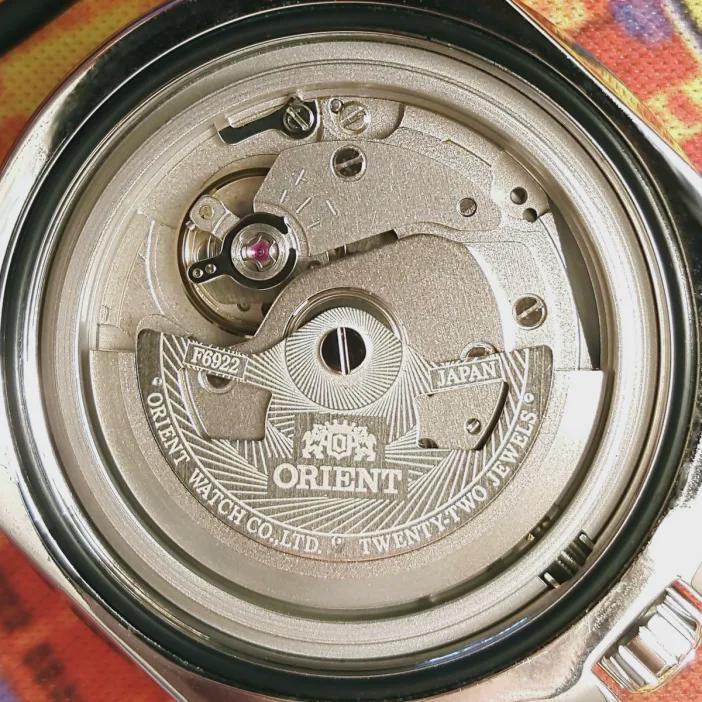
In-House Movements at Honest Prices: Five Brands Worth Knowing — And What "Affordable" Actually Means
Every few weeks, some version of the same question shows up across watch forums, Quora threads, and group chats: are there affordable luxury brands that actually build their own movements, instead of just bolting a familiar logo onto something generic? The short answer is yes. The more useful answer requires slowing down on one word first, because it's doing more work in that question than people realize — and getting it wrong leads to a slightly distorted picture of what you're actually buying at each price point. The Word "Affordable" Needs an Asterisk The watch industry uses "affordable luxury" as a relative term — relative to its own internal catalog, not to actual purchasing power in the real world. When an industry guide calls $1,000–$3,000 "entry-level luxury," or labels a $350 Tissot "the cheapest luxury watch on the market," that's affordable within a universe where some watches cost $150,000. It's a perfectly reasonable way to talk shop inside the industry. It is not affordable in the sense that most of the planet would actually use the word. Here's the comparison worth sitting with for a second: global median income sits somewhere around $9,700 a year, calculated in purchasing-power-parity terms. In plenty of countries, a typical monthly net salary lands somewhere between $800 and $2,500. Held up against that baseline, even the industry's own "cheapest luxury watch" at $350 represents roughly a third of a month's income for a huge share of the world's population. A $2,500 Oris is close to an entire month's pay. None of this makes the term dishonest exactly — every luxury category has its own internal scale, and "affordable" inside watchmaking has always meant "affordable relative to true high-end luxury," not "affordable relative to the median human being." But it's worth keeping that asterisk visible rather than letting it disappear, because it changes how you should read every spec sheet and price tag that follows. "Affordable" here means genuinely accessible to someone with a stable middle-class income in a wealthier economy. It is not a universal baseline, and pretending otherwise just muddies an otherwise useful conversation.
2
0
6d •
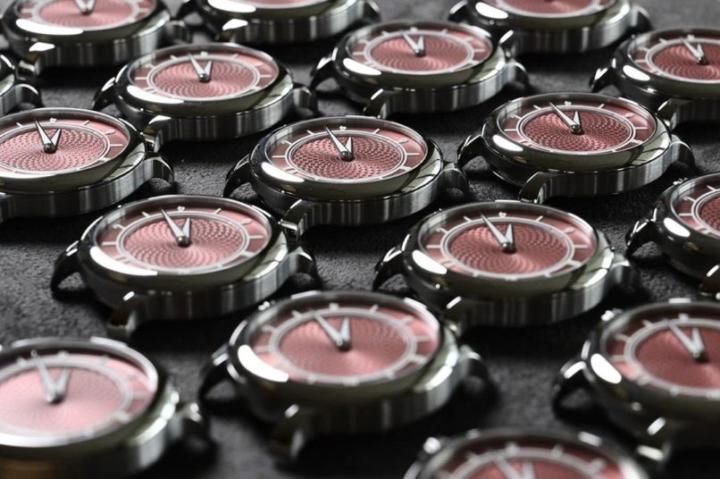
Logos are not cutting it anymore
Logos used to be the fastest way to broadcast taste, and they've stopped doing that job. Once everyone can recognize the same monogram on the same bag or the same bezel on the same watch, the logo stops signaling exclusivity and starts signaling ubiquity — and that's exactly the problem driving people toward custom pieces instead. There's real data behind this, and it's bigger than a passing trend. Industry research shows a generational divide that's almost stark: older luxury buyers were more likely to buy recognized brands and prize logo visibility, while younger high-net-worth buyers are consistently drawn to individuality and personalization instead. Multiple surveys converge on similar numbers — a clear majority of Millennials say they prefer brands offering bespoke or personalized options, and roughly half of Gen Z luxury buyers say self-expression matters more to them than brand recognition. That's not a niche preference anymore; it's becoming the default expectation for the buyers who'll drive most luxury spending over the next two decades. The watch world is one of the clearest places to actually see this happening, with names and numbers attached. Independent watchmaking has gone from a footnote to a real category, almost overnight. Ten years ago, "microbrand" barely existed as a term anyone outside a small forum would recognize. Now there are over 150 acclaimed independent watchmakers and microbrands operating worldwide, catalogued by country, with verified founders and price points — that's not a handful of hobbyists, that's an actual industry segment. A French founder named Etienne Malec raised €500,000 on Kickstarter back in 2017 to launch his own brand; a Japan-based maker, Alan Birchall, machines roughly 95% of his watches' components by hand, sometimes spending 40 minutes on a single screw, and still has people lining up to buy them. Neither of these is a household name in the Rolex-Patek sense, and that's precisely the point — buyers are tracking them down anyway becauswe they love their unicity.
0
0
10d •
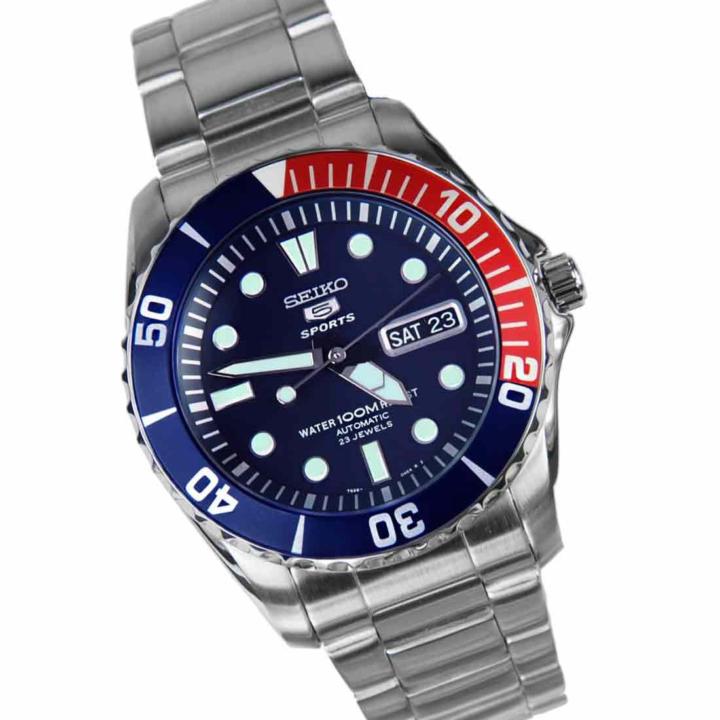
The Real Question Isn't "Affordable or Luxury" — It's "Honest or Borrowed"
If you spend any time in watch communities, forums, or even just scrolling social media, you'll eventually run into some version of the same question: is it actually worth buying an affordable business watch, or are you just settling for less than you could have? It's a fair question, and it deserves a real answer instead of a reflexive one. The reflexive answer — "buy the best you can afford" — isn't wrong, exactly, but it skips past the part that actually matters. Because "affordable" and "worth buying" aren't the same axis. You can have an affordable watch that's an excellent purchase, and an affordable watch that's a genuinely bad one, at the exact same price point. The difference has almost nothing to do with how much you spend, and almost everything to do with whether the watch is honest about what it is. Let's unpack that properly, because once you see the distinction clearly, it changes how you evaluate every watch you'll ever consider buying — not just the cheap ones. A Quick Word on "Affordable Luxury" — Because It's Not the Same Thing Before going further, it's worth separating two terms that get used almost interchangeably but actually describe different categories: "affordable business watch" and "affordable luxury." "Affordable luxury" is an industry-recognized segment, not just a casual phrase — it sits between mass-market watches and true high-end luxury, occupied by brands like Tudor, Longines, Tissot, or Frederique Constant, typically in the roughly $500–3,000 range. These are genuine Swiss (or Swiss-adjacent) houses, often with real heritage, sometimes with in-house movements, sitting deliberately one or two tiers below the Rolex/Omega/Cartier level on price while still offering authentic mechanical credentials. It's a legitimate, well-understood category — though even people who write about it regularly admit the term itself is a bit of a contradiction, since "luxury" by definition implies scarcity and exclusivity that "affordable" works against. The honest way to read "affordable luxury" is: real luxury-grade craftsmanship and materials, intentionally positioned at a lower price point by a brand that could charge more but has chosen not to.
2
0
1-10 of 84

@franz-rivoira-1819
Luxury and Design global expert and book author (4 titles, The Watch Manual collection). Quora's top horologist - now on skool with my community!
Active 3h ago
Joined Jan 5, 2026
ENFJ
Borgo Mantovano, Italy