
Pinned

Jan '25 •
Welcome to The Trust Transformation [START HERE]
Leadership was never meant to be carried alone. Over time, the pressure of leadership can quietly create exhaustion, isolation, strained relationships, decision fatigue, communication breakdowns, and the feeling that the weight never fully turns off. This community exists to help leaders build systems that hold under pressure. I’m Roy Reid, and I’m grateful you’re here. Before diving in, take a few minutes to watch the welcome video below and begin your journey with us. Your First 5 Steps ✅ 1. Book Your Free Onboarding & Coaching Call This is an opportunity for us to connect 1-on-1, discuss your leadership challenges and goals, answer questions, and help you identify the best next steps. 👉 Book your call here: Book Your Free Coaching Call 🙌 2. Introduce Yourself to the Community Visit the intro thread and share: - Who you are - What brought you here - Where you’re feeling pressure or focused on growth in leadership, relationships, or life You’re not alone here. 📥 3. Download the FREE CEO Trust Blueprint Learn how high-trust leaders strengthen communication, alignment, accountability, culture, and resilience under pressure. 👉 Download the PDF in the Classroom 👉 Watch the Training in the Classroom 💬 4. Get the Book The Trust Transformation is the foundational framework behind everything we teach in this community. Use your member discount to get your copy. 👉 Get the Book at the link in the Classroom with a 20% discount 💗 5. Start the Mini-Course Take Responsibility: The Four Types of Relationships is a practical, on-demand course designed to help you improve communication, ownership, trust, and relational health. ✔️ Short video modules ✔️ Downloadable workbook ✔️ Immediate implementation tools 👉 FREE in the classroom What’s Possible Here? This work has helped leaders and organizations: - strengthen communication and accountability - improve culture and organizational trust - reduce relational friction and decision fatigue - improve customer satisfaction and retention - strengthen marriages, families, and teams - increase engagement, resilience, and leadership clarity under pressure
![Welcome to The Trust Transformation [START HERE]](https://cdn.loom.com/sessions/thumbnails/4b1edefc9e664b8eb4694a16b1695ba8-e362b444db187ffb.gif)
Pinned
Mar 12 •
Facing My Mortality Changed My Understanding of Trust
What surviving an aortic dissection taught me about leadership under pressure. The idea for The Trust Transformation did not begin in a hospital room. But a hospital room is where its meaning became unmistakably clear to me. It began more than a decade earlier. In 2007, I started working on a concept I called Outrageous Trust. At the time, I had spent years observing leadership teams and organizations wrestling with the same invisible problem. - Decisions were made in meetings, but later they unraveled. - Alignment appeared strong on the surface, but beneath it, people hesitated to challenge one another honestly. - Accountability was often unclear, and leaders frequently carried the weight of important decisions alone. What I began to realize was that while most organizations valued trust, they thought that highlighting it in mission statements or culture presentations was enough. But trust is actually something much more powerful. It is an operating system. Just as the operating system in a computer determines how everything functions beneath the surface, trust determines how decisions hold up, how relationships function, and how organizations perform under pressure. Over the years, that idea continued to develop. Then in 2017, something important happened. Working alongside leaders at AdventHealth and collaborating with Dr. Omayra Mansfield, we launched what would become The Trust Transformation as an evidence-based employee training program. Through an Institutional Review Board study, we examined how people experienced trust before and after the training. What we discovered was encouraging. Participants began to shift their thinking about trust. Instead of seeing it as abstract or aspirational, they began to recognize it as practical and observable. Something that could be intentionally designed into leadership and culture. The data showed measurable positive changes. People began to see trust less as a vague cultural value and more as a system that shaped how leaders made decisions, communicated with one another, and worked through conflict.
1h •
Isolation: The Damage Was Happening Long Before My Heart Split Open
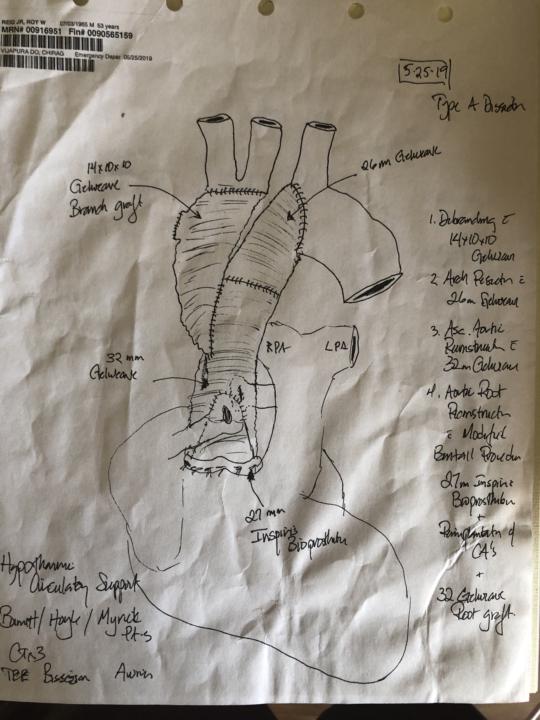
2,544 days ago (at the publication of this article), I suffered an acute aortic dissection. My aorta split open from my carotid arteries to the base of my heart. I suffered a stroke on the way to the hospital and was airlifted into emergency surgery, where doctors worked for six hours to replace the entire upper arch of the aorta and save my life. For periods of time during the surgery, I was clinically dead. There was no guarantee I would survive. If I did, there was concern I could require long-term care because of the potential neurological damage. By the grace of God, extraordinary medical care, and what I often call the mission, the medicine, and the miracles surrounding that moment, I woke up with my faculties intact and a second chance at life. But here’s the truth I’ve wrestled with ever since: The damage was happening long before my heart stopped. It was happening slowly. Quietly. Internally. And much of it began with pressure, pride, anger, and isolation. The Hidden Effect of Pressure One of the least discussed effects of pressure in leadership is isolation. The heavier the pressure becomes, the harder it becomes for leaders to admit: - exhaustion, - uncertainty, - emotional fatigue, - frustration, - disappointment, - or relational strain. Many high-performing leaders convince themselves: “I should be able to handle this.” “I can push through.” “I don’t need help.” I told myself those things repeatedly. At the time, I was leading communications during one of the largest organizational transformations in the company’s history. A new strategic vision was being rolled out. A major rebrand was underway. Expectations were high. Pressure was constant. And I was driven to succeed. But somewhere along the way, pressure stopped being something I managed and started becoming something that managed me. I became increasingly consumed with recognition, advancement, influence, and what I believed leadership owed me in return for my effort. When certain opportunities didn’t materialize, disappointment slowly gave way to resentment.
0
0
1d •
The Damage Was Happening Long Before My Heart Split Open
2,544 days ago, my heart literally split open. But the truth is: the damage was happening long before the medical crisis. It started quietly with pressure. Then came isolation.Frustration.Resentment.Pride.Emotional withdrawal. And like many leaders, I convinced myself I could carry it alone. What I’ve learned since then is this: One of the most dangerous effects of pressure in leadership is isolation. Check out my latest LinkedIn Newsletter, Trust Under Pressure to learn more. https://www.linkedin.com/pulse/isolation-damage-happening-long-before-my-heart-split-roy-xqo5e This is one of the most personal pieces I’ve written. If you’re silently carrying pressure right now, I hope this helps.
0
0
2d •
If you missed our call this morning, here is the recording: Leadership is NOT Meant To Be Carried Alone
Here is an outline and the recording from our call. Take time to review, answer the questions at the end and share you thoughts in the comments. One of the hidden effects of pressure is isolation. The heavier leadership becomes, the harder it becomes for leaders to admit: - exhaustion - uncertainty - frustration - emotional fatigue - relational strain Many high-performing leaders quietly begin believing: “I should be able to handle this.” But over time, isolation changes leadership. Research from Harvard Business Review and organizational psychology studies consistently shows that leaders who lack psychologically safe relationships experience: - increased decision fatigue - emotional exhaustion - reduced adaptability - lower relational trust - and higher burnout risk Humility creates the emotional openness necessary for sustainable leadership. Personal Story Talk about: - your drive early in leadership - carrying pressure silently - trying to prove yourself - emotional isolation before the aortic dissection - believing strength meant carrying everything alone Key line: “Pressure humbled me long before my body finally did.” Key Teaching Humility is not weakness. Humility allows leaders to: - listen - receive feedback - stay teachable - repair relationships - ask for help - acknowledge limits Research from Jim Collins’ work in Good to Great found that Level 5 leaders consistently combined fierce resolve with deep humility. Not ego.Not self-promotion.Humility. Coaching Conversation Prompts - Where has pressure caused you to emotionally withdraw? - What are you carrying silently right now? - Where do you struggle asking for help? - How has pressure affected your relationships? Here is a link to the TIME Magazine article I referenced in the lesson: https://time.com/archive/7138718/humility-a-quiet-underappreciated-strength/?utm_source=chatgpt.com

1-30 of 66

Powered by