
Write something
May 11 •
Does your dog yawn after you?
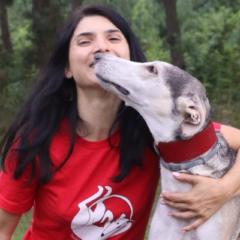
Everybody yawns—usually when they’re tired or bored 😮💨 But there’s another type called contagious yawning. That’s when you yawn just because you saw someone else yawn. The “we-feeling” behind yawning Between humans, contagious yawning isn’t random. Research shows it happens more often between people who feel emotionally close. The stronger the bond, the more likely the yawn spreads. This connects to something called a “we-relationship”—seeing someone as part of your group, like “one of us.” What about dogs? A study at Birkbeck, University of London, tested 25 dogs. Each dog watched either: - their owner yawning - or a researcher yawning Over a short 5-minute period, their reactions were measured. The result Dogs yawned after their owners… But not after unfamiliar researchers. This was selective. What does this suggest? Yawning in dogs isn’t just imitation. It reflects attention, bonding, and social closeness. Science suggests it’s more than copying—it may be a sign of connection. ❤️ The “we” bond Humans and dogs may form a real “we-based relationship.” Not just owner and pet—but a shared social unit. In this bond: - emotions influence each other - attention is shared - trust runs deep It can feel like: “what matters to you, matters to me.” Let’s test it. Let’s make our own “noodle research” 🐶 Does your dog yawn after you? How often does it happen—and does it show up within a few minutes? Drop your answer below 👇
1
0
Mar 30 •
Salukis vs 47°C Heat Test
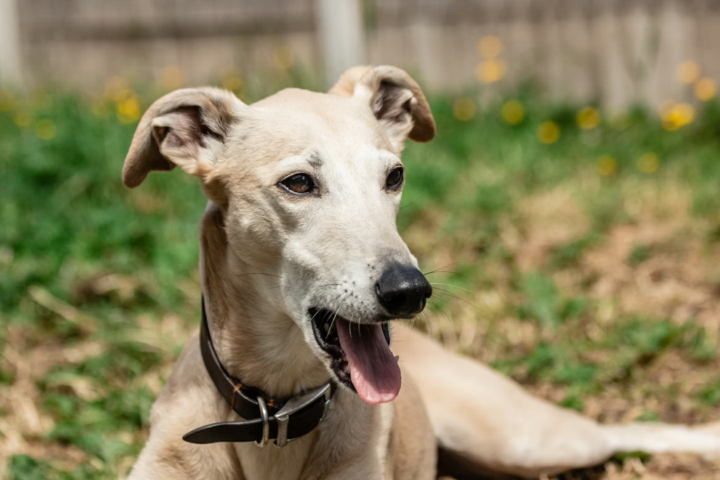
Most dogs struggle in heat. Salukis were literally studied at 47 °C. Researchers wanted to see how their bodies cope with extreme heat (controlled setup) How they handled it: They start panting hard — This dumps heat really efficiently. That should mess up their blood (too much CO₂ loss). But instead, their body adjusts. They release chemicals to their blood so it stays stable. Organs keep working and don't crash. They keep going. This is why Salukis are different. They were built to chase and hunt in desert heat and not fall apart. Important: Don’t try this with your dog. This was done in a controlled environment with monitoring. Most dogs start struggling way earlier (even around 30–38°C, depending on conditions). Salukis are not normal dogs when it comes to heat. Source:Krausz, Marder & Eylath (1977–78)Study on dogs exposed to hot, arid conditions (up to 47°C)
1
0
Feb 20 •
Why Sighthound Recall Is Different?
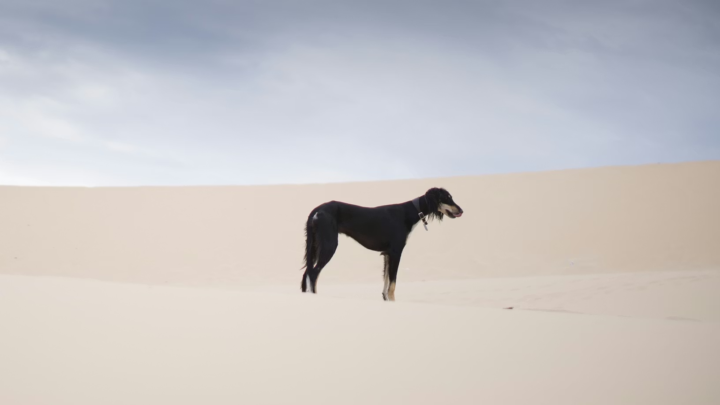
Sighthounds, such as Greyhounds, Whippets, Salukis, and Deerhounds, are extraordinary athletes with vision-driven hunting instincts. Unlike many other dog breeds, they were selectively bred over centuries to hunt by sight, pursuing fast-moving prey independently rather than working closely with humans. This unique evolutionary history gives them remarkable speed and visual acuity, but also makes recall more challenging. Brain States and Prey Drive Scientific research shows that sighthounds operate in two neurological states: 1. Alert-rest mode – a relaxed, calm state where the dog is attentive but not focused on prey. 2. Focused hunting mode – triggered by motion or the sight of potential prey. Once this hunting mode is activated, the dog’s brain prioritizes the moving target over external cues, including trained recall commands. This is because breeds selected for independent hunting tend to have strong prey drives and reduced inhibitory control compared to cooperative working breeds (Junttila et al., 2022). In other words, once a sighthound locks onto something to chase, their ability to respond to human commands is temporarily overridden by instinct. The Pre-Chase Window Although recall during an active chase is extremely difficult, research on sighthound behaviour (Normando et al., 2025) shows that owners can often anticipate when prey drive is about to engage. Key signs include: - Eyes locking on a moving target - Ears pricked forward - Body muscles tensing These subtle signals mark a brief pre-chase window, the final moment where recall is most likely to succeed. Once the dog launches into full pursuit, neurological focus is completely on the target, and trained commands are largely ignored until the chase ends. Practical Implications for Owners Understanding the sighthound’s brain and prey drive can help owners train and manage recall more effectively: - Train in low-arousal situations first: Strengthen recall when the dog is calm before introducing distractions. - Observe pre-chase signals: Recognize the early warning signs that your dog is about to switch into hunting mode. - Respect instinct, don’t punish: Ignoring recall mid-chase is not disobedience; it is a breed-typical, neurologically-driven response.
Mar 9 •
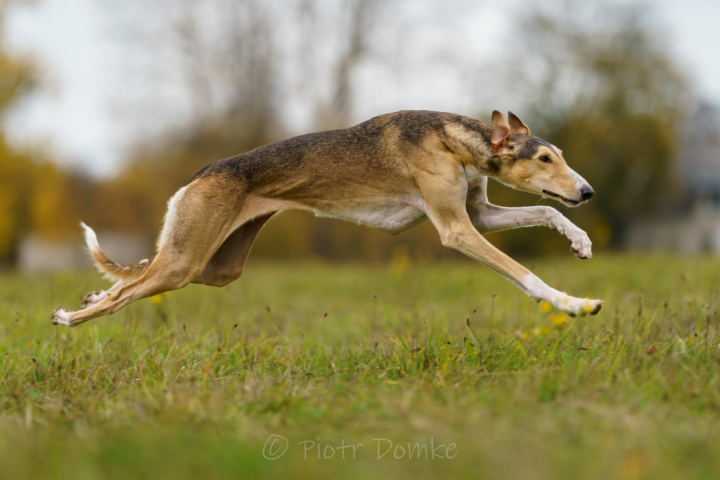
Uncatchable: The Secret Behind Noodles’ Speed — Double-Suspension Gallop
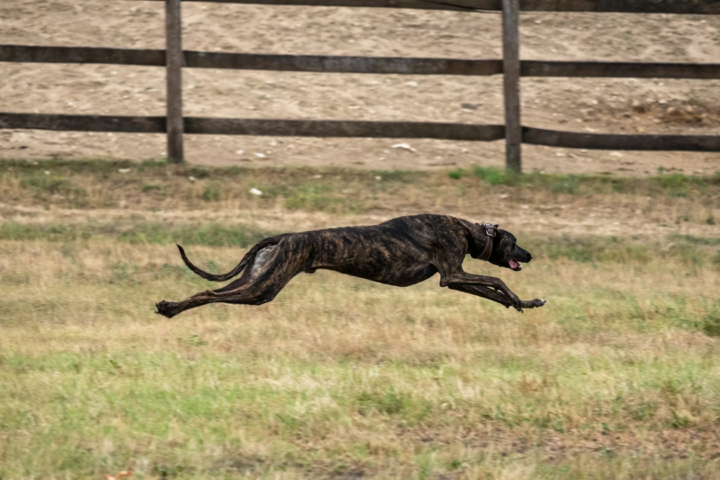
A running style where all four paws leave the ground twice in one stride. First suspension~The body stretches long. Front legs reach forward. Back legs extend behind. The dog is fully airborne. Second suspension~Collected phase All four paws lift again —but now the legs are tucked under the body. Another moment in the air. This stride allows longer steps and incredible acceleration. That’s why sighthounds can reach extreme speeds so quickly, but it is also the most energy-demanding stride. Sighthounds have an extremely flexible spine. It bends and extends like a spring, making their stride longer and more powerful. This is what makes sighthounds some of the fastest dogs in the world. P.S All sighthounds can achieve double suspension gallop. Most dogs can't run with a double-suspension gallop. They have shorter legs, less flexible spines, and more compact bodies. These traits make it harder to fully extend and collect the body in one stride. Typical running gait for many breeds is single-suspension gallop/canter. There is one moment where all paws leave the ground, but only once per stride.
2
0
Feb 13 •
Sighthounds are not lazy, they are energy - efficient
Dogs vary a lot in how much energy they use, both at rest and during activity. Different breeds are built for different kinds of work, so they don’t all use energy the same way. Scientists measure this with calorimetry, which is the standard method for tracking how much energy a body actually burns. Sighthounds are built for sprinting, not for constant movement or long-distance running like huskies. Sled dogs are designed to burn steady energy over many hours. Sighthounds are designed to use a large amount of energy in a very short time. ''The study compared anaerobic (sprinting) exercise in Greyhounds with aerobic (endurance) exercise in sled dogs. Greyhounds were run ~400 m (sprinting) and blood samples were taken before and after exercise. Sled dogs ran 3.5–5 hours per day over several days. Greyhounds showed no major change in leptin or adiponectin after sprint exercise, but a rise in irisin shortly after sprinting. Sled dogs showed changes in leptin related to endurance activity. Sprinting and endurance exercise affect physiology differently.'' Sprinting Greyhounds produce metabolic responses consistent with short, intense effort, while endurance dogs show different energetic effects. They evolved to chase prey with extreme speed over short bursts. When they start running, they accelerate fast and use a lot of power at once. That’s why they don’t spend the whole day moving — their bodies keep energy in reserve. So when you see a sighthound resting for hours, that isn’t laziness. It’s conservation. They stay in a low-energy state so they are always physically prepared for intense effort when it matters. For example a Greyhound that ran hard for an hour would not have the same explosive capacity left for a sudden chase later. Their physiology protects that burst ability. They can sleep most of the day and still produce incredible speed when needed. That makes sighthounds efficient at rest and powerful in motion. Sighthounds Are Not Just Couch Potatoes
1-8 of 8
powered by
skool.com/the-noodle-gazette-6545
A community dedicated to sighthounds! It is all about our beloved noodle-dogs—nothing more, nothing less. If you have a sighthound, join us!
Suggested communities
Powered by