Activity
Mon
Wed
Fri
Sun
Aug
Sep
Oct
Nov
Dec
Jan
Feb
Mar
Apr
May
Jun
Jul
What is this?
Less
More
Owned by Meric
A community dedicated to sighthounds! It is all about our beloved noodle-dogs—nothing more, nothing less. If you have a sighthound, join us!
Memberships
Chess Master School
4.2k members • Free
Millionaire Women Collective
9.8k members • Free
Videoproducing
183 members • $29/month
Small Business Video School
380 members • Free
Mobile Filmmaker Club
296 members • Free
The Doggy Brigade
160 members • Free
Dog People
85 members • Free
Photography Community
4.1k members • Free
Skoolers
164.9k members • Free
47 contributions to The Sighthound Club
7d •
Why Do Sighthounds Behave Like Aristocrats?
Anyone who has lived with a greyhound, saluki, borzoi, iggy or a true sighthound for a while usually notices the same thing: These dogs have a certain presence. It might be hard to explain at first. They are not usually the type of dog that charges into a room demanding attention. Many will quietly walk over, look around, and decide for themselves whether they want to join the activity or continue resting somewhere comfortable. They seem to have their own sense of timing. A visitor arrives? They might politely investigate. A strange noise outside? They might lift their head, think about it, and decide it is not worth getting involved. A new blanket appears on the sofa? They will probably be the first to test it. There is a reason many people describe sighthounds as having an aristocratic personality. It is not only because of their elegant appearance. Their long legs, narrow faces, and graceful movement certainly add to the impression, but their behaviour often reflects the history behind these unique dogs. They were hunters, not competitors. One thing many sighthound owners notice is how calmly their dogs approach food. Of course, every dog is an individual. Some sighthounds love their meals, and some can be picky, but many do not have the same frantic attitude toward food that people sometimes see in other breeds. Part of this goes back to their original purpose. Sighthounds hunted by sight. They were expected to spot prey, make quick decisions, and work with a high level of independence. Their job was not to constantly compete with other dogs around a shared resource or wait for humans to direct every move. They developed confidence. For many of them, food is simply part of the routine rather than a moment of urgency. They will get there when they get there. They know when to save their energy. A sighthound can spend an entire afternoon looking like the laziest creature in the house. Then suddenly, when given the chance to run, that same dog becomes something completely different.
0
0
19d •
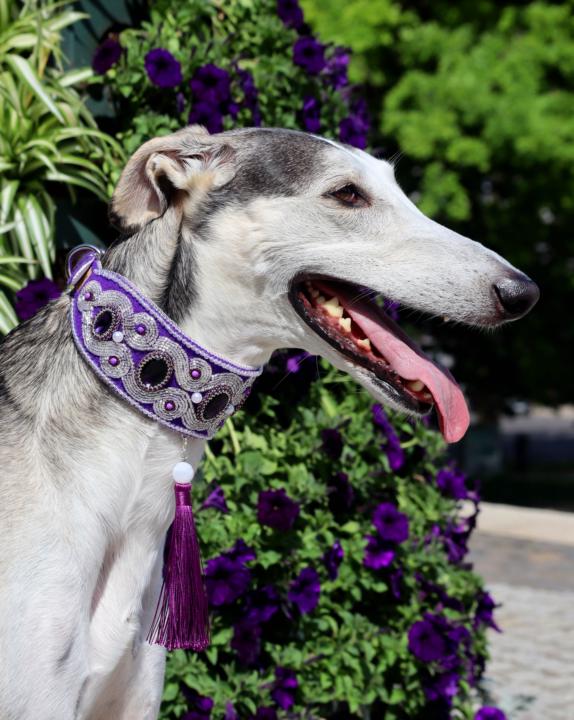
Sighthounds and Small Dogs: Why They Can Co-Exist / HOW
There’s a persistent myth that sighthounds and small dogs “don’t mix.” In reality, they often can live together peacefully and even form strong social bonds—but only under the right conditions, training approach, and environmental setup. Sighthounds are a group of dogs bred primarily for visual hunting—spotting movement and chasing at high speed over long distances.Their prey drive is the key factor that needs to be understood. Small dogs (like Chihuahuas, Dachshunds, Pomeranians, and similar breeds) vary widely in temperament, but often share: - High vocalization (barking, alerting) - Quick movements and sudden bursts of energy - Strong personality and territorial behavior - Fragility due to size differencesThe important point here is not “small dog = problem,” but rather movement style + behavior triggers matter more than size alone.Rapid, unpredictable movement + high excitement = trigger for chase response in sighthounds - This does NOT mean sighthounds view small dogs as prey in a literal sense. - A Critical Foundation: Reframing the Sighthound’s Perception It is very important that a sighthound learns that small dogs are not prey, but are also dogs. This understanding can be achieved through: - Early socialization during puppy development - Calm, structured exposure to small dogs - Regular positive shared experiences in controlled environments - When sighthounds grow up consistently seeing small dogs as part of their normal social world—not as moving “triggers”—their ability to coexist safely increases significantly. Not every dog fits every home. Some sighthounds have high prey drive. Some small dogs are highly reactive or provocative. Compatibility is individual, not just breed-based.
1 like • 16d
@Andrea MacLeod Maybe mine love small dogs because of the same reason, never thought of this xD Yeah squirrels and rabbits are totally different story.
28d •
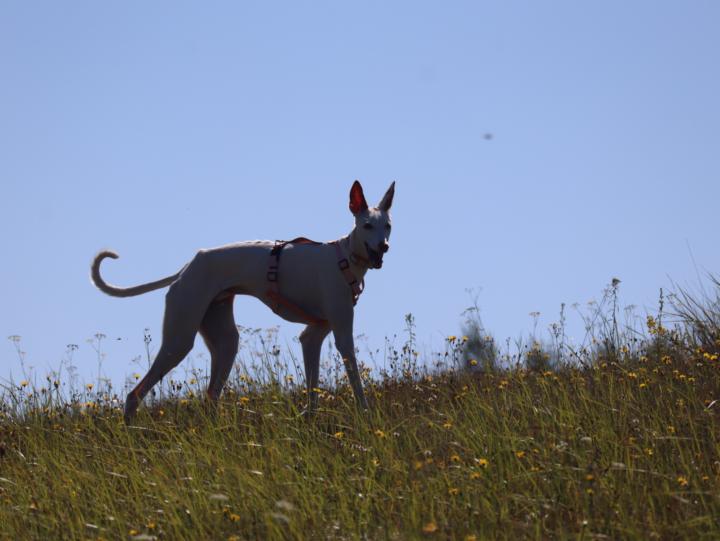
Prey Drive Explained ~ For First-Time Sighthound Owners
Prey drive is a sighthound's “chase instinct.” It is something sighthounds are born with. It makes them want to run after moving things. When a dog sees something move fast, like: - a cat - a bird - a ball - a plastic bag :p Their brain can go: “CHASE IT!” They move first, think later. When a sighthound sees something fast-moving, their brain doesn’t pause to analyze. Sighthounds Do Not Hesitate Sighthounds were selected for one thing in hunting: speed of decision + speed of action. In the field, hesitation meant: - Prey gets away - Energy is wasted - The hunt fails So over generations, sighthounds bred to; - React instantly to movement - Commit fully once they detect it - Reduce “thinking delay” between seeing and chasing HOW TO LIVE WITH PREY DRIVE You don’t “control it.” You manage the environment around it. You only let your sighthound off-leash in places where they physically cannot run into danger. (So when something triggers them—like a cat running—they don’t really “scan everything else” anymore. Their attention narrows. They do not see the environment like other dogs when prey appears. They won’t notice cars, traffic, people, or a mountain exploding next to them :D Find Off-Leash Safe Areas, such as; - Fenced fields - Secure dog areas - Empty beaches Sighthound is born to run, and it must exercise off-leash. If there's no fence ; Scan your surroundings, make sure there are no animals around. Train your recall (it probably won’t work 100%) 😉 But if you spot an animal, dog, human, or any danger early enough, you can use recall before your dog reacts or sees it. Because recall with sighthounds usually won’t work once they start chasing. Optional, but for me it’s a must: have a GPS tracker. So if your dog runs out of sight, you don’t lose them. PS: If your sighthound is interested, you can join coursing events where they get a chance to chase a lure (fake rabbit) and fulfil their natural chasing instinct.
2
0
Jun 15 •
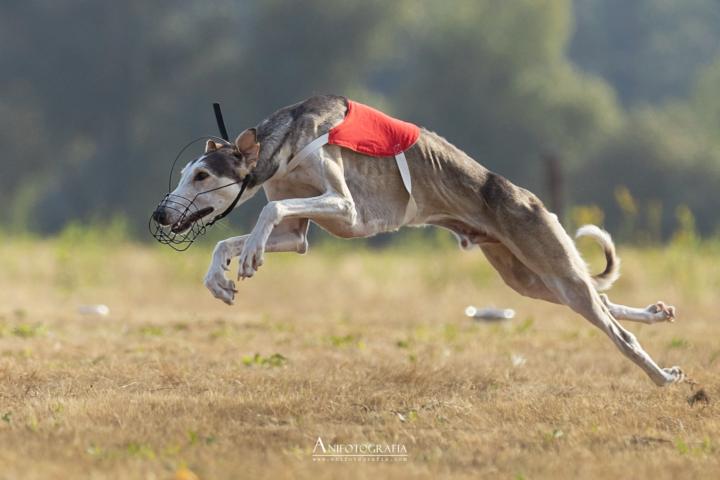
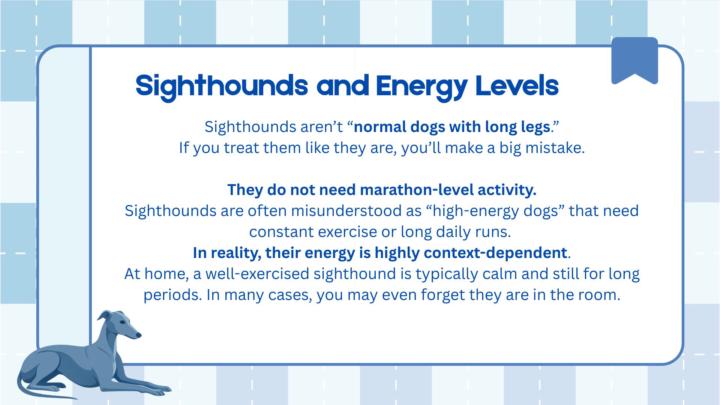
Sighthounds and Energy Levels
Sighthounds aren’t “normal dogs with long legs.” If you treat them like they are, you’ll make a big mistake. 1. They do not need marathon-level activity. Sighthounds are often misunderstood as “high-energy dogs” that need constant exercise or long daily runs. In reality, their energy is highly context-dependent. At home, a well-exercised sighthound is typically calm and still for long periods. In many cases, you may even forget they are in the room. They often: Sleep for most of the day Remain low-activity indoors This is normal behavior for the majority of sighthounds that receive appropriate physical and mental stimulation. However, if a sighthound is not given a proper outlet for their natural drive, this calmness can change and may be replaced by restlessness or frustration. Outside the home In open environments, their behavior changes significantly. They may show: - Sudden bursts of high-speed running (zoomies) - Intense focus on movement and distant stimuli - Strong visual tracking and prey response This shift is not constant energy—it is triggered energy. Key Takeaway Sighthounds conserve energy at home and release it in short, powerful bursts outside. They are sprinters, not endurance dogs. They do not require hours of continuous exercise to be satisfied. Important distinction They are not terriers or huskies. Those breeds are built for sustained activity and constant engagement. Sighthounds are different. They are not consistently active dogs. Instead, they are highly efficient energy users with a strong prey-driven sprint instinct.
4
0
1-10 of 47

Active 7d ago
Joined Sep 25, 2025
szczecin