
Write something

Mar 30 •
Did you feel the DST time change?
Quick check-inhere: did the time change mess anyone else up? This past Saturday to Sunday, clocks in some northern hemisphere countries went up (or forward? Not sure how to put it lol) by 1 hour. Spring is here! Great. But damn, I felt the impact, surprisingly. Or at least I think I did. Yeah, we 'lost' one hour of sleep, and I couldn't make it up because I had a dinner the previous night, and an early appointment the day after... but could just one hour less of sleep leave me feeling so energy less? Well... maybe! Not saying that was the solo culprit, but our bodies run on biological time, not wall time. When that shifts suddenly, everything gets disrupted — cortisol timing, melatonin release, sleep architecture. If you also felt a bit off, we can try this to reset: → Get sunlight within 30 min of waking (recalibrates your internal clock) → Keep consistent sleep/wake times (even on weekends) → No caffeine after 2pm for a few days → Dim lights in the evening (support natural melatonin production) → Try to keep the other parts of your routine consistent (meals, workouts, etc) It might take a few days, but you'll quickly adapt!
4
0

Nov '25 •
What is your 'longevity score'?
Let's be honest: we all live a big chunk of our days on 'automatic mode'. So more often than not, the small actions we make, the little decisions we take - all of them might fly by our radar and contribute to a daily routine that doesn't really match with our health goals. I am definitely guilty of that! So I created a short quiz that helped me assess how much in line I am with my longevity goals! The score doesn't really matter - but just going through those answers already helps bring some more attention to things we might have been overlooking! And that's the first step to change and self-improvement. BUT...!! There was a piece of the puzzle missing. 'Ok, now I know what I can improve... but how can I improve it?' At the end of the quiz, you can request a free game plan I made with daily habit suggestions to improve: 🥦 Nutrition · 💪 Exercise · 🌙 Sleep & Recovery · 🧘 Well-being 👉 Take the Longevity Questionnaire here

Dec '25 •
Merry Xmas, and a wonderful NY!!!!
Hello, hello everyone 👋 Another year has just flown by! Good God... but it's exciting. And that's because 2026 is going to be even better, I am sure of it! We'll be together as a community, supporting each other on our paths towards our best, healthier lives. 🧘🍲💪🛌 I just wanted to take the chance and say THANK YOU for being part of The Longevity Hub. We're just getting things started, and I’m really glad you’re all already here. This time of year also often comes with a lot of talk about New Year’s resolutions. Big goals, big promises - but what I hope we can build together here is something different. Next year isn’t about overnight transformations or perfect routines. It’s about small, consistent steps, better systems, and having the right support when motivation fades - because it always does at some point. The holidays are a great moment to slow down, reflect on what worked (and what didn’t) this year, and gently set intentions for the next one. No rush. No guilt. Just clarity. I’m excited for us to tackle our health goals together: learning, adjusting, and supporting each other along the way. That’s where real, lasting change happens. Wishing you and your loved ones a peaceful holiday season and a healthy, grounded start to the New Year 🎄✨ Andre
Feb 3 •
What's your view on GLP-1 AGONISTS?
That's a very hot topic at the moment, and I thought I'd bring it here - AS LONG AS we all remain friends, and civil. Do we have a deal? To get things started, let's explain what GLP-1 AGONISTS are and then I'll share my humble thoughts. Glucagon-like peptide-1 (GLP-1) receptor agonists are medications that mimic the natural GLP-1 hormone produced in the gut after eating. TRANSLATION: it's a drug that mimics a natural hormone we produce that slows down our digestion, signals satiety, and regulates blood sugar. So... GLP-1 agonists. Good or bad? Neither; or both. You pick the answer you'd like. But I can give my humble opinion in the meantime. We've developed this unhealthy habit to pick one side of the fence in virtually every topic. But life is rarely so 'black and white'. And it's in ignoring all the shades of grey in between that we become deaf to benefits, risks, and circumstances. Recent research has shown benefits of such drugs in health optimization. It shows valid promise, but I won't focus on this side of it as I feel like it's still niche. But these ‘weight loss drugs’ can also be extremely beneficial to a wide array of individuals - they have proven to be a powerful ally against morbid obesity and to reduce disease risk in people with metabolic disorders. So why wouldn't you use that powerful weapon to your favor? Now, using it to drop a few quick kgs before summer wouldn't be my best depiction of proper use. Taking any drugs should come with knowledge of benefits, risks, potential side effects - even psychological ones. We, humans, are very prone to developing body perception disorders and have to prepare for it when usage stops. So more important than loving it or hating it, I am on the side of personal circumstances - with the oversight of a qualified specialist. Go learn more about it, then ask yourself first: 'Do I REALLY think I need it?' or 'Why is it that I want it?' That's already a great initial filter. I am of the opinion that I wouldn’t use it unless I had a health issue that could justify it. Yeah - talking about myself here - why would I meddle with someone else’s life?
Jan 8 •
Comments on the new Dietary Guidelines for Americans
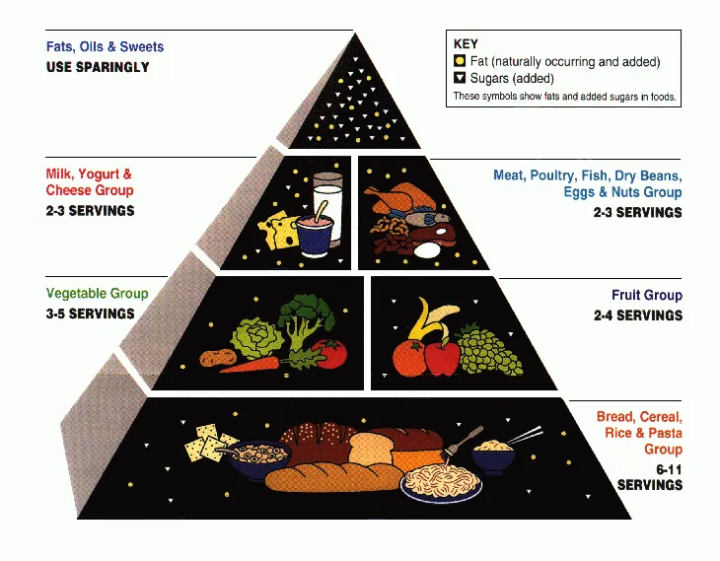
If you’re in this community, you're likely into nutrition and/or longevity in general - so you might have seen that the new Dietary Guidelines for Americans were published yesterday. They updated the food pyramid again, and I want to quickly walk you through what changed, because in my opinion, there’s also a bit of political framing around it. In their announcement, they compare the updated pyramid with one from decades ago: and yes, it looks very different (image below). There’s still a strong visual emphasis on cereals, grains, and carbohydrates: whether ultra-processed or not. But here’s an important detail that often gets lost: these guidelines are updated every five years, as nutrition science evolves. So the previous version wasn’t nearly as different as the comparison video makes it seem. Until now, the recommendations were more balanced: roughly equal portions of grains, vegetables, protein, and fruit, with a smaller portion of dairy. They emphasized whole grains, encouraged plant-based proteins, and recommended limiting sugary drinks, sodium, and processed foods. This year, there are some noticeable shifts: * Protein intake is more strongly emphasized, with daily recommendations increasing * Animal-based proteins (including red meat) and full-fat dairy appear more prominently, compared to earlier guidelines * Healthy fats, protein, vegetables, and fruit now make up most of the plate * Whole grains are still encouraged, especially over refined carbs, but they’re less visually central * Plant-based proteins are still included, but they play a slightly less prominent role than before Many of these changes were welcomed by specialists — especially the higher focus on protein quality and whole foods. However, concerns remain around saturated fat intake. Most experts still recommend keeping it around 10% of total daily calories, since excessive intake can raise LDL cholesterol and increase cardiovascular risk. Overall, these new guidelines are largely in line with what I personally believe:
3
0
1-7 of 7
powered by
skool.com/the-longevity-hub-9320
At The Longevity Hub, we learn the basics about the 4 pillars that support our health, so we can live longer, healthier, more fulfilled lives!
Suggested communities
Powered by