
Write something

🔥
1d •
Why sending YouTube viewers to a booking link kills your conversion rate
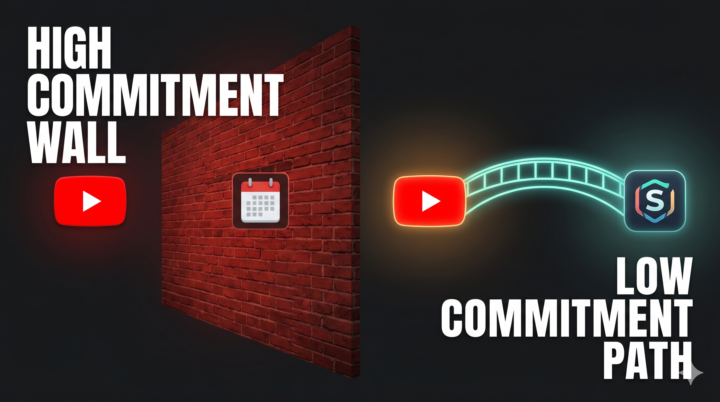
Most coaches, consultants, and founder-led businesses make the same mistake when they finally start getting traction on YouTube. They send the viewer straight to a booking link. It feels logical. The video did the work. The viewer is interested. The next step is the call. Right? It's the wrong step. And once you understand why, you can't unsee it. A YouTube viewer who has just watched 8 minutes of your content is *warm* traffic - they know you, they like the thinking, they're curious. But warm is not hot. Hot traffic books calls. Warm traffic needs one more step before it's ready to commit time on a calendar to a stranger on the internet. When you ask warm traffic to behave like hot traffic, you don't get a low conversion rate. You get *no* conversion. The viewer closes the tab and you never hear from them again. A free community sits in the middle for three reasons. One - it matches the temperature. Joining a community is a low-commitment yes. Booking a discovery call is a high-commitment yes. The brain processes them completely differently. Behavioural research going back to the 1960s shows that a small initial commitment makes a larger second commitment far more likely. Skip the small one and the big one rarely happens. Two - it removes the decision pressure. A booking link forces a yes/no in seconds, right after the viewer has been sitting passively for 10 minutes. That's cognitive whiplash. A community lets them lurk, read, and self-qualify in their own time. No countdown. No pressure. Just a quiet space to decide. Three - it adds peer proof. Inside the community, the viewer sees other people who look like them — same niche, same stage, same problems. That peer presence does more for conversion than any amount of testimonials on a sales page. The trust you built on YouTube gets transferred and amplified by the room. The trade-off is real. A community that nobody tends to becomes a ghost town, and a ghost town converts worse than a booking link. So the model only works if the community is actually run.
🔥
6d •
The podcast most coaches dismiss is the one that closes clients
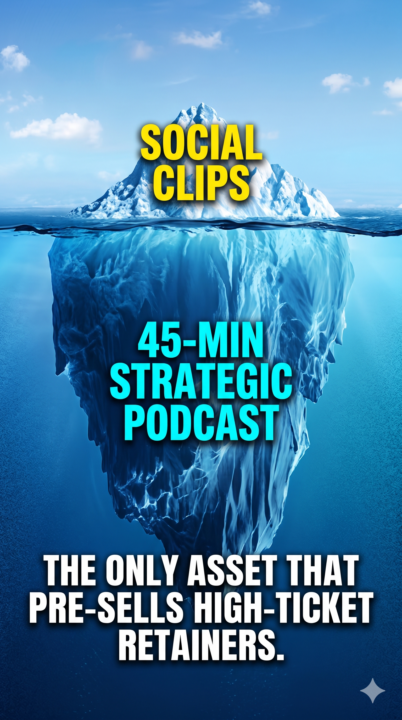
Most coaches and consultants treat podcasts as a vanity project. Something you do when you've "made it." A nice-to-have once the business is already running. That's the wrong frame entirely. A well-structured 45-minute video conversation does something no short-form clip, carousel, or LinkedIn post ever can - it lets a prospect sit inside your thinking long enough to decide they trust you before they've ever spoken to you. That matters more than most people realise. Coaches and consultants selling serious retainers aren't closing strangers. They're converting people who already believe in the methodology, already recognise the problem, and have already decided they want help. The question by the time they book a call isn't "should I work with someone?" It's "is this the right person?" A long-form video answers that question before the call begins. The prospect who's watched 40 minutes of you handling objections, walking through your framework, and demonstrating exactly how you think, that person doesn't need convincing. They arrive pre-qualified. The discovery call becomes a formality rather than a pitch. The catch is that most coaches produce podcasts the wrong way. They record a loose conversation, publish it, and wonder why nothing happens. Format alone doesn't do the work. The ones that generate inbound enquiries are built around a single, specific problem your ideal client is already searching for an answer to. One problem. One framework. One clear next step at the end. That's not a podcast. That's a pipeline asset that happens to be 45 minutes long. What's your current longest piece of content - and is it doing any of this work for you?
🔥
Mar 17 •
What Happens When They Google Your Name
A prospect who doesn't know you yet will do one thing before they book a call. They'll type your name into Google. 👉 https://youtu.be/zFITEziMnII?si=MBChg59a0MzSk8tR&t=2374 What they find in the next 30 seconds either confirms the decision or ends it. One YouTube video answers the exact question they were just asking. A LinkedIn post that sounds like the same person. A community that looks like somewhere worth being. That's not a personal brand. That's an Authority Estate doing its job. I touched on this in a recent collab, skip to 39:36 if you want the specific point. Link in first comment. 👇
🔥
17d •
The One-Channel Mistake That's Costing You Qualified Inbound
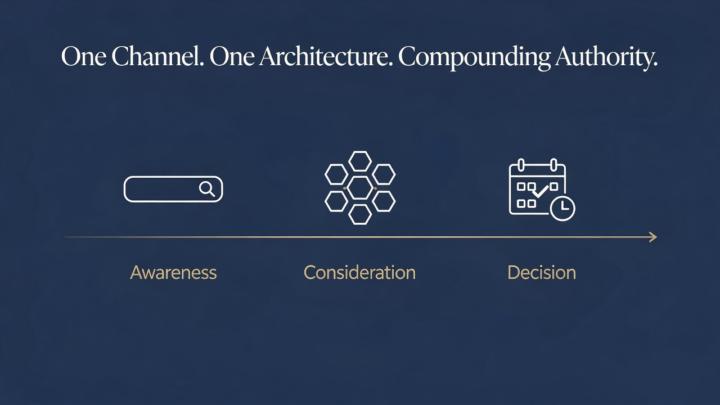
Most coaches and consultants I speak to have the same instinct when they start on YouTube. They want one channel that does everything, builds trust, demonstrates expertise, and converts prospects, all at once. So they post a technical deep-dive one week and a reflective personal update the next. The result is a channel that attracts viewers but not buyers. Watch time goes up. Inbound enquiries don't follow. Here's what's actually happening. Your YouTube channel is not a broadcast platform. It's an Authority Estate, a portfolio of digital assets, each one occupying a specific piece of search territory your ideal client is already searching. Every video is a deed of ownership over a specific problem, question, or transformation. When content is mixed - expert one week, personal the next - the estate has no coherent architecture. Prospects arrive, get value, and leave. The trust doesn't compound because the positioning isn't consistent. The fix isn't a second channel. It's a clearer content brief for the one you have. Every video should pass one test before scripting begins: could a prospect watch this alone and arrive at a discovery call already knowing your methodology, your positioning, and why you're the right choice? If yes, it belongs on the channel. If not, it's content - not an asset. Where are you currently in this? Drop your answer below. The most common roadblock becomes next week's video.
Poll
6 members have voted
🔥
19d •
Most coaches blame AI for generic content. The problem is earlier than that.
AI produces generalities when you give it generalities. Feed it a topic, "content marketing for coaches" and it returns the kind of output that sounds fluent, structured, and identical to everything else in your niche. That's not a failure of the tool. That's a failure of the input. The fix is a step most coaches skip entirely: let the AI interview you before you ask it to produce anything. Not "give me a post about X." Interview. Dig into a specific client situation. A belief you hold that contradicts the standard advice in your field. A moment from a client engagement that didn't go to plan, and what you learned from it. The kind of thing that never makes it into a standard prompt because it doesn't feel like "content." That context - your actual experience, your actual IP - is the only thing AI cannot manufacture on your behalf. Once that's in, the output is different. It sounds like you because it came from you. I use NotebookLM as part of this process. It's particularly effective at drawing out the non-obvious material, the stuff you know but haven't thought to say. The question for the room: when you use AI for content, where does it actually fall down for you? Generic output, wrong tone, missing your specific framing, or something else? Drop it below. I'll pull the patterns and build a resource around whatever surfaces most.

1-13 of 13
powered by
skool.com/the-authority-engine-7664
YouTube-led lead generation for Coaches and Consultants. Build an Authority Engine that attracts inbound clients - without chasing referrals.
Suggested communities
Powered by