

1d •
Stay With What Has Your Attention
There are ideas we think we're supposed to write about. And then there are the ones we keep thinking about when no one is asking us to. The question we return to. The story we keep telling. The subject we find ourselves reading about again. The sentence we can't quite leave alone. We can dismiss that repetition because it doesn't seem useful yet. But what if your attention is telling you something? You don't have to know what the idea will become before you give it more of your attention. Sometimes interest comes before understanding and fascination comes before language. And sometimes we discover what matters to us because we finally stop dismissing the very thing that keeps bringing us back.

3d •
You Don't Have to Know Where It Belongs Yet
Sometimes an idea arrives before you know what to do with it. A sentence. A memory. A question. Something someone says that remains with you. Our instinct can be to figure it out immediately. Where does this belong? What am I supposed to do with it? Is it even worth keeping? But not everything needs to make sense when it first arrives. Write it down. Give it somewhere to live. You may come back tomorrow, next month, or six months from now and suddenly recognize why it mattered. Skylie Cash writes about this in her book, Timelines of My Future. Sometimes we can look back at something we wrote and realize it wasn't meant for that moment. We were writing something we would understand later. Think of something you've almost dismissed because you didn't know where it belonged or what would come from it. Write down what you know about it right now. What changes when you trust that your interest in it is reason enough to keep listening?

2d •
What If the Meaning Is in the Connection?
One of my favourite things about writing is the moment when two things I hadn't consciously connected suddenly find each other. An experience from years ago connects to something I'm thinking about today. A sentence I've written reminds me of a conversation. An idea I've had suddenly makes more sense when another idea arrives. Neither one necessarily changed. I saw the relationship between them. This is one reason we don't always need to rush to decide what an idea means. Nothing has meaning except the meaning we give it. And sometimes that meaning changes as new connections appear. The deeper meaning may not be inside the original idea at all. It may be in what it eventually connects to. Choose one thought you've been carrying and begin with the words, “This makes me think about...” Don't decide where you're going. Follow the connection and notice where it takes you. When do unexpected connections between ideas tend to find you?
Poll
4 members have voted

4d •
Give Your Idea Time to Expand
An idea doesn't always arrive fully formed. Sometimes a thought comes to you and you know there's something there, but you don't quite know what it is yet. So you think about it for a while. You let it marinate. Then another piece comes to mind. Something you read connects with it—a memory surfaces. You hear something in a conversation that makes you see the original idea differently. You sit down to write and discover there was more there than you realized. This is how ideas expand. We can be quick to do something with an idea the moment it arrives. Turn it into a post. Put it into the book. Decide what it means. But sometimes the most meaningful thing we can do is give it our attention without asking it to become anything yet. Sometimes that means adding a voice note to your phone or writing it down in an ideas journal. Somewhere in those connections, your deeper idea begins to emerge. Today, think about an idea you’ve been carrying around. Write down what you know about it so far, and ask yourself: What else does this connect to? See what comes without trying to make it mean something yet.

Feb 25 •
New lessons, every time
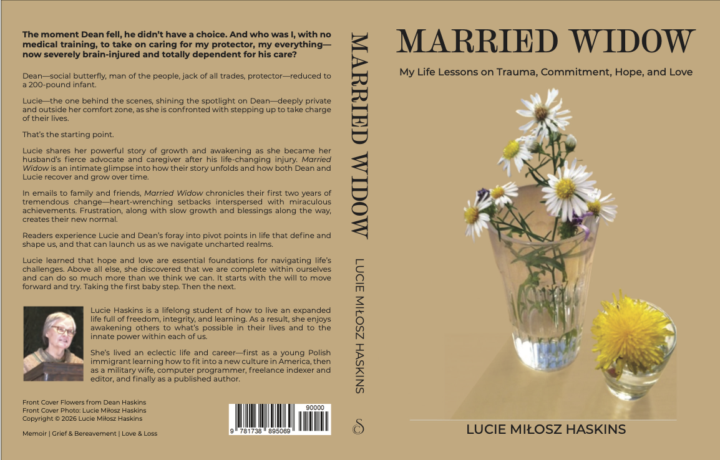
One thing I enjoy immensely is formatting a book for a client. It right up there with coaching them through the entire publishing process. And the absolute best is celebrating the author when we reach the finish line. And that happened today! OMG. Please join me in celebrating @Lucie Haskins today! The final PDFs for her book, Married Widow, got uploaded to Amazon with a release date of March 12, 2026. As I wrap up this project with Lucie, I thought it might be fun to share my lessons along the way. I learn something new every time I lay out a book in InDesign, even though I've produced a dozen books for clients. 1. Metatron's Code: my first publication in 2019 ... so everything was a learning curve. Biggest challenges to overcome: chapter page layout with the dot leaders, tabs, running heads, and adding a graphic to the running footer. (It's the little things.) 2. Amy and the Angels: kerning and leading. 3. Beyond The Shift: orphans, widows, and runts. (My proofreader, Lucie Haskins, shared about orphans and widows, and I taught her about runts.) 4. Married Widow has 45 images, so it became important to learn how to anchor images to a page. But first, the handy resize tool in Canva made the resizing process super easy. Every book gets easier, but I love the challenge of learning something new that never came up in a previous book. I’m curious where you are in your book journey—idea, draft, editing, or publishing?
1-8 of 8
powered by
skool.com/sourcecode-publishing-6681
For writers, content creators & entrepreneurs who know they have something to say. Find your truest words and develop your ideas into a body of work.
Suggested communities
Powered by