SOS - School of Spirituality
Private
201 members
Free
🔥
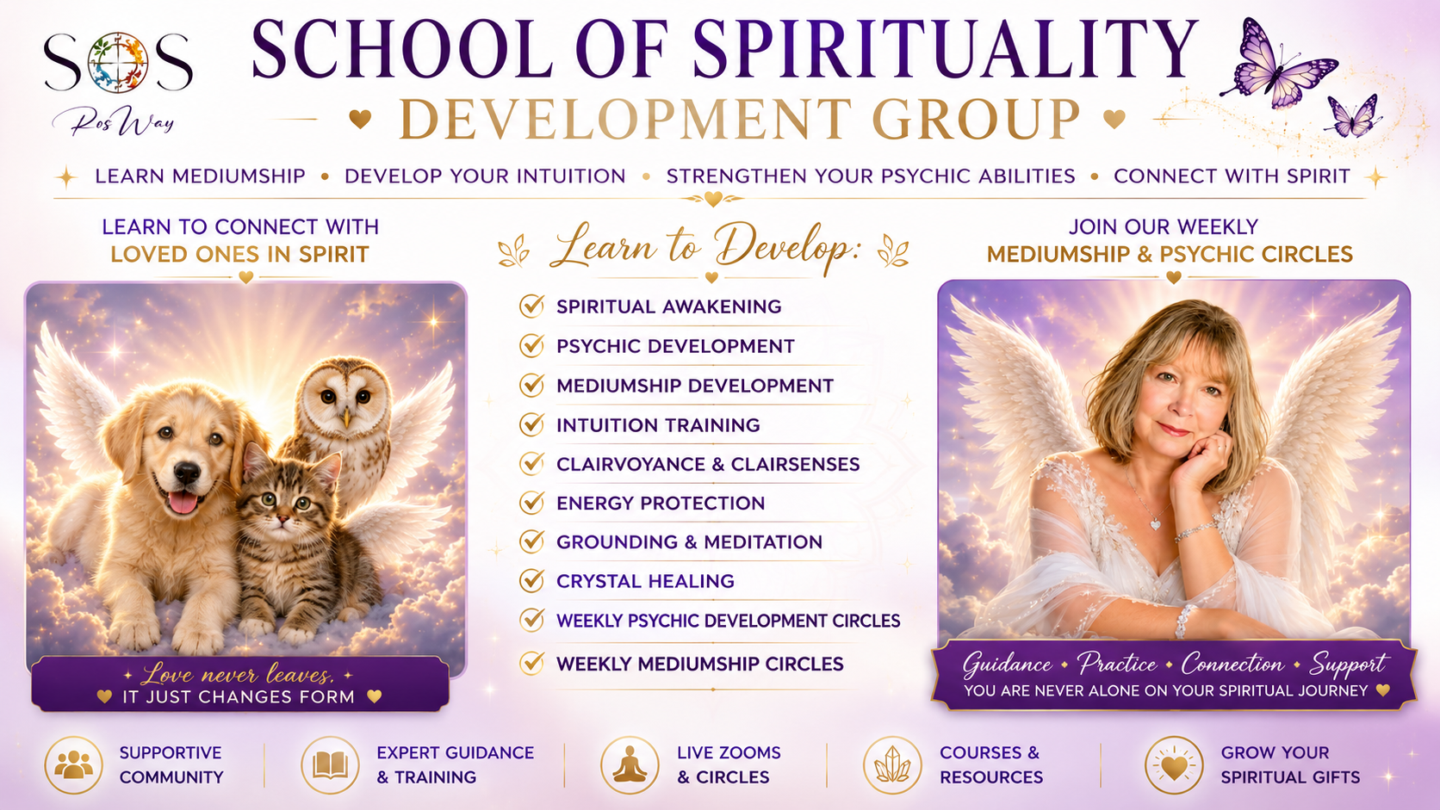
Learn Psychic Development, Mediumship Development and Spiritual Awakening with SOS – School of Spirituality.
Whether you're a complete beginner or looking to strengthen your abilities, our community helps you develop intuition, connect with Spirit, recognise the signs of Spiritual Awakening and build confidence in a safe, supportive environment.
Enjoy online courses, weekly Psychic Development Circles, Mediumship Development Circles, live Zoom workshops, practical exercises and expert guidance.
Learn clairvoyance, understand the clairsenses, improve spiritual protection, grounding, meditation, chakras, crystal healing and more.
If you're searching for how to become a medium, develop psychic abilities or strengthen your intuition, you'll find everything you need here.
Join our free community or upgrade to Premium for exclusive courses, weekly live workshops, development circles and ongoing guidance designed to help you strengthen your gifts and confidence.
powered by
skool.com/sos-school-of-spirituality-8713
Learn Psychic Development, Mediumship & Spiritual Awakening. Weekly live circles, courses, intuition training & a supportive spiritual community.