
Write something

Mar 10 •
What is in Your Emotional Backpack? 🎒🐘
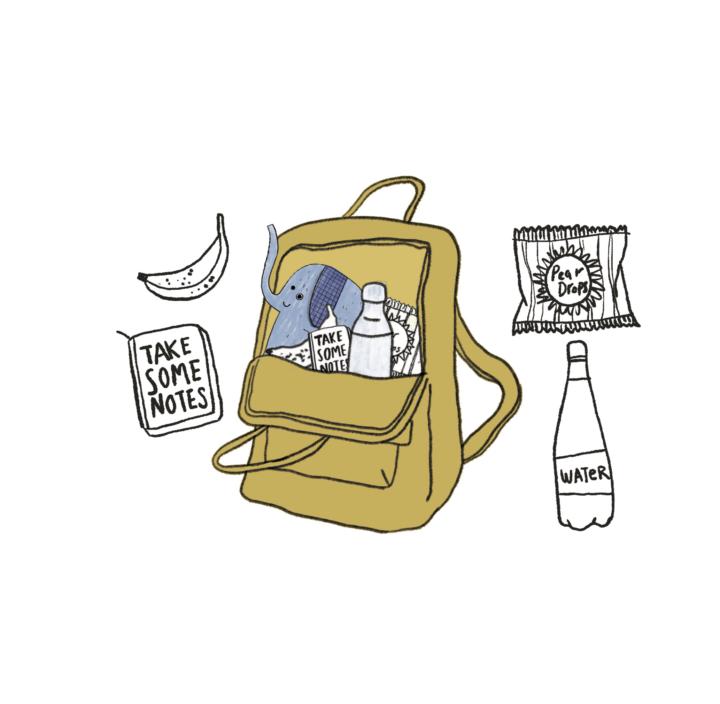
In The Boy with the Blue Bike, Leo knows that before he can hit the road, he has to pack for the journey. He packs only the essentials: water, some snacks, his notebook, and of course, his trusty companion, Chippy the elephant. These supplies make his journey dynamic, fun, and sustainable. But what happens when you pack the wrong things? As solo parents, we all carry an invisible, emotional backpack every single day. The problem is that after a high-conflict divorce or a toxic relationship, we often fill that backpack with heavy rocks without even realizing it. We pack the resentment over what our ex did. We pack the guilt over not giving our kids the "traditional" family. We pack the fear of the future. "The Heavy Backpack" There is a psychological phenomenon known as Cognitive Load. When your brain is expending all its energy carrying unresolved emotional trauma and rumination (the heavy rocks), you literally have less cognitive energy left to be present, to problem-solve, or to experience joy. The emotional weight doesn't just make the journey miserable—it physically drags you down. It is Time to Unpack Your backpack will either drag you down, or it will catapult you forward with the right supplies. You cannot climb the mountain if you are carrying boulders of resentment. To thrive, we have to deliberately unpack the trauma and repack the essentials: - Take out: The guilt. - Put in: Self-compassion. - Take out: The need to control the narcissist. - Put in: Iron-clad boundaries. - Take out: Isolation. - Put in: This community. (We are your "Chippy"—your trusty companions for the ride!) You are the one carrying it. You get to decide what stays inside. 👇 Let’s do an inventory check in the comments: What is ONE heavy "rock" (a specific fear, guilt, or resentment) that you are actively choosing to take OUT of your backpack today?
0
0
Mar 6 •
Freedom Friday: The "Overqualified" Trap 🦋
I am guessing many of you know this exact feeling. You are searching for jobs, intentionally applying for roles below your skill level just to put money in the bank. And you still get rejected. But this time, it’s not because you lack something. It’s because you have too much. You are "overqualified." Why "Too Much" Feels Like a Burden You constantly adapt your resume, dumbing it down just to land a simple job, and getting turned down feels terrible. Ironically, being told you are "too much" can make you feel like you aren't good enough. Employers often see your deep experience as a threat. They think you will get bored, that you are just passing through, or—in some cases—they look at your resume and think, "No, this person could take my job." Status Threat 🧠: It is not in your head. Research in organizational psychology calls this Status Threat. Hiring managers often reject highly competent candidates not because the candidate won't be great at the job, but because the manager's own ego and authority feel threatened by the candidate's expertise. The Solo Parent Reality: What these employers don't sense is our why. Even if we are overqualified, as single parents, we are profoundly grateful for a job that helps us bring food to the table. We aren't flight risks. We have the potential to be the absolute best at what we do because we are driven by something much deeper than a corporate ladder: our kids' stability. The Cocoon Phase: Personally, my own journey has been a test of resilience and surrender. It often feels like a loop that never ends. But I’ve realized this "overqualified" phase is actually an opportunity to analyze the lesson underneath it. Think of it as the caterpillar transforming in the cocoon. You are shedding an old identity that is no longer useful for your new path. Your spark is still there. You just have to figure out how to make it glow so bright that it blinds the wrong rooms and guides you to the right ones. Your Superpower: Momentum Figuring out how to get out of the rejection loop isn't easy. But in both the spiritual and physical world, the rule is the same: Movement generates momentum. Like riding a bike, you cannot find your balance if you are standing completely still. Start small. Send one email. Tweak one skill. Just start.
1
0

Feb 12 •
Chaos vs. Stability: Being the Anchor in the Storm ⚓🌪️
The fundamental difference is simple: Narcissists thrive on chaos. Kids thrive on routine. The narcissist uses unpredictability to control people. They keep everyone off-balance to "gain" compliance (which they confuse with love). For adults, this creates a trauma bond—an addiction to the highs and lows that can take years to detox from. But for kids? It is terrifying. Children are defenseless. They believe everything the adults in their lives tell them. When they grow up in a house where the rules constantly change and love is conditional, they develop a distorted vision of reality. They start to believe that "love" means walking on eggshells. The Psychology: The "Fawn" Response 🦌 When a child cannot fight back (Fight) and cannot leave (Flight), they survive by becoming incredibly pleasing. They suppress their own needs, personality, and feelings to merge with the abuser's expectations. They become "perfect" to stay safe. In The Boy with the Blue Bike, we see this in Perfect Point—kids terrified of making even a small mistake because they know the environment isn't safe for imperfection. Your Mission: The Anti-Chaos Strategy You cannot control what happens in the other house. But you can make your house the antidote. 1. Predictability is Safety 📅 Since they don't get stability over there, you must overdose them on it here. - Preview the Future: Let them know the plan in advance. "Tomorrow we are going to the park, then we will have lunch." - The "10-Minute Warning": Never spring a sudden transition on them. "In 10 minutes, we are leaving." - Why: When a child knows what is coming, their nervous system can finally relax. They don't have to be hyper-vigilant. 2. Strategic Silence (Protecting the Supply) 🤐 Be incredibly careful about what you share with the narcissist. If you tell the narc, "The kids love their new soccer coach," the narc might suddenly decide soccer is "stupid" or refuse to take them, just to hurt you. The result? The kids suffer. Outsmart the narc by keeping the things your children love out of the conflict zone. Protect their joy by protecting your privacy.
1
0

Feb 6 •
Your Most Powerful Superpower: The Safe Headquarters 🏠🛡️
Hi Superparents, Have you ever noticed that your child saves their biggest, loudest emotions for your living room? Or that they fall deeply asleep in the car the second you pick them up? It’s easy to think, "Why are they acting out with me?" But their nervous system is actually saying: "I am safe. I can finally let go." The Psychology: Restraint Collapse There is a name for this: Restraint Collapse. Children (and adults!) expend a huge amount of energy "holding it together" in environments where they feel they need to perform or be "good" to be accepted. When they finally return to their Safe Attachment Figure (you), that restraint collapses. The meltdown or the deep sleep, is actually the highest compliment. It means they don't have to wear a mask with you. The "Other House" Dynamic It is painful when it feels like your child "prefers" the other house, or acts "perfect" over there. But remember: Conditional love comes from fear. If they are walking on eggshells to avoid upsetting the other parent, they aren't being their true selves. In your house, they don't have to perform. They can be messy, loud, and real. The "Spilled Milk" Test In my book The Boy with the Blue Bike, Leo visits a neighborhood called Perfect Point. He watches a child accidentally break a sandcastle and immediately throw himself to the ground in terror, screaming, "I broke it, it's not perfect!". That child was terrified of making a mistake. Your house is the opposite of Perfect Point. In a Safe Headquarters, when milk spills, there is no yelling. We don't shame; we solve. "Oops, accidents happen. Let's grab a towel and clean this up together." You are teaching them that mistakes are not dangerous, they are just problems to be solved. The Silent House I know the silence is hard when they leave. Watching the house become quiet can feel heavy. But you are a Safe Headquarters for yourself, too. While they are gone, nurture you. Fill your own cup so that when they come back, tired, emotional, and ready to "collapse" into your arms, you are ready to catch them.
1
0

Feb 2 •
To the Single Dads: The Strongest Thing You Can Do is Let it Out 💪
Hi Superparents, Being a single parent requires a kind of strength that most people will never understand. You have to split yourself into multiple people: the provider, the nurturer, the teacher, and the disciplinarian. The bills double, the time shrinks, and physically, we are exhausted. We want to be present for our kids, but often our minds are stuck figuring out how to survive the month. Today, I want to talk specifically to the single dads. Growing up, most of us were given one playbook: Be strong. Don't cry. Man up. That might have helped us look tough on the outside, but on the inside, it often just made the storm stronger. Nobody taught us how to release the pressure, so we just kept sealing the lid tighter. The "Pressure Cooker" Trap: We see so many cases where single dads are judged as "aggressive" or "angry." But often, that anger isn't who they are, it’s a release valve. 🧠 Psychologists call this the "Pressure Cooker Effect" of emotional suppression. Research shows that when men suppress sadness or vulnerability to conform to traditional masculine norms, that energy doesn't disappear. It transforms. It often re-emerges as irritability, anger, or sudden aggression because the emotional "container" is simply overflowing. True Strength is Clearing the Storm Validating your emotions isn't a weakness; it is the ultimate sign of strength. When you deal with that storm inside, you clear out the debris. You make space. And do you know what fills that space? Love. When you aren't holding back the dam, you can let more love in, and let more love out for your children. "Man Up" and Cry --> It is okay to cry. You are not less of a man for it; you are a more human father. Try opening up a little today—whether it's with a friend, a family member, or just writing it down. Let them know you are working on this part of yourself. You can be tough and still feel deeply. So man up, cry it out, and come back stronger. I can't remember a time my own dad said "I love you" to me. I knew he felt it, but he never had the tools to express it. I decided to break that cycle. Today, I challenge my son to see who can scream "I LOVE YOU!" the loudest. It is silly, it is loud, and it is so much fun. But most importantly, every single day, he knows—without a doubt—that his dad loves him.

1-30 of 35
skool.com/solo-parent-superpowers
Unleash your Solo Parent Superpowers! 💪 You're a hero, and heroes need backup too. Join us!
Powered by