

6d •
Wow! Scientists Just Proved Our Consciousness Is Quantum...
This is compelling material with giant implications for meditation and the law of attraction. I saw this today and just wanted to share the information and our future possibilities. For thirty years, the scientific establishment called Roger Penrose's quantum consciousness theory impossible—until a Wellesley lab ran one rat experiment that flipped the entire field. Neuroscientist Michael Wiest's team just published the first causal evidence that quantum activity inside microtubules is directly tied to consciousness itself. The "warm, wet, noisy brain" objection materialists used to bury Penrose for decades just *collapsed*. What you'll learn: ✅ The anesthesia experiment that gave Orch OR its first causal proof ✅ Why classical AI can never be conscious — the quantum boundary ✅ Where this leaves the hard problem, panpsychism, and faith The materialist model just lost a round it didn't think it could lose — and what comes next rewrites medicine, AI, and meaning itself. ________________________________________________________________________ SHAPES REALITY VIDEO: The Quantum Observation Effect: Why Scientists Now Believe Consciousness Shapes Reality The quantum observation effect may be forcing science to rethink how consciousness shapes reality. Three 2026 breakthroughs are pushing that question into the open: measurable quantum observation, entanglement across fiber-optic networks, and brain patterns that echo advanced language models. The deeper tension is not just what particles do but what reality depends on. Inside this breakdown: • Why observation changes a quantum state • How quantum entanglement challenges space and time • What new photon and qubit research suggests • Where science and faith begin to intersect. If the quantum observation effect keeps holding up, what does that mean for how consciousness shapes reality? #QuantumPhysics #Consciousness #Science
2
0
23d •
The Hidden Architecture Of Reality: Invisible Laws That Shape Your Life
➡️ Most people move through life believing reality is random. They think success is luck. They think failure is fate. They think circumstances happen to them. But what if life is not random? What if beneath the surface of everything you experience, there is a hidden architecture — an invisible structure of laws, patterns, energy, consciousness, and cause-and-effect principles that quietly shape the results you see in your outer world? This is where the journey begins. The Hidden Architecture of Reality is the deeper order behind appearances. It is the unseen framework through which thought becomes feeling, feeling becomes action, action becomes habit, and habit becomes destiny. You are not simply living inside reality. You are participating in it. Every thought you think repeatedly sends a signal to your inner world. Every emotional state you dwell in shapes how you perceive things. Every belief you accept becomes a lens through which you interpret life. And over time, that inner pattern begins to organize your outer experience. This does not mean you control every event. It does not mean hardship is your fault. And it certainly does not mean life is always effortless. But it does mean this: You are not powerless. Laws are operating whether you know them or not. Just as gravity works whether you understand physics or not, the laws of consciousness, attention, vibration, cause and effect, polarity, rhythm, and correspondence influence your life whether you are aware of them or not. The awakening begins when you stop asking, "Why is life happening to me?" and begin asking, "How am I participating with the laws that shape my reality?" That question changes everything. The moment you become aware of the hidden architecture, you no longer react to life. You begin cooperating with it. You begin to notice that your attention is creative. Where attention goes, energy gathers. Where energy gathers, patterns form. Where patterns form, experiences repeat. This is why meditation is so powerful.
2
0


🔥
Mar 28 •
Why I feel emotional
Why I feeling drain and so down all day. It like i just feel like i am not good enough. I feel like crying all day but didn't. I want for a small walk that help a little but the feeling is still there stuck. I just want to have a good day. I know soon I will go to bed. I will do some of my diamond art maybe put music on that is calming. I am on my grounding mat.

Mar 5 •
Meditation music in daily life.
I am curious if anyone uses the music for other reasons? I have been listening to it to do school work. I find it helps to keep me focused and relaxed during long study sessions. I don’t feel so tired after 2-4 hour of hitting the books. I also use it when I am stuck waiting. It seems to activate the be still feeling while remaining aware and I can remain patient for longer periods. Are there ways you bring the peace of meditation into daily living? Music, images, mantras? What’s your favorite? I would love to expand my toolbox. Thank you for sharing!

Feb 24 •
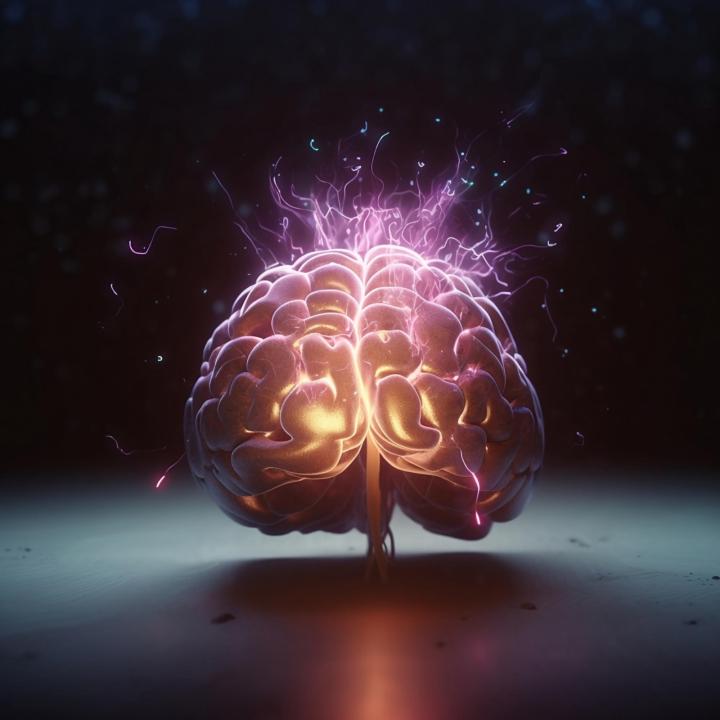
3-Minute Meditation Lesson: The Neuroscience Of Meditation
Recently, there has been significant interest and research into the neuroscience of meditation. Scientists and scholars are investigating the brain's silent mechanisms as meditation becomes increasingly popular. ======================================================= FIRST EVER! Stress Reset & Healing Circle Wednesday, March 4th, 7 pm - 8 pm EST https://us06web.zoom.us/j/4206874351?pwd=R0J6T2tVb29uakI1cW5UYnpCZmk3QT09 Release overwhelm & Reset Your Nervous System. Guided Meditation + Q&A + Our Future Community Please join me to reset your nervous system. We are going to go deep into healing and relaxation. Small steps count more than perfect ones. Hope to see you there! Go well. ======================================================= Neurologists seek to understand how meditation affects the body and mind. Neuroscience studies the nervous system, specifically the brain, and its relationship to behavior and cognition. Researchers have utilized various methods to study brain activity during contemplative times. Functional magnetic resonance imaging (fMRI) is a common approach for measuring variations in blood flow and oxygenation across different brain areas. Scientists have used fMRI scans to identify specific brain regions that are active during meditation. One of the most important findings of neuroscience on meditation is its effect on the prefrontal cortex. This part of the brain is responsible for decision-making, attention, and self-control. Studies have shown that regular meditation can increase activity in the prefrontal cortex, implying that it improves cognitive ability. This feature may explain why daily meditators frequently claim increased attention and concentration at work and in their relationships. Furthermore, studies have shown that meditation may significantly affect the amygdala, a brain region involved in emotion processing. The amygdala regulates our stress response, fear, and anxiety. Studies have shown that a consistent meditation practice can reduce amygdala activity, resulting in fewer stress and anxiety symptoms. This indicates that meditation could be valuable for managing and regulating emotions.
1-5 of 5
skool.com/secretsofmeditating
Tried meditating before but couldn’t stick with it? Learn meditation in a way that fits your lifestyle. FREE 7-day trial to see if it's a fit for you!
Leaderboard (30-day)
1

+2
2
🔥
+2
3

🔥
+1
4

+1
Powered by