
Write something

Apr 15 •
Confessions Links
https://youtu.be/zELElajH5gU https://youtu.be/vUiDrFPQWik https://youtu.be/hKeoD6mCQPc
0
0

Apr 14 •
Dante reading
Sean, I finished Paradise. I’m seeing the vision. It was amazing, I can’t wait to track with it in our class. I got into it so much that I forgot to take out our trash. I’m thinking of things beyond the mundane. I’m turning into an absent minded professor and a little out of touch with the immense busyness of our modern society. I’m blessed by Dante—it’s mind boggling. The ending is so amazing with the wheel, circles of Trinity and love that moves the sun and the other stars. Talk soon, Mark
Apr 9 •
Your teaching
Sean, Great class last night. Thank you for your indefatigable teaching. My prayer is that when I teach I can respond to students the way you do. You really hear our points and bring out even more. It is rare for a teacher to really hear students and respond in a way that makes them feel smart. You have the gift! Thank you, Mark
Mar 31 •
Paradiso Guides
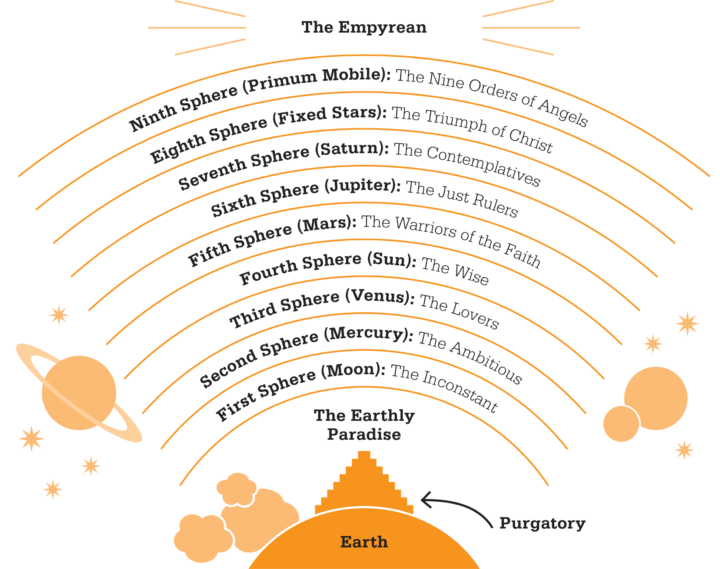
Hey guys, wanted to share 2 ideas to help with your reading of Paradiso. The image attached is the overall map of the ascent Dante will be making. He structures Paradiso off of the model of the Ptolemaic Universe. And the text below is an allegorical structure of the ascent: Each planet corresponds to one of the classical 7 liberal arts (Trivium and Quadrivium). Don't stress over this allegorical reading too much, we'll unpack it in more depth over this week's discussion. TRIVIUM (formation of the mind through language) 1. The Moon -> Grammar 2. Mercury -> Dialectics (Logic) 3. Venus -> Rhetoric QUADRIVIUM (perception of order in reality) 4. The Sun -> Arithmetic 5. Mars -> Music 6. Jupiter -> Geometry 7. Saturn -> Astronomy BEYOND THE LIBERAL ARTS 8. Fixed Stars -> natural science/physics/metaphysics (being itself) 9. Primum Mobile -> moral science/philosophy (ordering of the soul) 10. Empyrean -> theology (direct vision of God)
0
0
Mar 19 •
The template for purgatory
I’m glad you gave us a template: enter, virtue, examples from faith, lit or history, the contrapasso, the beatitude, angel, the examples of vice, prayer snd next climb. Thank you Sean. This helps me enjoy the reading better. Question: do the bad examples get out of purgatory or just our Dante? They seem trapped, Mark
1-18 of 18
powered by
skool.com/sean-berube-great-books-5485
A Great Books Cohort that will teach you to see the world like Dante Alighieri
Suggested communities
Powered by