User
Write something
New lesson inside the classroom – Trapped by Fear
Afternoon all — I hope you’ve had a good week. Inside the Knowledge Saves Lives folder in the classroom, you’ll now find a 30-minute pre-recorded workshop exploring how fear and isolation operate within coercive control. This session breaks down how fear is created, how it leads to self-isolation, and why this is often misunderstood in both personal and professional settings. Have a watch when you can, and if anything resonates or raises questions, feel free to reach out.💜🙂
1
0
New lesson inside the classroom – Trapped by Fear
Today’s Exercise: Reflecting on Our Role Professionally
“Why This Work Matters” Purpose:To reinforce purpose and support clearer decision-making under pressure. When we are grounded in why we do this work, it strengthens our ability to stay focused, even in complex or high-risk situations. Exercise:Take a few moments to write down 5 reasons why your role matters, specifically: - To victims/survivors - To safeguarding outcomes - To long-term societal impact Consider: - What happens when this role is done well? - What happens when risk is missed or minimised? Here’s mine: 1. Families are given hope at a time when all they face is fear and uncertainty. 2. As the saying goes, "If you give a man a fish, he will eat for a day, but if you teach a man how to fish, he will eat for life." The same applies here. By building awareness and equipping people with tools, they are able to navigate their way to safety without feeling dependent on others. 3. Improving outcomes, one case at a time. One case well done is one life potentially saved. Or even more if they have children. 4. By focusing on root causes, the long-term cost to society is significantly reduced. 5. Young people are given a stronger foundation to thrive, grow, and make safer choices.
Thursdays Exercise: A Gentler Approach to Affirmations
Sometimes affirmations don’t land because the brain knows they don’t feel true. Saying “I am happy” when you’re not can create resistance. But shifting to “What if I could feel happier?” opens the door instead of forcing it. This approach helps your brain feel safe enough to consider change, without feeling unrealistic or overwhelming. Start here: “What if I could…” Then gently build to: “I can…” → “I will…” Try this: Take a current thought:“I’m not good enough”“I can’t handle this” Reframe it: ➡️ What if I’m more capable than I think?➡️ What if I can handle this? Then ask: How would I show up if that were true? And if you have achieved things in the past that you never thought you could, remind your brain of this! This will open your brain up to the possibility of believing something is possible. 💜Here’s mine:💜 Old belief:“I will never be successful.”(This comes from a childhood wound.) Reframe:What if I can be successful… because I’ve already done it before when nobody thought I could?What if I can do it again?And look how far I’ve already come from where I was. Now something shifts. My brain starts to open to the possibility. So the next step becomes:➡️ I can be successful again And my brain is actually on board with that. The “I will” part?That still needs a bit more evidence, and that’s okay.
Welcome to all our new members 💜 We’re so glad you’re here. Here’s a simple exercise to help you start the week feeling grounded.
Happy Memory Activation Purpose: Emotional regulation + accessing a safe, calm state Exercise: Take a moment to recall a happy memory. Gently explore it: - What did you feel? - Where did you feel that in your body? - Who was with you? - Where were you? Then: Spend 5 minutes revisiting that memory. Slow your breathing right down — calm, steady, controlled. As you breathe, press play on that memory in your mind: - Watch it like a scene - Notice the details - Let yourself feel it again (You can do this with your eyes open or closed, whatever feels easier. Looking at photos from that time can help bring it to life.) To enhance the experience further, you can play regulation music or music you associate with that feeling, helping your body reconnect with that state more deeply. You can return to this at any point in your day — even for 60 seconds. It’s a simple way to interrupt negative thought patterns and gently bring your body back to a place of safety. 💜
Welcome to all our new members 💜 We’re so glad you’re here. Here’s a simple exercise to help you start the week feeling grounded.
1-7 of 7
powered by
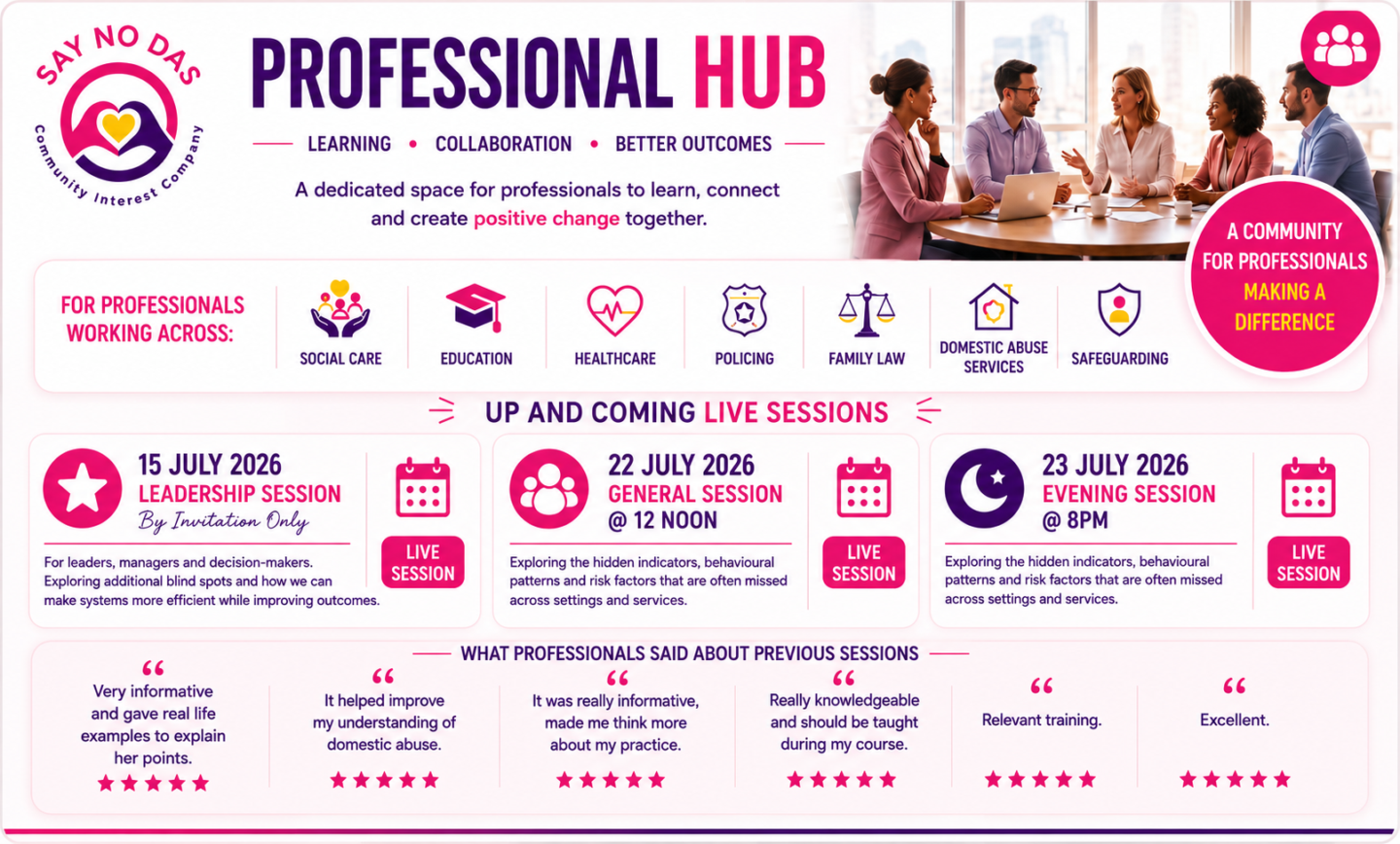
Say No Das Professional Hub
skool.com/say-no-das-professional-hub-3824
A professional space for those working with individuals impacted by abuse to deepen their understanding, improve trauma-informed practice & outcomes
Build your own community
Bring people together around your passion and get paid.
Powered by