
Write something
Pinned
Pinned

18d •
Brand New Here? This is for you!
First of all, welcome! You have entered a very friendly community with players of all types, levels and backgrounds, with one thing in common. We love hanging out, making friends, and encouraging/helping one another. We hope you will give us a chance to get to know you as well! We love welcoming in new people and learning about their journeys as well. Here are some great ways for us to get to know about you! 🎸 👋 - Introduce yourself here https://www.skool.com/rock-n-blues-guitar-academy-5681/kicking-things-off?p=5b37a372 🎸 🤘 - Share pics of your guitar(s) here https://www.skool.com/rock-n-blues-guitar-academy-5681/do-you-guys-have-any-interesting-guitars?p=6150627c 🎸 🎛️ - Share pictures of your studio/jam room/playing spaces here. https://www.skool.com/rock-n-blues-guitar-academy-5681/studio-tour?p=b63c59d2 Here's a short guide how to get around this place https://www.skool.com/rock-n-blues-guitar-academy-5681/new-layout?p=b380e2e9 New to music? Guitar? Here's a fun little course and it's free. Go to Classroom at the top, and select the "Musical Alphabet explained like youre 5 Years old". It's super short, and the feedback's been great! Other than that, just dive right in! We like to go live a lot, we all love hanging out - you never know what might pop up here! We look forward to getting to know you, and are glad youre here! Along those lines here's how to join us for our live (sometimes unannounced) hangouts! https://www.skool.com/rock-n-blues-guitar-academy-5681/how-to-join-lives-with-sean-and-hang-out?p=445f5a17
5
0
Pinned
6d •
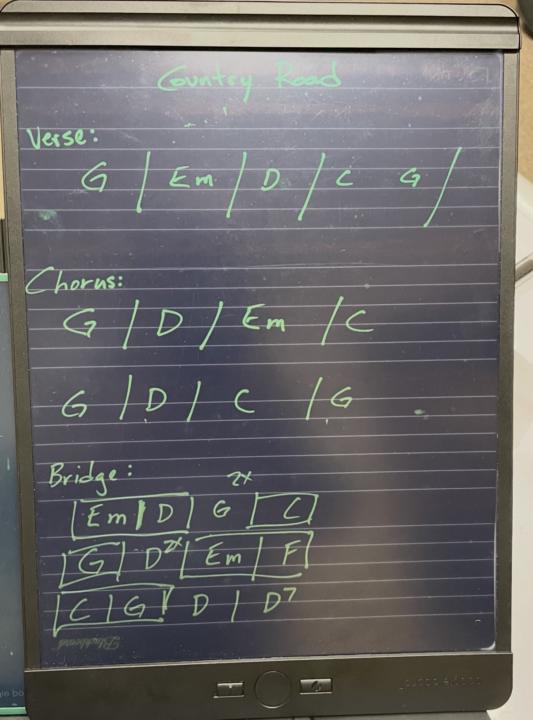
Theory Talk - Analysis of Country Roads 2
Today we will look at the Chorus, from a Harmonic analysis lens. Why is harmonic analysis so useful? For Me its easier to see a numeric structure, because it gives insight into where in the key that chord came from, not just “what the name of the chord is”. So now the Chorus, whats going on and what can I tell from this? G D Em C G D C G Right away, I separate this into two sets of 4 bars, because that 4 bar cluster just gives Me more visual and conceptual clarity. Its an 8 bar chorus. In Nashville terms. 1 5 6m 4 1 5 4 1 So the 1 goes to the 5, right! But we talked about how the 5 wants to pull back to the 1. But in this case, does it do that? Nope. It goes to the 6m. What gives? Well the simple answer is, even though a 5 wants to go to the 1… it doesnt HAVE to! In fact, they have a name for this very thing! When the 5 goes somewhere else, anywhere besides the 1, its called a Deceptive Cadence. Makes sense, right? You thought the 5 was going to to the 1, and boom, it made a sudden turn, tricking or “deceiving” you! You thought it would zig and it zagged instead! So it went to the Em, or 6m. Deceptive Cadence! Happens all the time, and its perfectly fine. From the 6m it went to the 4. C. Now we are on the next set of 4 bars. What is it? a G, back to the 1! If you recall, there was a Cadence in our first analysis called the Plagal Cadence? That’s the 4-1 cadence. So now we see that in the last bar we just looked at, C went to G, and now off we go to the remaining chords! Now we go from 1 to… the 5, and from there, instead of straight to the 1 it goes to the 4 then the 1: 1 5 4 1 The 5 went to the 4, is that therefore a deceptive cadence? I wouldn’t really say so. We tend to look at it as a bit of an extended/meandering path from 5 back to the 1. So in essence its still 5-1 but it goes to the 4 first, then the 1, which is basically a Plagal cadence, right? So we just look at the 5 4 then 1 as a very common move we see a lot of in music. So, a Deceptive Cadence might be a 5 to 2m or 3m etc.

17h •
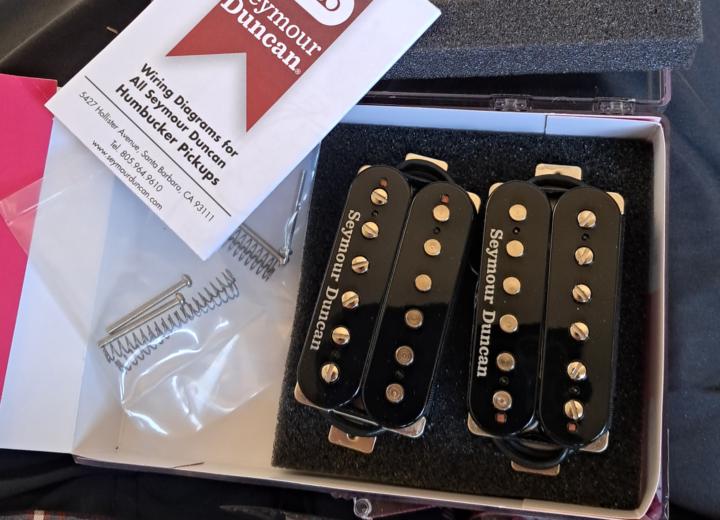
Look what landed today @
The pickups landed this afternoon!! Got too much on to fit them today!!

8h •
This is the Can't you see video
@Sean Christiansen I like the way this guy replicates the flute part in Can't you see. I haven't seen this taught like this before.
1
0
1-30 of 200
powered by
skool.com/rock-n-blues-guitar-academy-5681
A Free Online Guitar Community with friendly people that love guitar. We talk gear, learn, jam together and all levels are welcome! Come join us!
Suggested communities
Powered by