
Write something

3d •
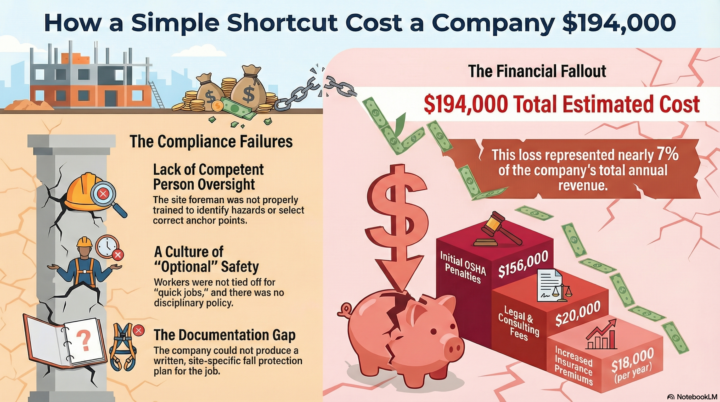
How a Harness Mistake Cost a Company $194,000
This involves a mid-sized commercial contractor operating in the Texas market. They were a solid business: $2.8 million in annual revenue, 12 full-time employees, and a generally good reputation. They weren't "bad actors." They bought good equipment, they held weekly safety meetings (mostly verbal), and they cared about their crew. The Incident: An OSHA inspector was driving to another site when he noticed a crew working on a low-slope commercial roof. He pulled over for a "drive-by" inspection—which they are legally allowed to do if they spot a hazard from the public road.He walked onto the site and found three workers on the roof. - Worker A was wearing a harness but wasn't clipped in. - Worker B was clipped in, but his lanyard was attached to a PVC vent pipe (which is absolutely not a rated anchor point). - The Foreman was on the ground. When asked, he couldn't produce a written fall protection plan for the site. What Went Wrong: The owner of this company fell into the classic trap: He thought "owning the gear" was compliance. He assumed that because he bought $300 harnesses, his guys were safe. He was wrong. Issue 1: Lack of Competent Person Oversight - OSHA requires a "Competent Person" to identify hazards and have the authority to stop work. While the foreman was technically in charge, he hadn't been trained on how to calculate fall clearance or select anchor points. He let Worker B tie off to a PVC pipe because he didn't know better. Issue 2: The "Culture of Optional" - Worker A wasn't clipped in because it was "just a quick job." The culture of the company allowed safety to be optional when it was inconvenient. There was no disciplinary program in place for unsafe behavior. Root Cause 3: The Documentation Gap - If it’s not written down, it doesn't exist. The company had no written site-specific fall protection plan. This turned a "Serious" violation into a much harder conversation about negligence. The Outcome: Because the company owned the gear but failed to enforce its use, OSHA leaned hard on them. They cited Willful Violations—the most expensive category—arguing "plain indifference" to the law.
1-1 of 1
powered by
skool.com/risk-management-tips-7690
Free community for business owners who want to simplify compliance, reduce risk exposure, and protect their profits. No BS. Pure strategy.
Suggested communities
Powered by