

19d •
Is joining a team a smart move? 5 questions to help you decide
The right team offers support, structure and mentorship. The wrong one can set you back. by Josh Ries Today, June 23, 2026 originally posted on Inman Website When the market slows down, joining a real estate team can start to feel like the obvious answer. Leads are harder to come by. Buyers are cautious. Sellers are harder to price. Deals take longer. Then an agent looks around and thinks, “Maybe I just need to join a team, and everything will get easier.“ Sometimes that is the right move. But sometimes it is just a panic decision dressed up as a business strategy. Joining a team can be a great way to get support, structure, mentorship and more opportunities. It can also be a great way to lose time, give up margin and tie your business to someone else’s goals without realizing it until you are already deep in their systems. 5 questions to ask before joining a real estate team Before you join a real estate team, ask these five questions. 1. What are my long-term goals in real estate? Before you ask the team leader anything, ask yourself this first: What do I actually want my real estate business to look like in five years? If your goal is to become a strong solo agent, the team you join should help you build skills, systems and confidence that eventually allow you to stand on your own. If your goal is to start your own team someday, look for a team where you can learn leadership, operations, lead generation and business math from the inside. But if your goal is to stay on a team long term and focus mainly on sales, that is a different decision. You may want strong support, consistent lead flow, clear accountability and a structure where you can plug in and perform. None of these goals are wrong. The problem is joining a team before you know which one applies to you. It’s hard to choose the right team when you have not defined what you want the team to help you build.

20d •
The Negotiation Was Won Before the Offer Was Written
It took me a long time to realize that the best negotiations rarely happen during the negotiation. Early in my real estate career, I thought negotiation was about having the right response at the right moment. The right script. The right comeback. The right way to push back when things got tense. Then I started noticing something. The deals that felt the easiest to negotiate were usually the ones where I had spent the most time preparing the client beforehand. The seller already understood how buyers were likely to react to pricing. The buyer already understood how appraisal gaps worked. Everyone knew the likely sticking points before they became sticking points. By the time the offer was written, there were very few surprises left. The deals that became stressful usually looked different. Somewhere along the way, a conversation got skipped. Expectations were not set. Risks were not explained. A client became emotionally attached to an outcome that was never realistic. Then the negotiation became difficult. Not because anyone was a bad negotiator. Because we were trying to solve an emotional problem that should have been addressed weeks earlier. That changed the way I think about negotiation. Today, I spend far less time thinking about how I will respond to objections and far more time thinking about what expectations need to be set before the objection ever appears. If I know an appraisal gap could become an issue, we talk about it before we write the offer. If I know inspection findings could create anxiety, we talk about it before the inspection happens. If I know a seller’s pricing expectations are unrealistic, we work through that before the home hits the market. The goal is not to win arguments. The goal is to remove surprises. I have found that when clients know what is coming, they make decisions with logic instead of emotion. Conversations become easier. Negotiations become cleaner. Deals become less stressful for everyone involved. The biggest lesson I learned is that great negotiators are usually not better at talking.
0
0
Apr '25 •
🗣️ Drop Lead Generation Course Request Here ⬇️
Over the years, I’ve taken a ton of online courses to level up my real estate lead generation game. The challenge? Most of them aren’t built specifically for real estate, so I’d end up spending more time sorting through the content than actually applying it. When I started this community, one of my goals was to help agents and brokers streamline their systems—and that starts with the way we learn. That’s why, here at Real Estate Lead Gen Academy, we’re focused on micro-courses—short, focused lessons you can take during small breaks in your day. ✅ No fluff. ✅ Learn what’s actually relevant to your business. ✅ Skip what doesn’t apply. If there’s a course or topic you’d like to see, drop your request in the comments below! Let’s build this together.
21d •
Cost Per Lead Is a Vanity Metric
Lead generation companies love talking about cost per lead. And honestly, I understand why. A low cost per lead sounds impressive. It is easy to measure, easy to market, and easy to put in a sales presentation. The problem is your real estate business does not run on leads. It runs on closings. I have seen agents celebrate getting leads for $5 each, then wonder why they are struggling to make money. I have also seen agents complain about paying $100 per lead while quietly building a very profitable business. The difference is they were looking at the wrong metric. Cost per lead measures activity. Cost per closing measures outcomes. Imagine Agent A generates 100 leads at $10 each. They spend $1,000 and close one transaction. Their cost per closing is $1,000. Now imagine Agent B generates 20 leads at $50 each. They also spend $1,000, but close four transactions. Their cost per closing is $250. Most agents would celebrate Agent A because the cost per lead looks fantastic. Meanwhile, Agent B built the more profitable business. That is why cost per lead can be a dangerous metric. It tells you how efficiently you generated inquiries, but it tells you almost nothing about whether those inquiries become revenue. This is where a lot of agents get trapped. They focus on volume instead of conversion. They chase more leads, lower lead costs, and bigger databases while ignoring the systems that actually turn opportunities into clients. In reality, a lead source that generates fewer but higher intent prospects will often outperform a source that produces hundreds of cheap inquiries. The same principle applies to your follow up. If improving your process increases conversion from 1 percent to 2 percent, you just cut your cost per closing in half without generating a single additional lead. That is leverage. It is also one of the fastest ways to improve profitability because it does not require more marketing spend. The next time a lead generation company tells you how cheap their leads are, ask a different question. What is the average cost per closing?
Jan 10 •
About This Community - Check out the Details Here
About a year ago, I set out to build a better platform where real estate agents could get training that was not filtered through the lens of a single brokerage. Over the last ten years, I have watched real estate training get worse and worse. It really hit a peak in late 2024 when the market started to slow. A lot of brokerages and brokers shifted into survival mode, and when that happens, training is usually the first thing to get “trimmed” so they can keep the lights on. To me, that is unacceptable. When an industry has an 80 percent failure rate at the first renewal, we cannot afford to treat training like an optional perk. We should be giving more to agents, not less. Most agents do not fail because they are lazy. They fail because nobody ever hands them a real system, then they get told to just make more calls, do more open houses, and post more on social, with no plan and no business math behind it. That is what this community is for. My goal is simple. Help you build a better real estate business using proven business principles, real world math, and systems that actually hold up in the real market, not just in a hype market. This is not going to turn into a loud, gimmicky coaching platform. I am not interested in selling you motivation. I am interested in helping you build a business that works, with your goals in mind, and with strategies you can actually execute. If you are here for that, you are in the right place.
1-30 of 272
skool.com/realestateleads
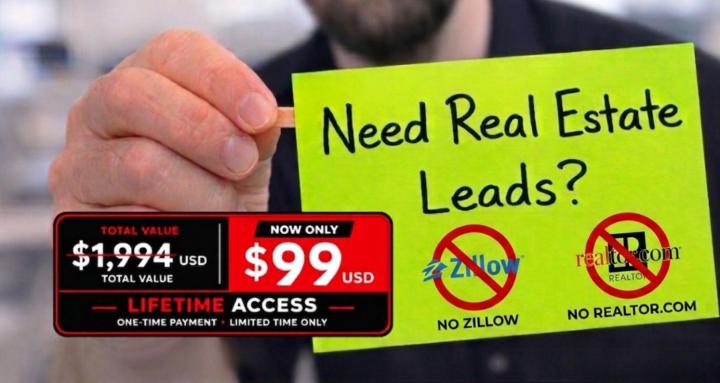
Build Real Estate Lead Generation Systems That Generate More Leads and Closings Without Relying on Third Party Companies Like Zillow and Realtor.com
Leaderboard (30-day)
1

+4
2

+1
3

+1
Powered by