
Write something
Pinned

23d •
Whats your biggest blocker?
What's the number one thing that you say today that stopped you from being more successful?
Poll
1 member has voted
0
0
4d •
Anticipation Waves and the Skill Nobody Talks About
Why the People Who Seem Lucky Are Really Just Tuned Into a Frequency You Keep Ignoring It’s a black car. No, it’s a black truck. I can see it. I was waiting patiently, the way any husband learns to wait, as my wife needed just ten more minutes to get out the door for dinner. What is this prep time they need? I will never understand it. I gave up trying to understand it years ago. But finally I got the signal. The “let’s go.” And we jumped in the car and pulled onto the main road heading out for dinner. Still Googling your marketing problems? Just ask me. Get Help About half a mile from the restaurant, I’m doing what I always do. I’m mentally scanning the parking lot ahead of us before we can even see it. And this quick flash hits me. It’s not a thought. It’s not a guess. It’s something from some third dimension that just washes over me in a wave, and in that wave I see a black truck. I tell my wife. It’s black. It’s a black truck. The space is right next to it. She nods because she’s been through this before. She knows the drill. As we get closer to the restaurant, we see another car pulling into the parking lot a couple hundred yards ahead of us. I go, “They better not be taking that spot.” And sure enough, we pull in and the only available space in the entire lot is behind a black Ram truck, and the person who just jumped in ahead of us is sliding right into it. If she hadn’t needed that extra prep time, we’d be parked and walking in already. But that’s life, and that’s not the point. The point is that this kind of thing happens to me all the time. These moments are almost common now. I can literally see things ahead of time. Not as some grand cinematic vision. Just a flash. Quick and sharp. But it’s there. And it happens so often that my wife has started asking me to find other things, including picking the lotto numbers. I told her that’s not what this is for. It’s not something I can control. It’s not something I can aim like a flashlight at whatever I want. I can’t just say, “Oh, let me predict the future real quick.” But it has happened so many times with so many different things that it goes beyond discussion at this point. It’s not even a debate about whether it’s real or not. It just is. I can just do it. I get this particular wave that quickly rushes over me with a vision, and I can see into the future just enough to know something before it happens.
8d •
Mirror of Your Time - Legacy Is Your Currency and a Ghost From 1956 Taught Me I Was Wasting Mine
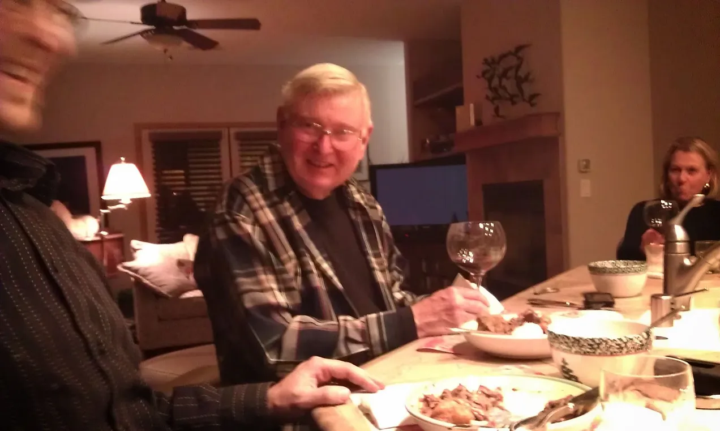
Journal Entry And now I’m running out of time, trying to outlive life, just when I’ve got it figured out how to make it shine, the hands of time have cut up, and I’m still running, staying in the fight. Those are lyrics from one of our new songs called Wasting No More Time, set to release in just a few weeks. I wrote those words from a place most people don’t like to visit. That quiet room in the back of your mind where you sit down with yourself and ask the only question that actually matters. Have I done what I came here to do. Still Googling your marketing problems? Just ask me. Get Help Every year around this time I’m reminded of my father’s birthday. This year would have put him at 89. He passed away ten years ago, but my thoughts are always circular to this part of the year. His birthday passes by like another orbiting celestial being around my world, predictable and gravitational, pulling me back into the same reflection whether I want to go there or not. His influence on my life was significant, although the memories themselves only capture a few wisps of remembrance. Fleeting images. A voice I can almost hear. Moments that feel more like impressions than photographs. And yet those wisps carry more weight than anything concrete ever could. Here is what happens when you go looking for a man who lived a full life before the internet existed. If you Google my father, only one thing comes up. His minor league baseball stats from 1956. He was a pitcher in the New York Giants farm system, played for both the Muskogee and St. Cloud franchises. Forty three strikeouts on the season. A three and three record. That is it. That is the entire digital footprint of a man who raised a family, loved people, failed at things, succeeded at others, and eventually left this earth the same way we all will. One obituary notice and a line in a box score from a league most people have never heard of. There are no pictures. No video. No diary. No historical reference. Not even a family tree written on the back of an envelope somewhere. The man literally does not exist in any searchable, findable, retrievable way. He exists only in the minds of the people who can still recall the faintest details, both good and bad, that made up the full texture of someone’s life. And those minds are aging. Those memories are fading. And one day they will be gone too.
9d •
Zero Visibility Doesn't Mean You're Lost
Why the season you can't see through is the same one that's been guiding you all along... We came around the corner to the top of the access road and hit a wall. White. Pure white. Not a haze, not a fog, not a flurry. A whiteout. Zero visibility. Nothing but a heavy squall hammering the top of Killington with everything it had. There was nowhere to turn because there was nothing to see. The road, the trees, the buildings, all of it swallowed whole. Still Googling your marketing problems? Just ask me. Get Help Now luckily I knew where we were. I’ve driven this stretch enough times that my hands could do what my eyes couldn’t. I could feel the road. I knew the condo was close, maybe a hundred feet ahead of me, but it was invisible. Completely erased by this zombie apocalypse level wall of snow raging across the peak. I crept past two, maybe three turns, second guessing every one of them, trying to figure out which entrance was ours. When the road started to pitch back downhill I knew I’d gone too far. So I turned around, retraced the route, and finally found it. We pulled into the parking lot where a fresh three or four inches had piled up in what felt like the last hour alone. That kind of squall means something. It’s not just snow. It’s a signal. The next morning the sun blazed through the curtains like nothing had happened. Bright. Clean. Beautiful. I checked the thermometer. Negative sixteen degrees. I looked over at my wife and said well, at least it’s sunny out. We made it through the day with the high topping out at negative seven, which believe it or not I’ve done before. I’ve played this game. Nobody at the resort wanted to talk about what the temperature was doing at the peak. They didn’t even publish it on the website because they were afraid of scaring people off. Can’t say I blame them. But here’s where the story turns. This morning I was standing in the kitchen and glanced over at the Alexa, the one that cycles through family photos on its screen. And there it was. A picture from just a few years earlier. Same mountain. Same base lodge. My wife and I sitting there in 45 degree weather with the biggest smiles on our faces like we had conquered the world. We looked like we owned the place. Not a care. Not a cloud. Just warmth and victory.

10d •
The Class You Skipped All Semester Is the One Your Business Needs Most
Why the smartest people in the room are still walking past the doors that matter I walked into the building the way you walk into a place you’ve been a hundred times before. Familiar hallways. That same industrial carpet smell. Fluorescent lights buzzing overhead like they always do in those kinds of buildings. I knew this place. I knew the layout, the stairwells, the way the floors connected. What I didn’t know was where my English class was. The one I hadn’t attended all semester. I didn’t know the room number. I didn’t know the professor’s name. I just knew I was supposed to be there and I wasn’t. ---------------------------- Still Googling your marketing problems? Just ask me. Get Help ---------------------------- Now here’s the thing about me. I’ve always been fortunate enough to have a mind that could walk into almost any situation cold and figure out the mechanics of what was happening. I credit that to my father’s side. That man was so sharp it was almost annoying. Academically, talking to him sometimes made me feel like I was bringing a plastic spoon to a sword fight. The only thing I could really do was argue with him. I’m not even sure half of what I said made any sense, but I said it with enough conviction that he gave me a nickname. Argue Face. Looking back on it, that wasn’t stubbornness. That was salesmanship being born. That was the first draft of the guy who would eventually make a living out of walking into rooms where he didn’t have all the answers and figuring it out anyway. So there I was in the dream, banking on that same instinct. If I could just find this class and sit down in the chair, I could pick up the thread. I could read the room, get the gist, fill in the blanks. I’d done it before. This wasn’t my first time showing up late to something important and making it work. I just needed to get through the door. I started asking around. Who teaches on the first floor? Nobody knew. I went to the receptionist near the food court. She had no idea either. So I did what I always do when nobody has the answer. I started opening doors myself. One by one. Peeking in. Nope, that’s a science class. Wrong one. Next door. Nope. Fifteen minutes late now and counting. They’ve rearranged this whole building since the last time I was here and nothing is where it used to be.
0
0
1-27 of 27

skool.com/profitengines
Expert Level Digital Marketing, AI Focused Strategy and Business Consulting.
Powered by