
Write something
Pinned
Oct 8 •
The Circles, their overlap and closing the gap between training and reality.
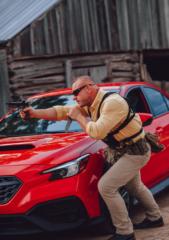
**LIFT. FIGHT. SHOOT. — Why the circle has to be complete.** Most people train one pillar and hope the other two never get tested. Lifters who can't fight. Fighters who've never shot under stress. Shooters who gas out walking up a flight of stairs. **THE GAP** — There's where you train, and there's where it happens. Most training lives in the first: clean mats, static targets, compliant partners, nobody hitting back. Reality is none of that — it's dark, it's loud, you're gassed, your hands are shaking, and the other guy didn't read your lesson plan. The distance between those two places is where people get killed. Everything here is built to close that distance: live resistance, entangled weapons work, shooting under stress. If it doesn't survive contact with reality, it doesn't belong here. Real-world violence doesn't respect categories. A parking lot confrontation starts with words, goes hands-on, hits the ground — and now it’s a sprint to get a weapon in the mix to answer that knife or gun that your attacker has introduced. If you only trained one pillar, that's exactly where your plan ends. Here's how they overlap: **LIFT** — Strength and conditioning is the engine. Strength makes every technique hit harder and work better. Conditioning means you can still think and fight in minute three, not just minute one. A stronger, better-conditioned body takes damage, keeps moving, and keeps making decisions. **FIGHT** — Combatives and grappling own the space where real fights actually live: the clinch, the ground, the scramble. This is also where firearms get introduced, grabbed, and fought over. If you can't fight for your gun, you don't really have a gun. **SHOOT** — Firearms training for the worst day: drawing under pressure, shooting entangled, shooting when you're gassed and your hands are shaking. The gun doesn't replace the fight — it ends it. But only if you can get to it and keep it. The circle: lift builds the body, fight owns the middle distance, shoot delivers the final answer. Miss one and there's a gap — and gaps are where people lose.
1
0
Oct 9 •
New 9wk Turbo Template Conditioning Program.
You can take this program of minimal equipment and boost your conditioning and muscle endurance as a standalone or pluck sessions from it and plug them into your existing program for metcon sessions
Oct 8 •
Discussions
You’ll see that there are four Discussion bubbles. General, Lift, Fight & Shoot. Use these for any questions you have about any of the listed pillars and General for anything that doesn't fall into the pillars. This is your spot to ask or present a topic and use these collective as a sounding board.
1
0
Jan 20 •
New Categories set up
It’s been slow rolling with the holidays and back to work but we are back and building the community with discussion spots in the Categories under Lift, Fight & Shoot. This is your space to ask, share and discuss topics related to the three Pilars of the Combatives University Program.

Dec '25 •
Question Coach Jeffro Mullenax
You prefer side control over the mount position. What arsenal do you have to make it better positioning in sparring or fight? I also watched the pistol drill over and I am wondering what pistol do you recommend for self protection and bear or mountain lion protection? What rifle for hunting buck or elk? Would you do a rifle drill video too?
1-12 of 12
powered by

skool.com/performance-on-demand-hub-3665
Battle-proven combatives, shooting & taclete fitness led by BJJ/Combatives Black Belt USMC & 20yr LEO vet. Let’s Bullet Proof your Chassis 💥
Suggested communities
Powered by