
Write something

4d •
CAN YOU DRAW MULTIPLE PEPTIDES INTO THE SAME SYRINGE? 🤔
This question comes up constantly, so let's clarify exactly what we're talking about. I'm NOT talking about mixing two peptides together in one vial and storing them that way. I'm talking about this: You have two or more peptides already reconstituted in their own separate vials. You draw peptide #1 into the syringe, then draw peptide #2 into that SAME syringe, and inject them immediately. Can you do that? Sometimes combinations are used this way in practice, but there is a big difference between “people commonly do it” and “we have actual compatibility data proving every formulation can be mixed in the same syringe.” ****************************************************************************************************** WHY IMMEDIATE USE IS DIFFERENT FROM STORAGE: If two peptides are drawn together and injected immediately, they aren't sitting together for hours or days. That matters because chemical degradation, aggregation and other stability problems can be time-dependent. But immediate administration doesn't magically eliminate compatibility concerns. The moment those two solutions meet, you've potentially changed: - pH - concentration - ionic strength - buffer composition - preservative concentration - solubility conditions - So my answer is never simply: “They're peptides, so sure — mix them.” ***************************************************************************************************** COMBINATIONS YOU'LL COMMONLY HEAR ABOUT: CJC-1295 + Ipamorelin This is probably the classic example. These two are commonly paired and are even commercially compounded together by some pharmacies. If someone has two separately reconstituted vials, you'll frequently hear about both being drawn into the same syringe for immediate administration. Does that mean every independently sourced CJC and ipamorelin formulation has documented syringe-compatibility data? No. So I would describe this one as: COMMONLY COMBINED — but formulation-specific compatibility still matters.

24d •
Peptide Cycling: Why It Matters (And Which Peptides Actually Need It)
One of the most common questions I get is: "Do I have to cycle my peptides?" The answer is... Some you do. Some you don't. Not every peptide requires cycling, but understanding why certain peptides should be cycled can help maximize effectiveness while minimizing tolerance, receptor desensitization, and unnecessary exposure. Let's break it down. What Is Peptide Cycling? Cycling simply means using a peptide for a predetermined period, then taking time off before starting another cycle. That time off is called a washout period. Think of it like strength training. Your muscles don't grow while you're lifting. They grow while they recover. Many peptide receptors work similarly. Continuous stimulation can eventually cause receptors to become less responsive. Why Cycling Matters Depending on the peptide, cycling may help: • Prevent receptor desensitization • Reduce tolerance • Maintain effectiveness • Allow normal hormone signaling to recover • Reduce unnecessary exposure to growth factors • Improve long-term results Some peptides are intended to trigger a temporary biological signal—not stimulate that pathway forever. ************************************************************************************************* Peptides That Commonly Require Cycling Growth Hormone Secretagogues Examples: • CJC-1295 • Ipamorelin • Sermorelin • Hexarelin • Tesamorelin • GHRP-2 • GHRP-6 Why cycle? These peptides stimulate your body's natural growth hormone system. Continuous stimulation may reduce receptor responsiveness over time, particularly with certain GHRPs such as Hexarelin. Most researchers find periodic breaks help maintain sensitivity. Typical cycle: 8-16 weeks on Washout: 2-4 weeks *************************************************************************************************** Examples: • IGF-1 LR3 Why cycle? IGF-1 directly stimulates cellular growth and proliferation. Unlike growth hormone secretagogues, these bypass some of the body's normal regulatory mechanisms.
4
0

Jun 25 •
WHY LEARNING TO INTERPRET A CoA (CERTIFICATE OF ANALYSIS) IS SO IMPORTANT...
https://youtu.be/PA4u1tclQ0E
Jun 22 •
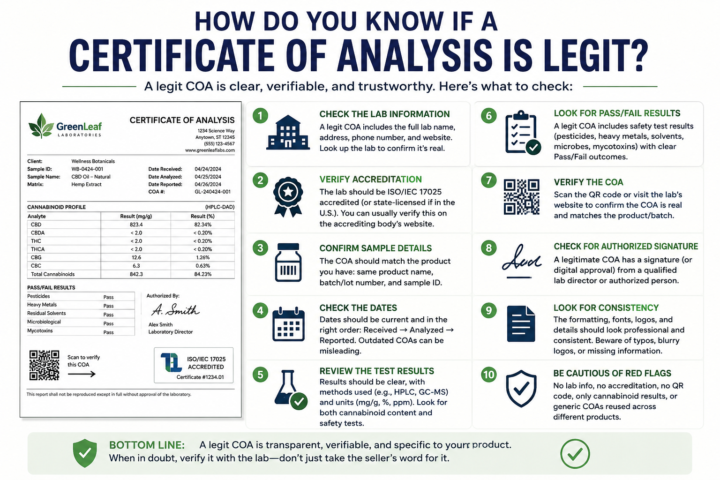
EVALUATING CoA’s FOR LEGITIMACY
When evaluating a Certificate of Analysis (COA), don't just look at the purity percentage. A COA is only as trustworthy as the laboratory and the information it provides. ✅ 1. Verify the Laboratory Exists A legitimate COA should include: - Full laboratory name - Physical address - Phone number - Website - Email contact Take 30 seconds and verify the lab online. Red flag 🚩: - No website - Generic Gmail address - No physical address - Lab cannot be found online ✅ 2. Confirm the Lab Performs Independent Testing The vendor and testing laboratory should be separate entities. Red flag 🚩: - Vendor "testing themselves" - No indication of third-party testing Independent testing reduces conflicts of interest. ✅ 3. Check for Accreditation Look for: - ISO/IEC 17025 accreditation - DEA registration (when applicable) - State licensing (when applicable) You can often verify ISO accreditation directly through the accrediting body's website. Red flag 🚩: - Accreditation logos present but no certificate number - Claims of accreditation that cannot be verified ✅ 4. Match the Lot Number The lot number on the product should exactly match the lot number on the COA. Check: - Product name - Lot number - Batch number - Sample ID Red flag 🚩: - Same COA used for multiple lots - Lot numbers don't match ✅ 5. Review the Test Date A legitimate COA should show: - Date received - Date analyzed - Date reported Red flag 🚩: - Very old testing - Future dates - Missing dates ✅ 6. Verify Testing Methodology For peptides, you should typically see methods such as: - HPLC (High Performance Liquid Chromatography) - UPLC - LC-MS/MS - Mass Spectrometry A purity result without methodology means very little. Red flag 🚩: - No test method listed - No chromatogram available when requested ✅ 7. Look at the Actual Results For peptides, look for: - Purity % - Net peptide content (mg) - Identity confirmation - Moisture content (if reported)
1-10 of 10

skool.com/peptidejunkies24
Advance your peptide research with precise, science-driven guidance, expert community talk, and access to vetted suppliers, promotions, and giveaways.
Leaderboard (30-day)
1

+19
2

+13
3

+6
4

+5
5

+4
Powered by