
Write something
Pinned

🔥
1d •
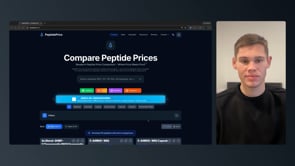
🚀 Price Tracking Is LIVE on PeptidePrice.store!
This one's been a long time coming, and I'm pumped to finally share it with you guys. Starting today (February 12th), every peptide on the site is being price tracked daily, rolling over a 90-day window. You can now see exactly how prices move over time — no more guessing whether you're catching a deal or paying a premium. Here's what you get: 📈 Interactive price history graphs — hover over any data point to see exact prices by date and vendor. Company logos are built right into the charts so you can quickly spot who's cheapest. 🔀 Filter however you want — toggle between with discount codes or base prices, switch between total price and price per milligram, and filter by specific vendors. 📊 Raw data table — every vendor, every day, laid out so you can see the full picture. Lowest, average, and highest prices all at a glance. 📱 Works on mobile too — same features, optimized for your phone. Look for the new little icon next to products — hover over it and click "View Price History" to check it out. I backfilled 30 days of data to start, and from here it tracks forward daily. 20,000 lines of code went into the backend for this, so if something breaks, bear with me — but I'll keep it as accurate as possible. I'm already tracking all of this for you guys anyway, so why not make it visible? Might even add a CSV export option down the road. 👉 Go try it out: peptideprice.store Watch the full demo walkthrough here: https://vimeo.com/1164525504/131573bed7 Let me know what you think! PeptidePrice is nothing without you guys — appreciate all the support as always. 🤝
Pinned
🔥
Nov '25 •
Peptide Price + Research Supplies Links
Price Tool: https://peptideprice.store/ Research Supplies (Amazon): https://www.amazon.com/shop/derber?ccs_id=59e5f3f6-2df6-4f14-8ba1-eb1cc6f09ace
Pinned
🔥
Jan 11 •
How to Reconstitute Any Peptide Answered
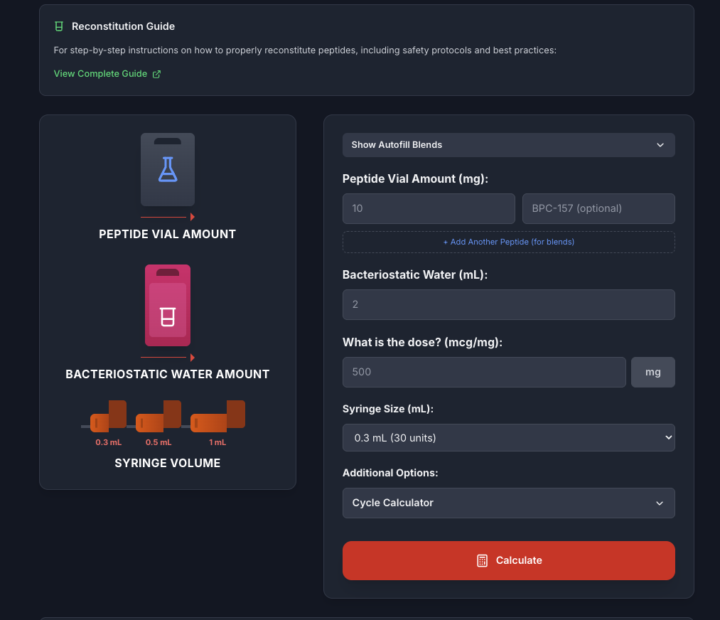
I get questions about reconstitution and research dosing constantly, so here's everything you need to know in one place. I'm building out a comprehensive FAQs section in the Classroom to answer all the common questions I get. If you're still confused after reading this, head over to the Reconstitution FAQ here: https://www.skool.com/peptide-price-9771/classroom/b7dcc989?md=5ef850cf36f5467b9fbb9811f9b69cbf The Most Important Thing to Understand The amount of BAC water you use is entirely up to you. There is no single "correct" amount—you're just choosing how concentrated you want the peptide to be. That said, there are practical guidelines that make the process much easier. My Simple Rule of Thumb (for peptides under 30mg) For every 1 mg of peptide, use 10 units of BAC water. Example with a single peptide: - 20 mg peptide - 10 units per mg - 20 × 10 = 200 units - 200 units = 2 mL of BAC water So you'd reconstitute a 20 mg vial with 2 mL of BAC water. Important Vial Size Rule For anything in a small vial that's over 30 mg, always use 3 mL of BAC water. That's simply the most that will fit in a standard small peptide vial. Once you go past 30 mg, you're no longer choosing concentration freely—you're limited by physical vial volume. What About Blends? For blends, add up the total peptide amount first, then apply the same logic. Example with a blend: - 10 mg BPC-157 - 10 mg TB-500 - Total peptide = 20 mg Now apply the rule: - 20 mg × 10 units = 200 units - 200 units = 2 mL BAC water Blends are reconstituted based on total mg, not each peptide individually. If the total blend exceeds 30 mg in a small vial, use 3 mL. Make It Even Easier With the Calculator I built a calculator specifically for this: https://peptideprice.store/calculator How to use it for a single peptide: 1. Enter Peptide Vial Amount (mg) 2. Enter BAC Water amount (mL) 3. Enter your desired dose 4. Select syringe size 5. Hit Calculate
🔥
4h •
🔬 AM Shred Blend – Full Research Guide
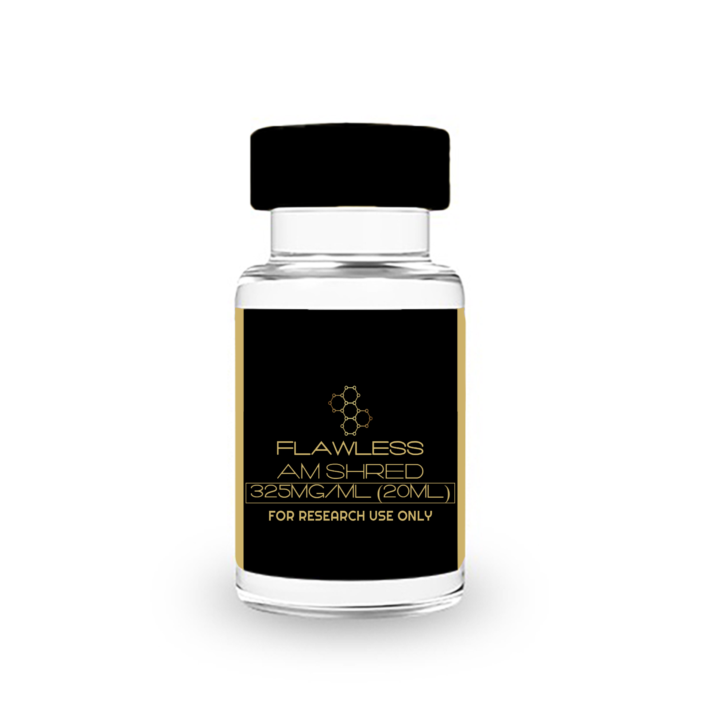
I've been getting a ton of questions to break down this AM Shred Blend from Flawless Compounds and Glow Aminos. So here's every component and how they work together. Research and Educational Purposes Only Not Medical Advice! AM Shred is a multi-ingredient amino blend, and each component plays a specific role in metabolic and cellular function. Let's walk through every single one so you actually understand what's in the vial and WHY it's there. 📋 What's In 1mL? Each vial contains 20mL total, so at 1mL per day you're looking at a 20-day supply. Here's the per-mL breakdown: - Methionine — 25mg - Inositol — 50mg - Choline — 50mg - L-Carnitine — 200mg - Methyl B-12 — 500mcg Now let's talk about what each one actually does. 🧱 Methionine (25mg) This is an essential amino acid — meaning your body can't make it on its own. It plays a key role in something called methylation, which is basically how your body processes and moves fats. It also supports the production of glutathione, one of your body's most important antioxidants. Think of methionine as a building block that helps your body break down and transport fat more efficiently rather than letting it just sit around. Simple version: Helps your body process fat instead of storing it. 🔄 Inositol (50mg) Inositol is sometimes grouped with B-vitamins (it used to be called B8). It's involved in how insulin signals work in your cells and plays a role in fat metabolism in the liver. It essentially helps the liver do its job of moving fat OUT rather than holding onto it. It's also been studied for its role in supporting mood and healthy insulin sensitivity. Simple version: Supports your liver in fat transport and helps with insulin signaling. 🧠 Choline (50mg) Choline is a nutrient most people are actually deficient in. It's critical for liver function, brain health, and fat metabolism. Without adequate choline, fat can accumulate in the liver. It works closely with methionine and inositol — this trio is actually the classic "MIC" combination you've probably seen referenced. Together they form the foundation of lipotropic (fat-moving) support.
1-30 of 5,063
powered by
skool.com/peptide-price-9771
Premier peptide education hub. FREE courses on research peptides & GLP-1s. US supplier intel, safety protocols & expert community support. 🧬🚀
Suggested communities
Powered by