
Write something

Jun 13 •
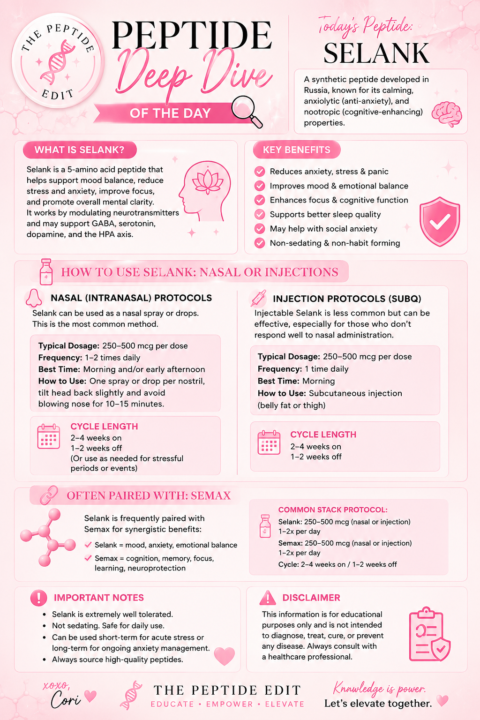
🧠✨ Today’s Peptide Deep Dive: SELANK ✨🧠
This is actually one I’m really excited about because it’ll be my first time researching an intranasal peptide. Normally, I stick to either oral supplements or injectables, so this will be completely new territory for me. I’ve heard and read so many positive things about Selank over the years that I finally decided it’s time to see what all the hype is about. Some of the things I’m hoping to support in this next phase are: 🩷 Better stress resilience😌 Less feeling of being “on edge”🧠 Improved focus and mental clarity😴 Better quality sleep✨ More emotional balance without feeling sedated What really caught my attention is that people often describe it as feeling more like the “best version of themselves” rather than feeling like they’re taking something. And since I’m always looking for ways to optimize while still feeling like me, that definitely intrigued me. As always, I’ll be sharing my honest experience along the way—good, bad, or completely uneventful. 😂 So tell me… have you researched Selank before? If so, was it worth the hype? 👇💕
Apr 6 •
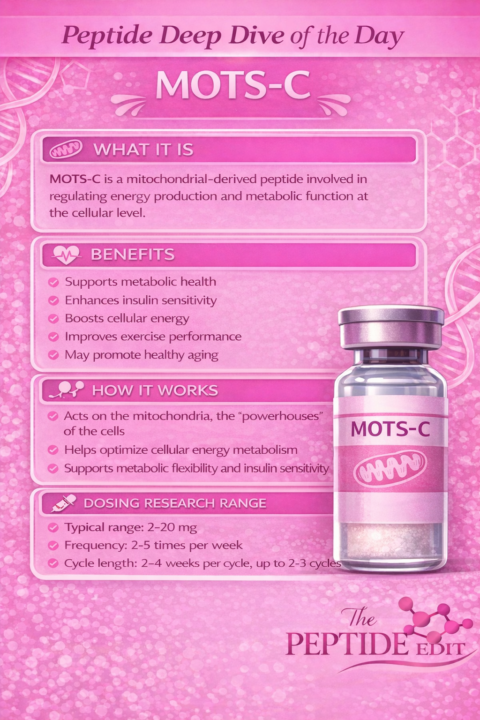
Peptide Deep Dive of the Day: MOTS-C
MOTS-C is a mitochondrial-derived peptide that plays a role in how the body regulates energy production and metabolic function. Unlike many peptides that signal the pituitary or endocrine system, MOTS-C works at the mitochondrial level, which is why it’s often researched for its potential role in supporting cellular energy and metabolic health. Researchers have looked at MOTS-C for potential benefits related to: • Metabolic health • Insulin sensitivity • Cellular energy production • Exercise performance • Healthy aging and longevity Because MOTS-C works through mitochondrial signaling, it’s often studied in protocols focused on metabolism, longevity, and mitochondrial optimization. One thing to note is that dosing protocols for MOTS-C vary widely in research, so you’ll see a pretty broad range depending on the protocol and goal. This is actually one of the newer peptides that EllieMD recently started carrying for those who prefer having medical guidance along the way. It’s also available through both of the other vetted sources I share in the guide, so if you’re researching it further make sure to check the guidebook in the classroom for more details. Educational purposes only — not medical advice.
Apr 13 •
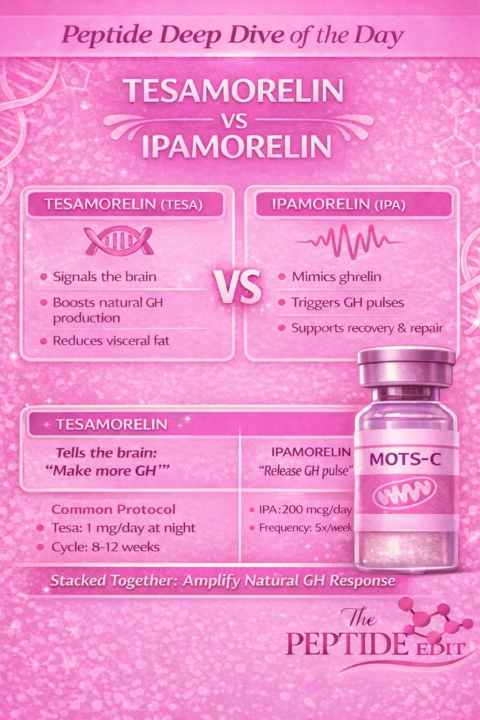
🔬 Daily Peptide Deep Dive: Tesamorelin vs Ipamorelin
If you’re newer to peptides, these two get mentioned together a lot — but they actually work very differently. Tesamorelin (Tesa) This peptide signals your brain to release more of your own natural growth hormone. It’s best known for helping reduce visceral fat (the deeper abdominal fat around organs). Because it stimulates growth hormone production, people sometimes notice improvements in body composition, metabolism, and skin quality. Ipamorelin (IPA) Ipamorelin works a bit differently. It mimics the hormone ghrelin, which triggers growth hormone pulses in the body. Many people use it for recovery, sleep quality, muscle repair, and overall GH support. The simple way to think about it: • Tesamorelin → tells the brain to produce more growth hormone • Ipamorelin → triggers growth hormone pulses When used together, some people stack them to support a stronger natural GH response, but everyone’s tolerance can be different — especially with dosing adjustments. As always, understanding what each peptide actually does before stacking anything is key. 💬 Have you tried either one? Or both together? What was your experience?
Apr 14 •
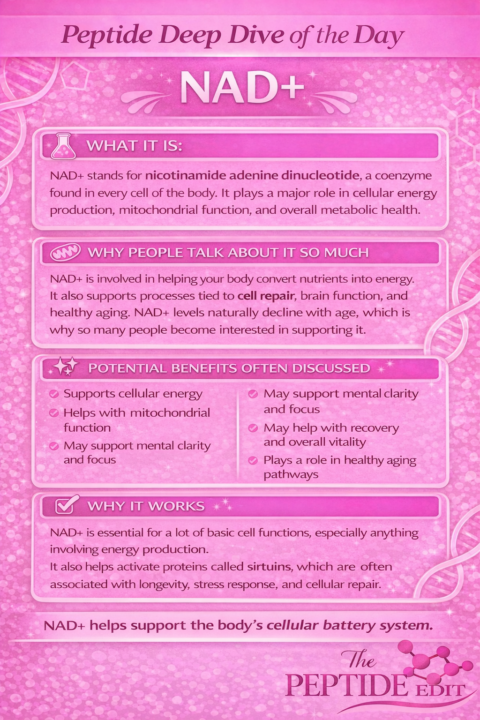
🧬Daily Deep Dive of the Day: NAD+
What it is: NAD+ stands for nicotinamide adenine dinucleotide, a coenzyme found in every cell of the body. It plays a major role in cellular energy production, mitochondrial function, and overall metabolic health. Why people talk about it so much: NAD+ is involved in helping your body convert nutrients into energy. It also supports processes tied to cell repair, brain function, and healthy aging. NAD+ levels naturally decline with age, which is why so many people become interested in supporting it. Potential benefits often discussed: • Supports cellular energy • Helps with mitochondrial function • May support mental clarity and focus • May help with recovery and overall vitality • Plays a role in healthy aging pathways How it works: NAD+ is essential for many basic cell functions, especially those involving energy production. It also helps activate proteins called sirtuins, which are often associated with longevity, stress response, and cellular repair. Why people use it: A lot of people look into NAD+ for things like: • low energy • brain fog • recovery support • healthy aging support • overall metabolic wellness Typical research dosing protocols often discussed: • Dose: commonly 25–100mg per injection • Frequency: typically 1–3 times per week depending on goals • Cycle length: often 6–8 weeks, followed by a break before repeating Simple way to think about it: NAD+ helps support the body’s cellular battery system.
Apr 9 •
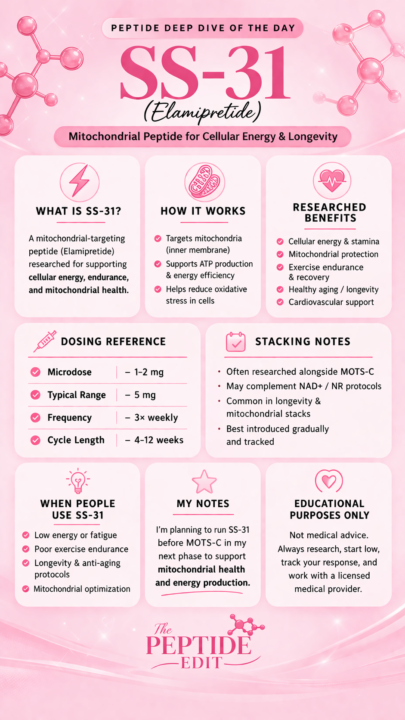
Peptide Deep Dive of the Day: SS-31
SS-31 (also called Elamipretide) is a mitochondrial-targeting peptide that’s being researched for its ability to support cellular energy production and mitochondrial function. Unlike many peptides that work through hormone signaling, SS-31 works directly at the mitochondria, which are essentially the energy producers inside our cells. Researchers have studied SS-31 for its potential role in supporting: • Cellular energy production • Mitochondrial protection • Exercise endurance and recovery • Healthy aging and longevity • Cardiovascular and metabolic health Because it targets mitochondrial health, SS-31 is often researched in protocols focused on fatigue, metabolic optimization, and longevity pathways. You’ll often see this one discussed alongside MOTS-C, since both are connected to mitochondrial signaling and energy regulation. If you want to see the dosing ranges and cycle recommendations, make sure to check the reference guide in the classroom where I keep everything organized. Educational purposes only — not medical advice.
1-12 of 12
powered by
skool.com/peptide-edit-eastcoastfldiy-4291
A community learning about peptides, stacks, and protocols for metabolism, recovery, longevity, and overall health.
Suggested communities
Powered by