
Write something
Pinned

Jun 19 •
What are you most interested in right now?
Vote below so we can make the community more useful and focus future posts, guides, and discussions around what people actually need. Choose the option that best matches your main goal right now: After you vote, comment with a little context about where you are starting from and what you are trying to accomplish.
Poll
6 members have voted
2
0
Pinned
Jun 19 •
Welcome and Start Here
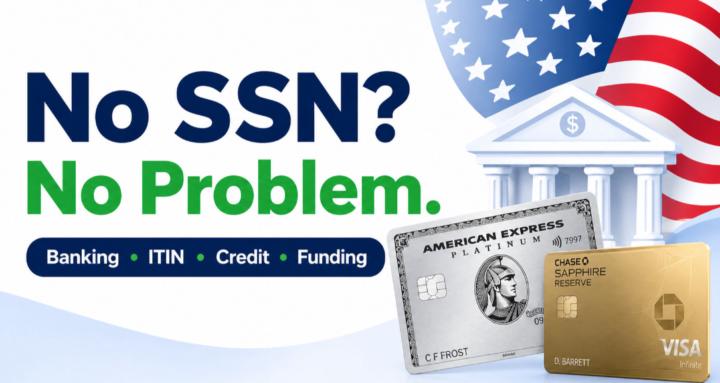
I’m US Finance Guide, the admin here. I created this community because there are a lot of people trying to access the US financial system without an SSN, but the information is scattered, confusing, and often incomplete. Some people are trying to open their first US bank account. Some are trying to build personal credit from zero. Some want high-limit credit cards or personal loans. Others are non-US founders trying to handle LLC banking, payment processing, business credit, or 0% business funding. This community is here to bring those conversations into one place. We’ll be sharing practical information, real experiences, approval data points, and step-by-step guidance around US banking, credit, ITIN guidance, personal loans, LLC banking, business credit, and funding. 1. If you’re here, drop a quick intro: Create a new post, so you can earn points and future access to courses... And introduce yourself and write... Where are you based, and what are you working on right now , banking, personal credit, business credit, funding, or something else? 2. Check out the classroom and the getting started course 3 Post in the community, share your data points, what worked, what didn't , struggles. Write your posts so they can help the whole community. Glad to have you here.
Jun 24 •
The Real Opportunity Starts After Your ITIN
Most people focus on getting an ITIN. Few focus on what happens after. And that’s where the real opportunity begins. An ITIN is not the opportunity itself. It’s the key that unlocks access to opportunities you may not have had before. Business banking.Credit card programs. Higher credit limits. Business funding. Loans and mortgages. Travel points. Cashback. U.S. business credibility. New income streams. But here’s the part many people miss: The paperwork gets you in the door. The strategy determines what you do once you’re inside. I’ve noticed that the people who get the best results are not always the ones with the most money, the best connections, or the most resources. They’re usually the ones who have a clear plan for what comes next. They understand that getting an ITIN is not the finish line. It’s the starting point. Once you have it, the focus should shift to: ✅ Building banking relationships ✅ Establishing personal and business credit responsibly ✅ Staying compliant ✅ Increasing access to funding ✅ Leveraging credit for business growth ✅ Using rewards, cashback, and travel points strategically ✅ Creating systems that support long-term financial growth This is where entrepreneurs can start thinking bigger. Not just, “How do I get approved?” But: “How do I use this access wisely?” “How do I build credibility?” “How do I create funding options for my business?” “How do I turn financial access into long-term growth?” Because getting access is one thing. Maximising it is another. The people who win long term are the ones who don’t just collect documents. They build a strategy. So I’m curious: What’s the biggest goal you’re hoping to achieve after getting your ITIN? Is it business credit, funding, credit cards, banking, travel rewards, cashback, real estate, or something else?
Aug 15 •
NASA credit union cards
They have a pre-approval application with only soft pull and at the end they will tell you your limit which is cool There are several card themes to choose from and a couple of versions of cards, cash back and rewards. Before you accept , it will ask you if you want to do the hard pull. You will have 30 days to accept the offer. They don't seem to have soft pull requests in the website or app though, although some are reporting you can request this through the secure message system by specifying soft pull only. The preapproval works with ITIN numbers. Also note that there are some users reporting that they were approved with the pre-approval and then declined on the hard pull Let us know what limit you got !
0
0
Aug 15 •
Bread financial
Bread financial is a financial issuer of branded cards. They have three cards available for pre-approval Ford card - sign into ford and then do the preapproval for the card All pet credit card Bread rewards AMEX - issued by bread, not amex. so this is worthwhile giving a shot if you are want to try some different issuers The Bread rewards used to have a direct pre approval link from the bread site, but now it needs an invite access code. So if anyone knows where to get the preapproval invite let us know !
0
0
1-30 of 67
powered by
skool.com/openclaw-8860
No SSN? US banking, credit cards, personal loans, business credit, LLC
banking & 0% funding for biz owners, immigrants and non-residents.
Suggested communities
Powered by