

25d •
World Mental Health Day: Why “I’m Fine” Is Not Always the End of the Conversation
As World Mental Health Day approaches on 10 October, this year’s theme; “Lived experiences heard: real voices, real change”, offers an important challenge for every leader, manager, coach and colleague: Are we really listening? In workplaces, professional networks and even among friends, “I’m fine” is one of the most common answers we hear. Sometimes it means exactly that. But sometimes it can mean: “I don’t know how to explain what is going on.” “I don’t want to burden anyone.” “I’m worried about how this will be received.” “I don’t think anyone can help.” “I’m trying to hold it together.” The issue is not that people are being dishonest. Often, they are protecting themselves in environments where openness may not yet feel safe. That is where communication matters. The role of NLP: More choice, not quick fixes For those of us who use NLP in coaching, leadership, learning or communication, mental health is an area that calls for humility and responsibility. NLP can help people become more aware of their language, assumptions, emotional states and patterns of attention. It can support better conversations and help people access choices that may feel unavailable when they are under pressure. But NLP is not therapy… It is not a replacement for counselling, psychotherapy, medical support, crisis intervention or clinical mental-health care. Nor should it ever be used to persuade someone that their distress is simply “a mindset issue.” There is a vital difference between helping someone explore their thinking and trying to talk them out of their experience. A useful principle is this: ‘We can help people explore the meaning they are making, without denying the reality of what they are facing.’ “The map is not the territory” in real conversations One of the best-known NLP ideas is that ‘The map is not the territory’. In simple terms: each of us experiences life through our own internal map, shaped by our beliefs, memories, values, circumstances and current emotional state.
2
0


Jun 15 •
You Know Bandler and Grinder, But What About the Man They Could Not Have Done It Without?
I just got in contact with a gentleman who has been working with one of the original founders of NLP. Back before it was called Neuro-Linguistic Programming, it was called Meta. Everybody attributes the creation of NLP to Richard Bandler and John Grinder, but those two would have never been successful in creating it without their first student and co-creator, the third and often hidden gem, Frank Pucelik, who was a Vietnam veteran suffering from the turmoil of being in combat and was one of the first to be transformed by NLP. P.S. Still looking to practice some of the advanced processes that I am learning with anybody who is willing, before I go back to my day job. Hit me up. https://youtu.be/XFAULwn5mNM?si=LDtCixf1O1oqkHG4
Jun 15 •
Metaprograms Meet Core Values: What I'm Discovering in Practice
I just had an interesting practice session using the metaprogram outline in these master practitioner manuals I got my hands on, combining it with core values elicitation. I was always wondering how we can change metaprograms, and whether it's even ethical to change them. I'm starting to see a pattern where simply opening up the scope of someone's metaprogram and giving them more choice, guided by their core values, has been extremely interesting. I'm still looking for people to practice with before my schedule goes back to normal. My part-time job, coaching sessions, and jiu-jitsu fill up my calendar fast. Feel free to hit me up.
0
0
Jun 10 •
NLP Surgery - Phobia Model
I believe some people had a problem accessing todays NLP Surgery, so I ran it again and recorded the session for you. This weeks question came in from Sarah asking about NLPs Fast Phobia Model. Please also read pages 184 to 185 of Toby and Kates book - 'The NLP Practitioner', before practicing this technique and have a read of the attached PDF for more information. You can also see Toby demonstrate The Fast Phobia Model in front of a live audience many years ago. The technique is the same as is the outcome: The client successfully releases the phobia. https://www.youtube.com/watch?v=qgwgLI2Didc Please post your questions here for next weeks NLP Surgery which will go live from The Lake District where some of us are meeting up for a walk and talk (Please see separate post if you want to join us).
Jun 7 •
Can Someone Break Down Matrix Reimprinting and How It Connects to Projective Identification and Standard Reimprinting?
Hi everyone, I want to get anybody's opinion on reimprinting, matrix reimprinting, and projective identification. I was discussing with another practitioner who does matrix reimprinting, which I had never heard of before. He tried to explain it to me but honestly I didn't fully understand his explanation, so I'm curious if anyone can shed some light on what it actually is. I know there are different forms of reimprinting, but I'm not clear on how matrix reimprinting fits in or how it differs from what I already do. In my experience working with clients, if a parts integration is not taking, I typically do a reimprint, and that does hold and has had lasting effects. However, I love adding more tools to my toolbox, and I'm wondering: does projective identification typically lead to a reimprint, or does it just call for parts work? And what is the connection between projective identification, standard reimprinting, and matrix reimprinting?
0
0
1-10 of 10
powered by
skool.com/nlp-1250
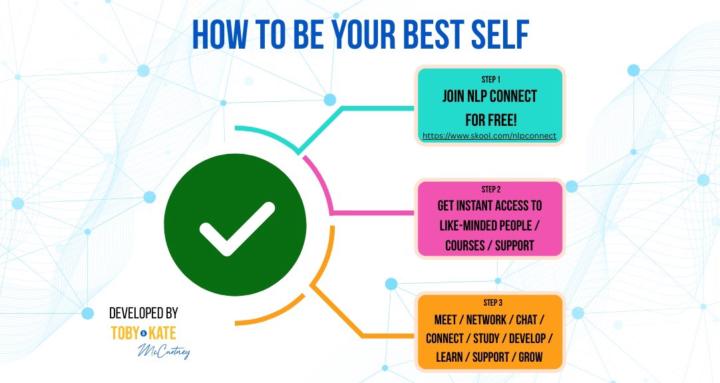
Join NLP Connect! Access free trainings, tutorials, and podcasts for personal and professional growth in a lively community of NLP enthusiasts!
Suggested communities
Powered by