

🔥
4d •
REPLAY - June Financial Review
Tracking your business income and expenses does more than help you know your numbers. It gives you clarity and confidence. When you build a simple monthly habit, you'll: - Make bookkeeping easier and faster - Make tax season much less stressful - Understand your cash flow - Spot subscriptions and expenses you can reduce or eliminate - Make better business decisions based on real data, not guesses This replay includes the first 15 minutes of our coworking session, where I walk through: - Why every entrepreneur should track their finances each month - How to use my Business Financial Review spreadsheet - How to download your Amazon KDP royalty report from last month Then it's your turn. Open the spreadsheet, gather your bank statements, credit card statements, and income reports, and spend a little time organizing your numbers. Future you will be grateful. If you get stuck or have questions as you work through it, ask in the comments below. I'm happy to help.

🔥
4d •
LIVE NOW! 💰 June Monthly Business Money Date & Coworking
Today, we're setting aside intentional time to review our business finances for June. This isn't about perfection. It's about awareness. The better we know our numbers, the better decisions we can make. Today's Plan 👋 Welcome & Check In (5–10 min) - How are you feeling about your business this month? - Spreadsheet Walkthrough (5 min) The goal is to build the habit. 💻 Quiet Coworking (40-45 min) Now it's work time Use this time to: - Download statements - Categorize expenses - Update your spreadsheet - Review June income - Calculate profit - Make notes about what stands out I'll stay here working on mine, too. 💡 Ahas & Reflection (5 min) Share if you'd like: - What surprised you? - What expense was worth every penny? - Anything you'll spend differently next month? - What investment are you most excited about? ➡️ Next Steps Before we leave, write down one action you'll take because of today's review. Examples: - Cancel a subscription - Increase marketing - Open a business HYSA - Follow up on unpaid invoices - Invest in a tool or education - Start tracking something you've been ignoring Small financial habits, repeated every month, create remarkable businesses over time. Join us live in five if you can! https://www.skool.com/multiple-streams-of-income-4358/calendar?eid=b01d259b4cd349a5bd4d5511544cdde2

🔥
5d •
Let’s Talk Money: Business HYSAs 💰
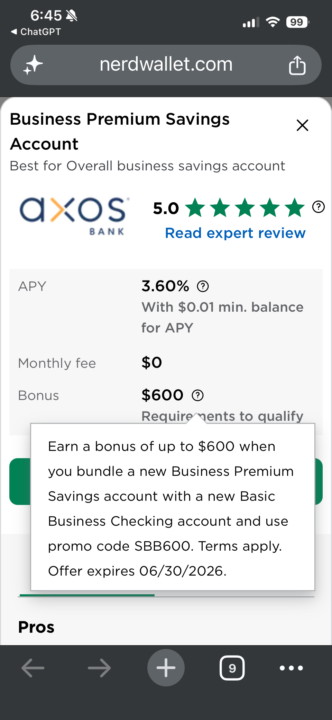
One thing I like to do is keep my personal and business finances intentionally separate. My $10,000 Kiva 0% interest business loan will be deposited into a business high yield savings account (HYSA) until I need it. That way it can earn a little interest while I spend it thoughtfully over time. I also like having it separate because it makes it much easier to: - Track exactly how the loan money is being used. - Monitor my business spending. - Stay organized with repayments over the next three years. - Keep clean records for my business. It’s a simple system, but simple systems are often the easiest to stick with. When I’m researching financial products, NerdWallet is one of my favorite places to start because they do a great job comparing options and explaining the pros and cons. https://www.nerdwallet.com/business/banking/best/business-savings-accounts I genuinely enjoy talking about money, both personal and business. I’ve spent many years learning about budgeting, investing, debt, cash flow, and building multiple income streams, and I’m always happy to share what I’ve learned. What money questions do you have? Drop them in the comments and let’s learn together. PS- tomorrow we review June’s biz finances together! The Zoom link and the time are in the calendar tab! Join us for this coworking session!
🔥
9d •
Update: My crowd-lending is fully funded! 🎁
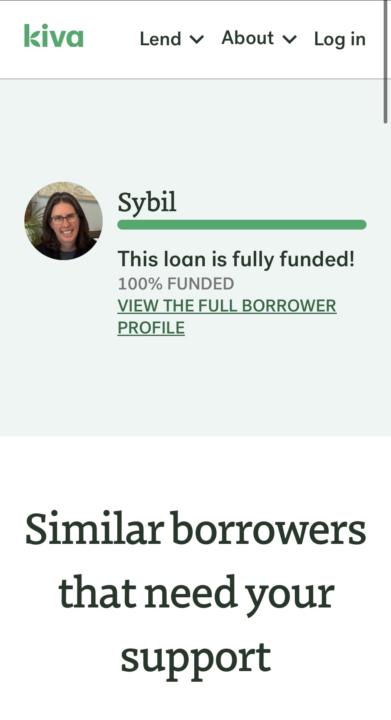
You guys, I’m fully funded and so grateful! 🎉 Woohoo and thank you! Original message: The last few days have been huge for my Kiva loan, and it looks like I’ll reach the full $10,000 today! I’m feeling incredibly grateful. Just a few weeks ago I wasn’t sure I’d even make it through private fundraising. Now, thanks to so many people saying “yes,” this loan is 97% funded with 137 lenders behind it. 💚 If everything finishes as expected, Kiva pays out the funds just a few days after the loan reaches 100%. This loan will help me manufacture more journals and planners so I can continue growing Burn Bright, Not Out and Income Without Burnout. To every single person who lent, shared, commented, encouraged me, or simply cheered me on… thank you. You helped make this happen. I’ll be back with a celebratory update when that funding bar hits 100%! 🌱🎉
🔥
14d •
🎉 Woohoo! Kiva update!
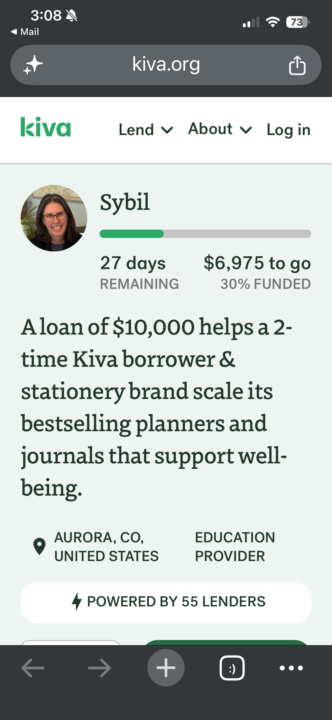
We’re now at 55 lenders and 30% funded! 🙌 Even better… the 2x matching funds are back. If you’ve been thinking about lending, now is the time. Your impact goes twice as far while the match is available. A huge thank you to every single person who has already supported this project. Your belief means more than you know. Let’s keep the momentum going and meet my fundraising goal! 💙 Check it out here!
1-30 of 87
powered by

skool.com/multiple-streams-of-income-4358
Build sustainable income streams with best-selling author Sybil Hall. Real businesses, real progress, a community growing together 12 weeks at a time.
Suggested communities
Powered by