
Write something
2d •
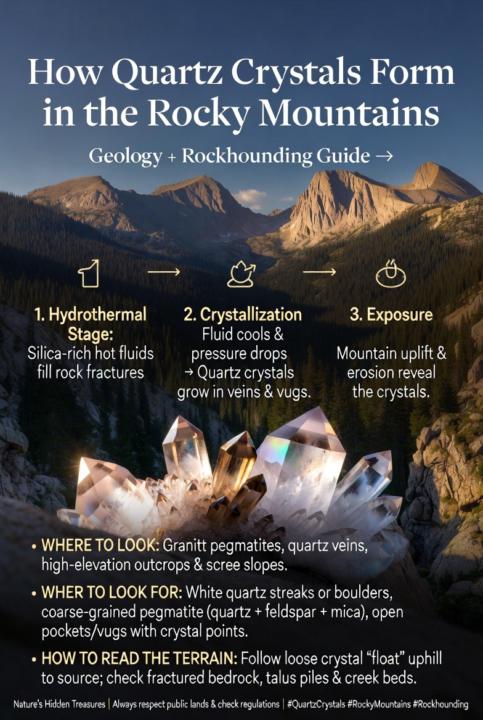
Rocky mountain crystal card📚
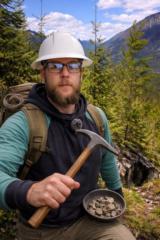
Your welcome to a free card of the week. 👍 This week is crystals of the rocky mountains Welcome to the Crystal Hunting and Prospector’s Guide card. Uncovering natural treasures hidden deep within the rugged beauty of the Rocky Mountains of Canada. This card isn’t just a technical guide—it’s a personal journey, a connection to the earth. for anyone with a passion for crystals, adventure, and the wild. Whether you’re just starting out or you’ve been exploring the backcountry for years, this card is for you. I will try my best every week to give you some thing worth your time in are community because you time is important. If you can live any where in the world for one year to look for cool rocks where would that be??👇
Poll
2 members have voted
2
0
9d •
🖤Quartz and ????📗
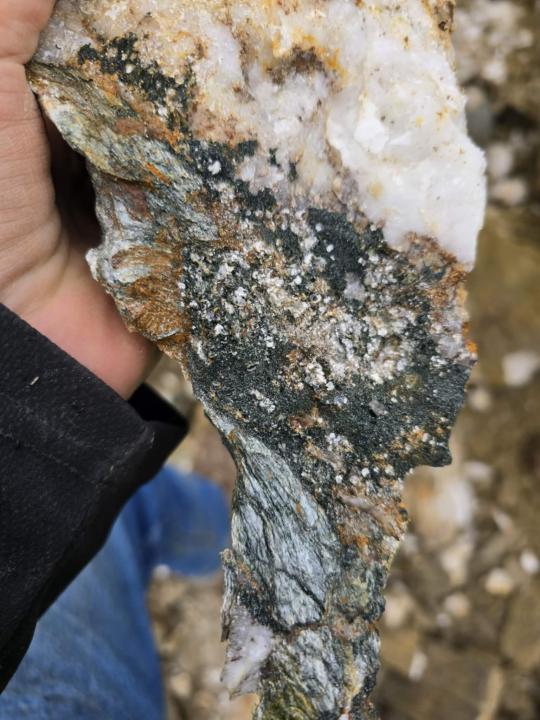
My buddy found this in Boswell bc its quartz with a black-looking oxide or crystal structure. It looks like small granule crystals. Photos only work so much the best way is to have it in hand to test and see what it can be. What do you think it can be???? 🏴 Quartz with black tourmaline (schorl),✅️❎️ Silver lead galena oxidation✅️❎️ iron hematite / magnetite✅️❎️ manganese oxide✅️❎️ graphite✅️❎️ Or some thing els❓️ Will update as i go😃
22d •
🌍 Geology Learning Wednesday – Agates Explained
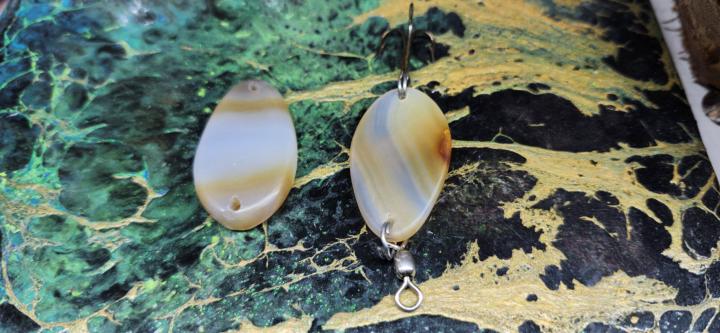
Ever picked up a rock that looked plain on the outside… but inside it tells a whole story? Today we’re talking about Agates 🔥 💎 What is an Agate? Agate is a form of banded chalcedony (a type of quartz) known for its layered patterns and colors. 🌋 How Agates Form Agates form inside volcanic rock. Gas bubbles get trapped in cooling lava Over time, silica-rich water flows through Layers slowly build up inside the cavity Thousands to millions of years later… you get banded agate 👉 Every band = a different mineral deposit over time 🔨 Hardness 6.5 – 7 on the Mohs scale Hard enough for tools, jewelry, and even survival uses like my fishing lures you see in photo 📍 Where to Find Agates Look in places with volcanic history: Riverbeds & creeks Gravel bars Old lava flows Mountain slopes with exposed rock (And number one basalt-rich zones.) 💡 Pro tip: Water-worn areas polish agates naturally—making them easier to spot. ⏳ When to Hunt Spring runoff → fresh material exposed After heavy rain → dirt washed away Low water levels → new ground revealed 🔥 Why Agates Are Special They’re not just rocks… they’re time capsules of the Earth. Every band tells a story from thousands (or millions) of years ago. 🎣 From Earth to Art My brother turned a couple of agates into fishing lures—one white/yellow banded piece and another with earthy brown tones. Proof that what you find in the wild can become something real, useful, and meaningful. 👉 I’ll drop the photo below 👇 📸 Community Challenge Have you ever found an agate? Post it below—or even better, show what you’ve made with one.
1
0
30d •
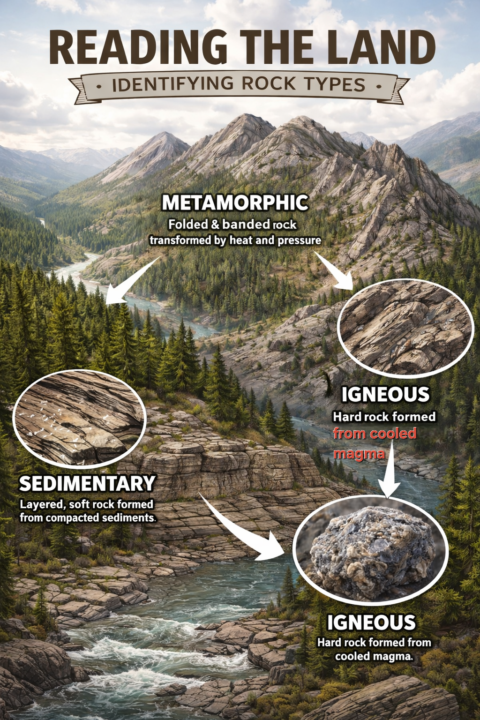
🌍 Geology Wednesday – Learning to Read the Land
Ever notice how the land tells a story… you just have to slow down enough to read it? I remember hiking up a slope here in BC, nothing crazy at first—just loose gravel, scattered pine, and a dry ridge. But the more I paid attention, the more everything started making sense. At the bottom of the hill, the ground was layered. You could actually see thin lines running through the rock—almost like pages in a book. That’s your first clue: sedimentary rock. Formed over time from sand, mud, and debris settling in layers—usually from water. Old riverbeds, lake bottoms, even ancient oceans. If you see layers, soft breaking rock, or fossils… you’re in sediment country. 🗺 As I moved higher, things changed.⬆️ The rock got harder. No layers. Just solid, tough material with crystals locked inside. That’s when you know you’re stepping into igneous rock—born from fire. This stuff comes from cooled magma or lava. If it cooled slow underground, you’ll see bigger crystals. Fast cooling (like lava) = smoother, finer rock. No layering, just raw earth energy locked in stone🪨 Then near the top ridge… things got interesting. The rocks looked twisted. Banded. Almost melted and reformed. Not quite layered like sediment—but not random like igneous either. That’s metamorphic rock. These started as something else—sedimentary or igneous—but got changed by intense heat and pressure deep in the earth. Think of it like the rock went through a transformation. You’ll see lines, folds, and a tougher, almost “compressed” look. 🧭 What to Watch for in the Field: Layers = Sedimentary (water, time, pressure) No layers + crystals = Igneous (fire, cooling magma) Banded / folded / hardened = Metamorphic (heat + pressure transformation) 🌲 Bonus Tip – Read the Terrain & Trees: Flat or rolling land with lots of loose material → usually sedimentary zones🪨 Sharp ridges, cliffs, volcanic-looking rock → igneous areas🏞 Folded mountains and high-pressure zones → metamorphic regions🏔 Even the trees can hint at what’s below. Thin soil and stressed trees often mean hard bedrock close to surface.
1
0
Mar 18 •
Wednesday – Educational Post 📚🎓 Topic: How Gold Forms & Where to Find It
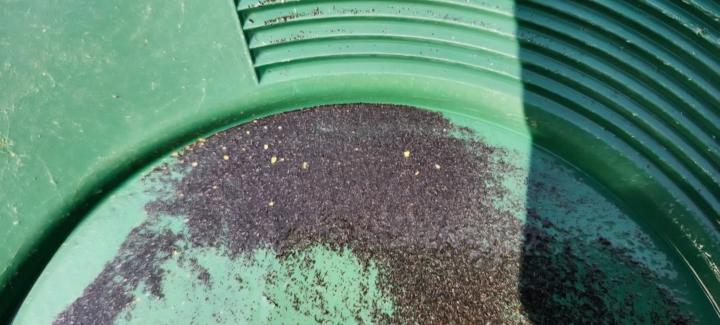
Most people think gold just “shows up” in rivers… but there’s a whole process behind it 👇 Gold actually forms deep underground through hydrothermal activity. Hot fluids move through cracks in rock and deposit gold into veins—usually in quartz. Over time, weathering breaks these veins apart, and gold gets released into the environment. That’s how placer gold is created 👇 • Gold travels downhill • Water moves it into creeks and rivers • Because gold is heavy, it settles in low-pressure zones Where to look: ✔ Behind big rocks in rivers ✔ Inside cracks in bedrock ✔ On inside bends of streams ✔ In black sand deposits Pro Tip: If you find black sand, slow down—gold is often right there with it. This applies anywhere in the world, not just here in BC. 💬 Question for the community: Have you ever found gold in one of these spots? Or where’s your best location?
1
0
1-5 of 5
powered by
skool.com/modern-prospector-academy-9551
Welcome to Modern Prospector.
Learn real-world skills to find gold, gems, and minerals using proven techniques and field knowledge.
Suggested communities
Powered by