
Write something
Pinned
4d •
Weekly Check-In:
This week I want to: ☐ Train ☐ Improve fitness ☐ Work on mobility ☐ Simply get started What's your goal this week? 👇
10d •
Your Belt Doesn't Make You Invincible
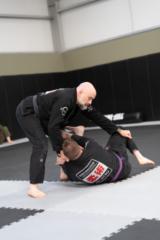
One of the biggest lessons in Jiu-Jitsu as we get older is learning to let go of the idea that we have to prove ourselves every time we step onto the mats. A higher belt doesn't mean you should be able to beat every younger, stronger, more athletic lower belt. Your belt represents your knowledge, experience, timing, composure, and understanding of the art. It doesn't make you immune to age, injuries, or the physical advantages of others. And that's perfectly fine. As we get older, our approach to training needs to evolve. ✅ Train smarter, not just harder. ✅ Choose your rounds wisely. Not every roll needs to be a war. ✅ Focus on timing, technique, and efficiency rather than relying on strength. ✅ Leave your ego at the door. Getting tapped by a younger lower belt doesn't erase years of experience. ✅ Share your knowledge. Helping others improve is part of your own development. There's a big difference between training to prove something and training because you want to keep doing something you love. The real goal isn't to stay 25 forever. It's to still be enjoying Jiu-Jitsu at 50, 60, 70, and beyond. Longevity is a skill in itself. 💬 "Question for the community" Has your approach to rolling changed as you've gotten older or more experienced? Are you still trying to win every round, or have you started looking at the bigger picture? 👇 Share your thoughts below.
11d •
Weekly Check In.
This week I want to: ☐ Train ☐ Improve fitness ☐ Work on mobility ☐ Simply get started What's your goal this week? 👇
2
0
1-30 of 83
powered by
skool.com/martial-arts-for-life-2294
Train martial arts in a way that builds strength, confidence, and longevity—without pressure, ego, or burnout.
Suggested communities
Powered by